

CfD Auction Round 7a: The Verdict
The UK government has approved a record number of solar, onshore wind, and tidal projects - building on last month’s offshore wind success - to deliver Britain’s biggest-ever clean energy auction.
The move confirms the largest ever procurement of solar projects in the UK – 4.9 GW – providing a major boost for one of the cheapest and cleanest energy sources available.
Taken together with offshore wind results, the government has secured 14.7 GW of clean, homegrown power, enough to power equivalent of 16 million homes.
Once operational this new clean, homegrown generation is expected to reduce energy bills for families, deliver clean power by 2030 and give Britain energy sovereignty.

This comes just weeks after the government delivered the single biggest procurement of offshore wind that Europe has seen and securing a major vote of confidence in the UK’s clean energy mission.
The outcome of Contracts for Difference Auction Round 7a, builds on that success with a record number of solar projects secured, the largest onshore wind project to be successful in England in a decade, and offers a commitment on new tidal stream schemes. Combined with January’s offshore wind results, the UK government has now actioned a record 201 projects, generating 14.7 GW of new clean power - enough to supply the equivalent of 16 million homes.
This puts the country on track for its 2030 clean power target, securing clean, homegrown energy at good value for billpayers - once again proving that clean power is the right choice for energy security and to meet rising electricity demand. New onshore wind has been agreed at a price of £72.24/MWh and new solar at £65.23/MWh, both under half the £147/MWh cost of building and operating new gas power stations.
Once built and generating, the new clean, homegrown power will reduce bills for households and drive down wholesale prices, while protecting families and businesses from fossil fuel price shocks that have triggered half of all recessions since the 1970s.
These projects deliver major infrastructure for the country as Britain seeks to meet future electricity demand – unlocking an additional £5 billion in private sector investment and supporting up to 10,000 jobs.
Successful projects include:
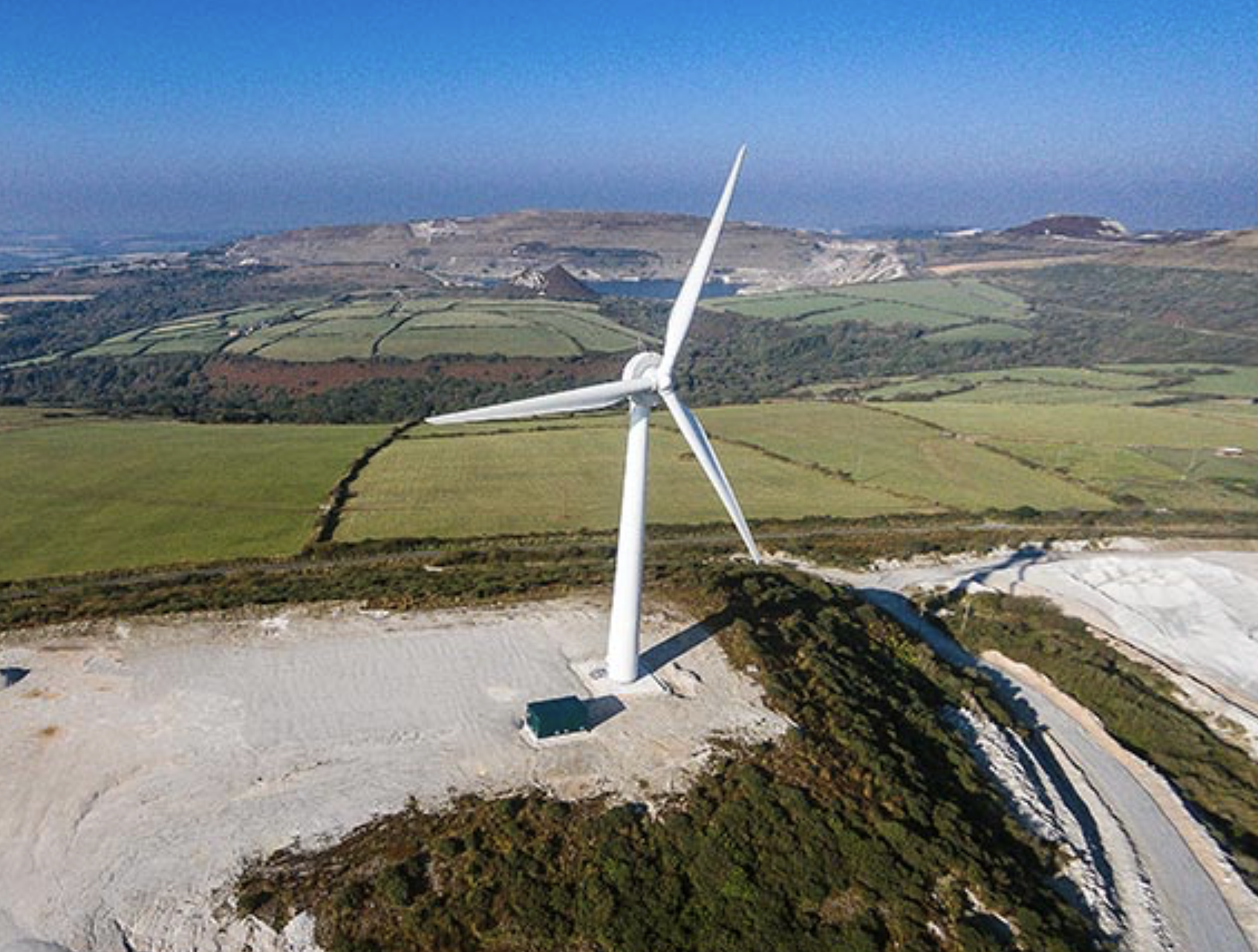
The start of something big - Imerys Wind Farm at St Austell. Developed by Clean Earth Energy, this project on former mining land will feature turbines over 100m tall.
Imerys Wind Farm in Cornwall – the largest onshore wind project to be successful in England in a decade, helping rebuild an industry that was stagnant under the de facto onshore wind ban.
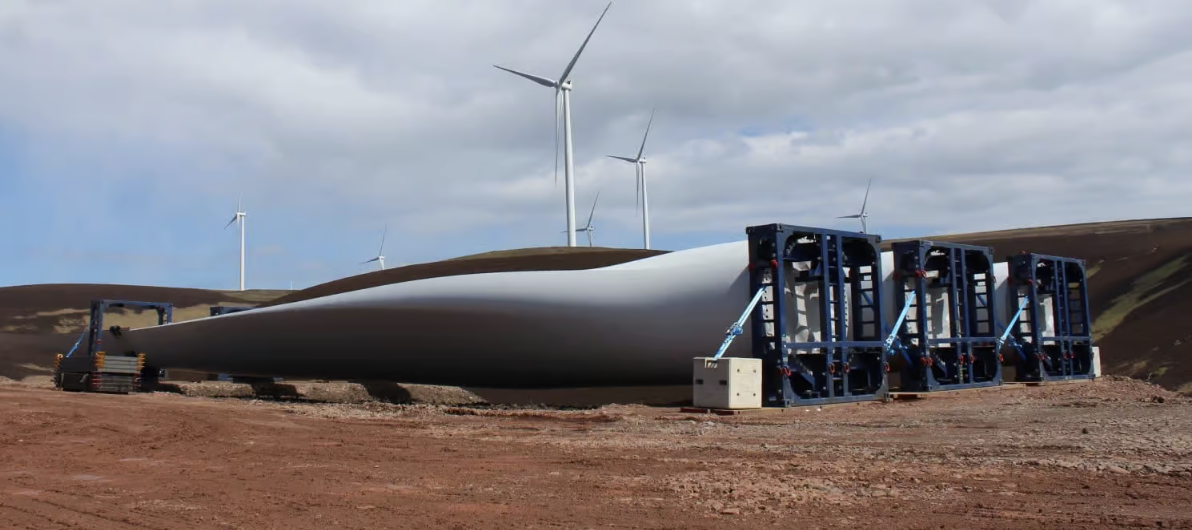
Sanquhar II: Two of the turbines will be 149m to tip, with the remaining turbines being 200m to tip. The development by CWP Energy also includes an energy storage facility.
Sanquhar II Wind Farm in Dumfries and Galloway - the fourth largest onshore wind farm in the UK - driving growth and private investment across the region.
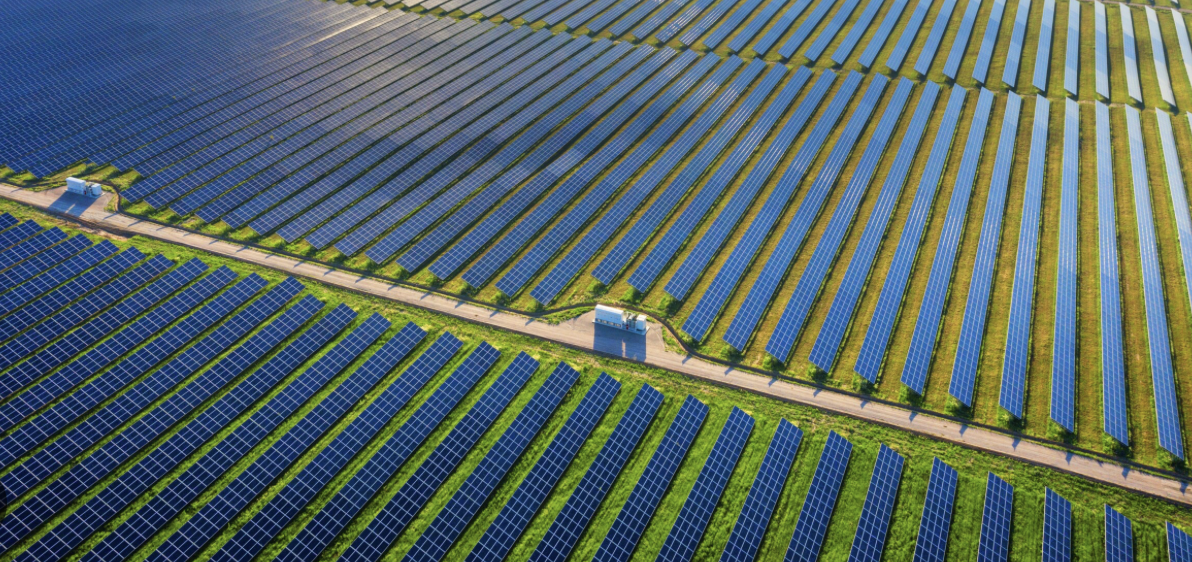
West Burton Solar Farm
Island Green Power’s West Burton solar farm - a Nationally Significant Infrastructure Project that is now the largest solar farm ever to win a government renewables contract, transforming the home of the last coal-fired power station into a powerhouse of clean, secure, homegrown energy that Britain controls.

Chris Hewett & Lucy Dolton
Chief executive of Solar Energy UK Chris Hewett called the results a “milestone for the solar sector”, and “proof positive that [solar PV] provides the cheapest power available”.
According to energy consultancy the Energy and Climate Intelligence Unit (ECIU), this auction round coupled with the offshore wind round (AR7, results of which were announced in January) will reduce UK gas imports by over 80TWh annually
It also said that by 2030, when the final projects awarded in AR7 and AR7A come online, projects secured in this auction will provide around 10% of the UK’s generation.
However, as pointed out by Lucy Dolton, renewable generation lead at energy consultancy Cornwall Insight, delivering on the projects’ timelines will be a challenge.
“Historically, renewable projects in the UK have faced delays often due to grid connection backlogs and planning holdups.
With AR7 and some of AR8 representing the only realistic pipeline for pre-2030 capacity, keeping to schedule will be essential
AR7 is a step forward, but its impact will depend on the UK’s ability to deliver these projects on time, get the grid ready, and build the storage to support them.”
It also follows wider action to cut energy bills, including taking an average £150 of costs off bills from April and launching the biggest ever public investment in home energy upgrades through the Warm Homes Plan.