

Cap & Floor decision pending on Coire Glas 1.3 GW PHS power station
Britain’s largest Long Duration Electricity Storage (LDES) project at Coire Glas, near Fort William, has reached a significant milestone, with developer SSE completing a £100m exploratory works programme which saw it drill and blast a 1.2km tunnel into the hillside in the Scottish Highlands.
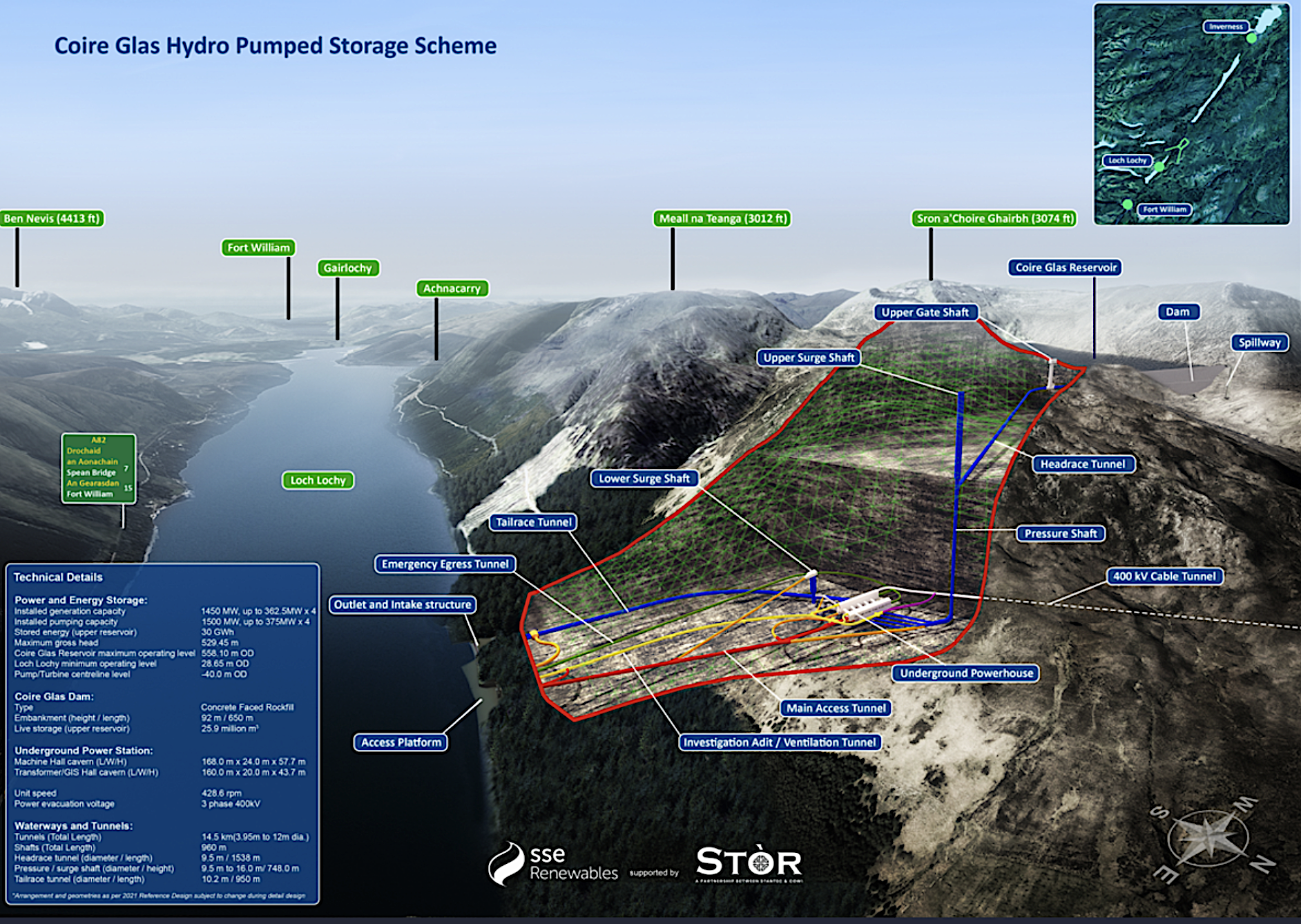
Image: SSE
The next stage of the process is a multi-criteria assessment (MCA) where Ofgem, working alongside the National Energy System Operator (NESO), will select a small number of LDES projects to be awarded a cap and floor contract in the summer.
Being awarded a cap and floor means the project is underwritten to provide financial protection on the downside. It ensures that the project can earn a minimum income to recover their investment.
If revenue is high, consumers are rewarded with the excess revenue being shared.
The MCA process scores projects across multiple criteria including deliverability, value for money and contribution to wider societal benefits such as reductions in consumer and system balancing costs.
Coire Glas could be the first major pumped storage hydro scheme built in more than 40 years more than doubling Great Britain’s existing electricity storage capacity.
Pumped storage schemes involve two bodies of water at different heights. During periods of low demand and/or surplus generation, electricity is used to pump water from the lower loch to the upper reservoir, storing energy. The energy is released by using the water to generate hydro-electricity at a time when demand is high and/or other variable generation is low.
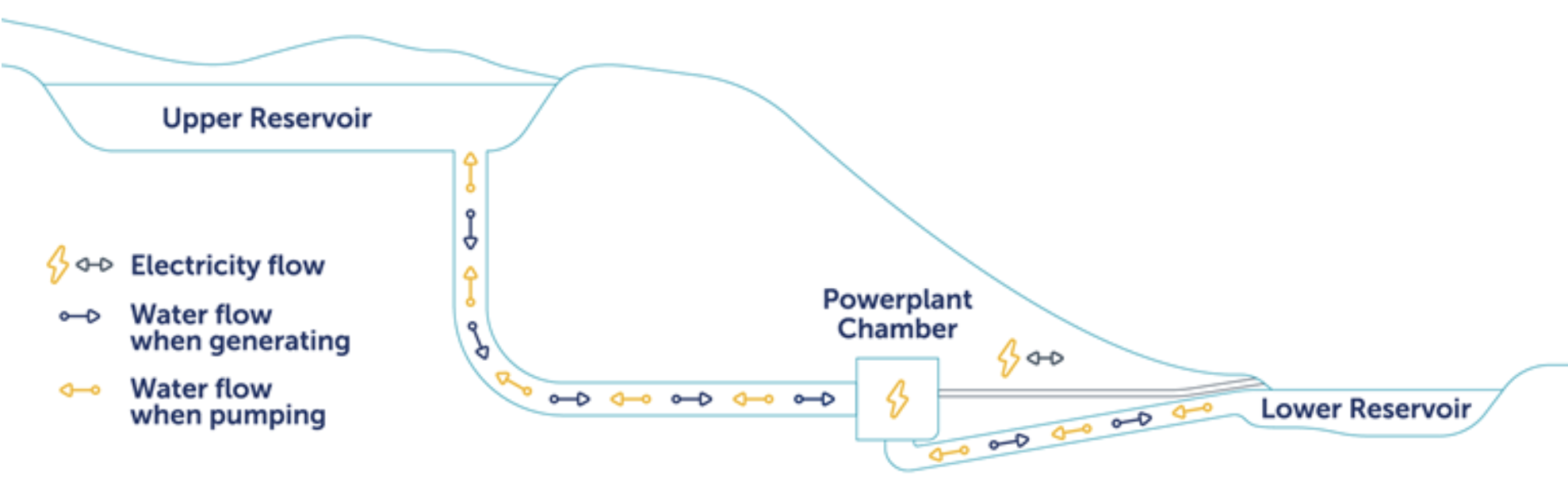
How it works Image: SSE
The UK Government confirmed last year a cap and floor investment framework would be introduced to enable the deployment of long-duration electricity storage projects. Meanwhile, the system operator, NESO, has said pumped storage hydro will be critical for energy flexibility as part of the 2030 Clean Power plan.

Robert Bryce
Robert Bryce, Director of Hydro at SSE Renewables said:
“The decision to introduce a cap and floor investment framework was a massive step forward in delivering more of the flexible homegrown energy the UK needs to enable clean power by 2030 and our transition to net zero by 2050.
“Having reached this important milestone in the exploratory works, we are now looking forward to seeing further detail on how the first projects will be taken forward under the scheme, which will be a key enabler of the Government’s Clean Power Plan.”
At 1.3GW with up to 30GWh of storage capacity, Coire Glas could power three million homes for up to 24 hours and would nearly double Great Britain's total current electricity storage capacity, helping the UK to put even more of its homegrown renewable energy to use.
The exploratory works gathered important geological data to inform the main design of the scheme with over 90,000 tonnes of rock and earth excavated.
Coire Glas received planning consent in 2020 and the project is the largest and most advanced of the more than 10GW of long duration electricity storage projects in the pipeline in the UK.
Robert added:
“We are encouraged to see that NESO has identified pumped storage as critical to both its potential pathways to achieve clean power by 2030. We eagerly await the UK government’s response to the CP30 Report, which is expected to set out the practical steps they will now take to make that pathway a reality. In our view this will require accelerated implementation of the cap and floor with a view to enabling final investment decisions at pace on the most advanced and impactful projects.”
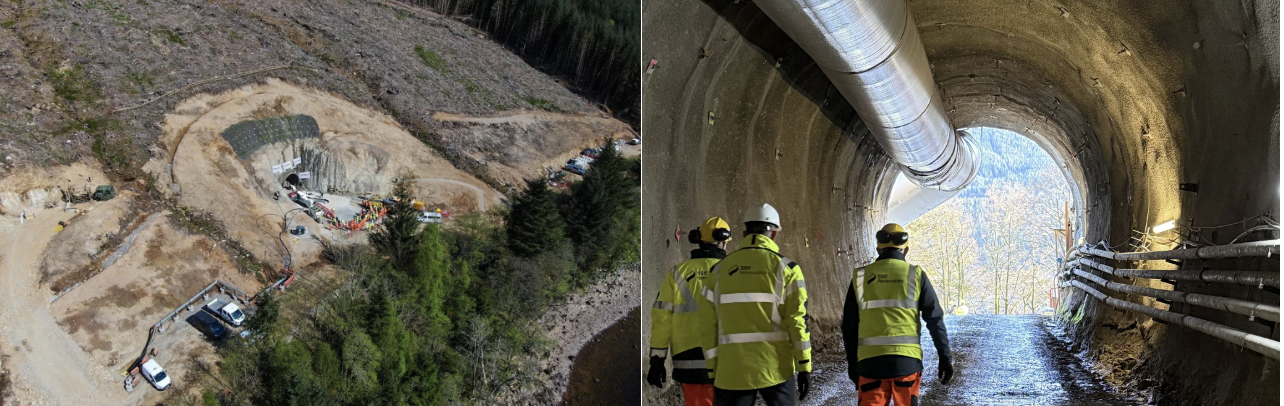
Coire Glas enabling works Images: SSE
Scotland’s unique natural geography provides the ideal environment to deploy pumped storage hydro assets, delivering critical system flexibility by storing low-carbon power in times of surplus to be deployed when the wind doesn’t blow, and sun doesn’t shine.
Coire Glas would be able to ramp to its full generating capacity in under 60 seconds to rapidly support grid stability and start generating in under 10 seconds.
As it is predominantly a civil engineering project, most of the capex cost would be expected to be spent domestically - a major boost for the UK economy and local supply chains.
With an appropriate designed cap and floor regime in place and swift action to progress the first projects, SSE believes Coire Glas could be delivering flexibility to the system in the early 2030s.
Coire Glas is expected to deliver a GVA impact of £81.5 m to the Highlands and £123.9 million to the Scottish economy over the seven-year core construction period.
The project has also supported more than £160k of community and educational initiatives to date, with the project providing almost circa 30per cent local employment and if it goes ahead a multi-million-pound community benefit fund will be open to the region.