

Datacentre constraints frustrate investment ambitions
Data centre builder Nscale has been told the power supply for its flagship UK project will not be ready in time for its planned 2027 opening, according to reports.
The flagship scheme, estimated to cost £2bn, is set to provide Nvidia GPUs to customers including Microsoft.
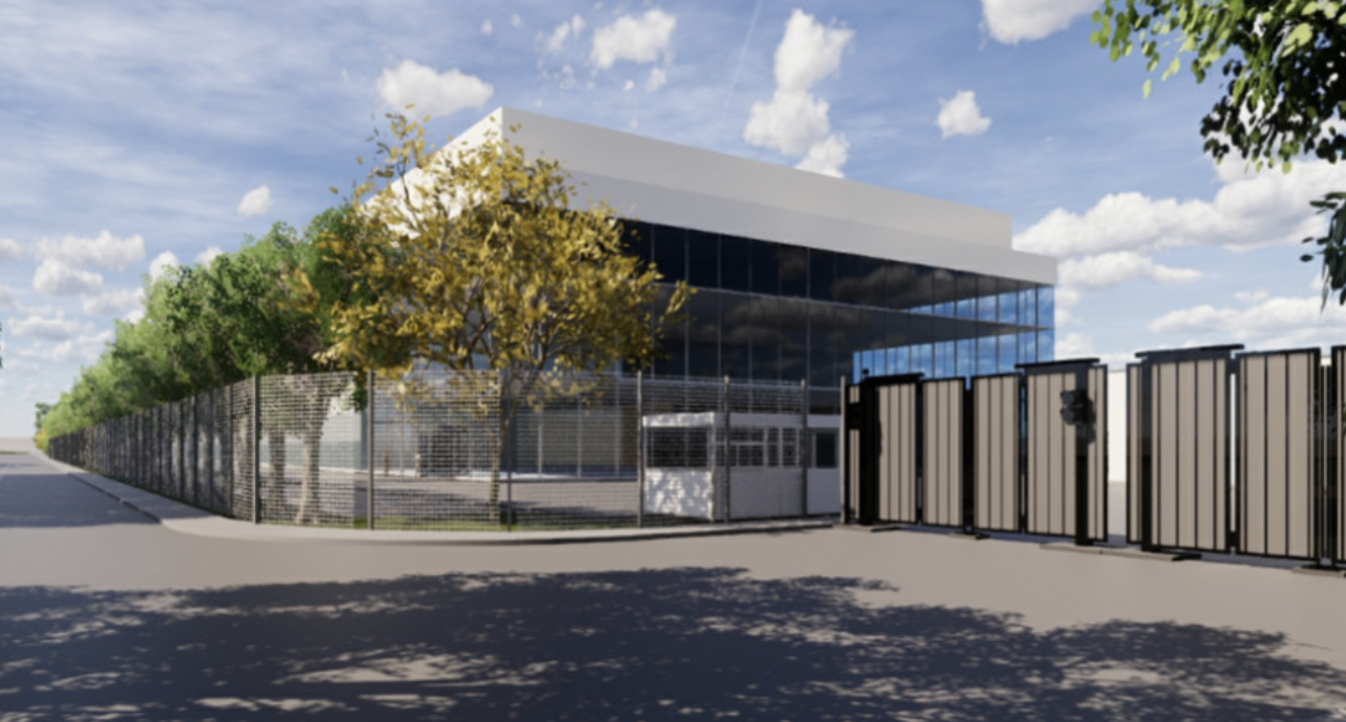
Render of the Loughton facility. Image: Nscale
But the site, at Loughton, Essex, is still awaiting a 90-megawatt grid connection.
Limited grid capacity has become a major bottleneck for data centre developments across the UK, as the facilities require vast amounts of electricity.
Nscale is currently pursuing alternative power solutions for the site. The company is said to be in discussions with California-based Bloom Energy to provide electricity through solid oxide fuel cells instead of waiting for the permanent grid connection.
It is understood Nscale remains fully committed to the Essex project.
If data centres fail to deliver compute capacity by an agreed date, they can sometimes have to pay their customer to account for the delays.

Data from research provider Sightline Climate suggests 26% of data centre capacity was delayed in 2025. It estimates that 30–50% of the global data centre capacity expected for 2026 could be delayed due to power constraints, equipment shortages, or local opposition.
Nscale has secured over $5bn in funding, with backers including Nokia, Nvidia, Dell and Blue Owl.
The company’s other UK site in Northumberland, was suspended by OpenAI earlier this year, citing high energy costs. The London-headquartered company is currently working on data centre projects in five countries.

Taco Engelaar
Taco Engelaar, SVP at energy and climate technology company Neara, said: "Britain’s dreams of data centre sovereignty will disappear if we don’t get a grip on the grid.
"This latest delay should hammer home the fact that billion dollar investment and political ambition mean nothing against our eminently physical infrastructure and the constraints it presents.
"But rather than scramble to source emergency power, we must consider more strategic planning that allows us to build where capacity actually exists and make more of the grid where it’s currently underutilised”.
Another proposed hyperscale artificial intelligence data centre in Argyll has been indefinitely mothballed due to severe national grid connection delays, exposing the physical infrastructure limits of Scotland’s sovereign technology ambitions.
Argyll Data Development had envisioned transforming a rural peninsula into a premier AI Growth Zone, scaling from an initial one hundred megawatts to a staggering two-gigawatt capacity at full build-out. However, the project stalled after the developer was quoted £5.5m for just two connection cables, accompanied by a timeline extending several years into the future.
SP Energy Networks and National Grid have cited a massive backlog of renewable energy projects and industrial developments competing for limited transmission capacity across the Scottish network.
The sheer scale of the Argyll proposal, which would eventually consume power equivalent to half of Scotland’s entire peak national demand, simply overwhelmed the available local infrastructure, rendering the phased expansion plan economically and logistically unfeasible under current grid constraints.
A similar frustration was encountered by Microsoft (as reported in these pages) in Leeds.
The problem is starting to attract some innovative solutions. For example, China has just launched the world's first offshore wind-powered underwater data centre.
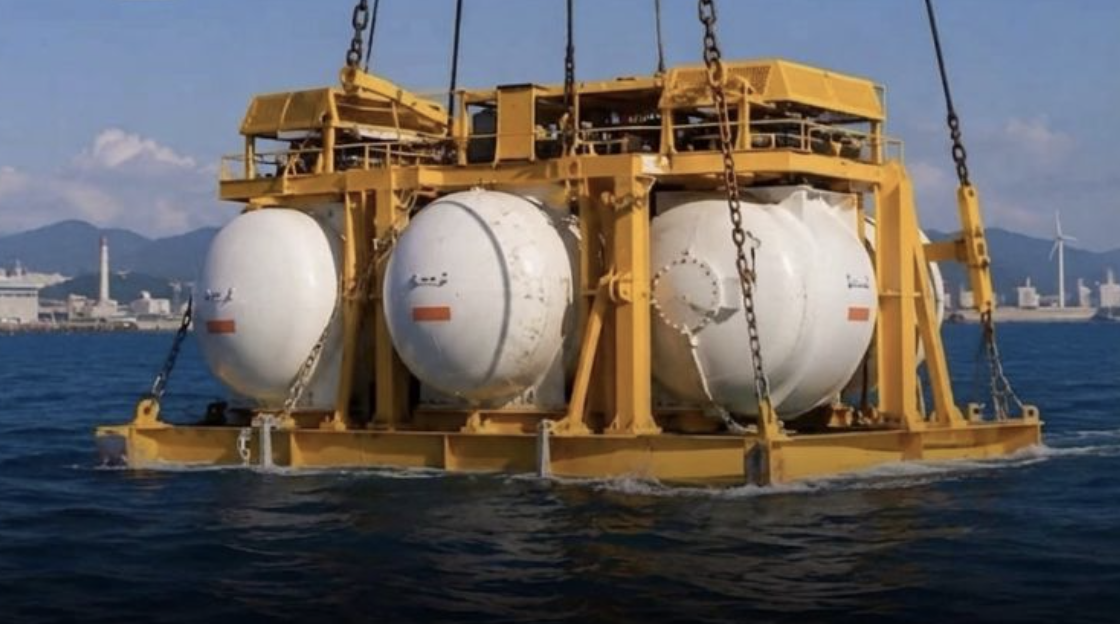
The facility began commercial operation in May, off the coast of Shanghai's Lingang Special Area. It sits about 10 kilometres offshore and 10 metres below the surface.
The specifications:
- Planned computing capacity of 24 megawatts
- Designed to house nearly 2,000 servers
- Powered by a nearby offshore wind farm
- Cooled using natural seawater instead of traditional air conditioning
It reduces electricity use by around 22.8%, eliminates freshwater cooling entirely, and cuts land use by more than 90% compared with conventional data centres.
It is built to handle AI computing, cloud services, big data, 5G, and large language models.
Data centres are one of the fastest growing pressures on energy, water, and land. As AI demand accelerates, that pressure only grows.
China is showing that the answer may not be building more of the same infrastructure on land and may be rethinking where and how that infrastructure exists in the first place.