

Drax drives net zero strategy through flexibility
Drax has completed its acquisition of Flexitricity, adding the AI-based optimizer business to its growing battery-focused portfolio.
Better known for its pumped-hydro storage assets, UK energy company Drax has been increasing its exposure to Britain’s BESS market in recent months and made headlines earlier in 2026 when it signed a 15-year tolling agreement with Zenobe.
The UK’s electricity system is undergoing a remarkable transformation. Generation has always been the main controllable resource for balancing the network, with the system operator adjusting the amount of generation to match variations in demand. But as demand increases, and fossil-fuelled generation continues to be replaced by renewables, this traditional approach is no longer adequate.
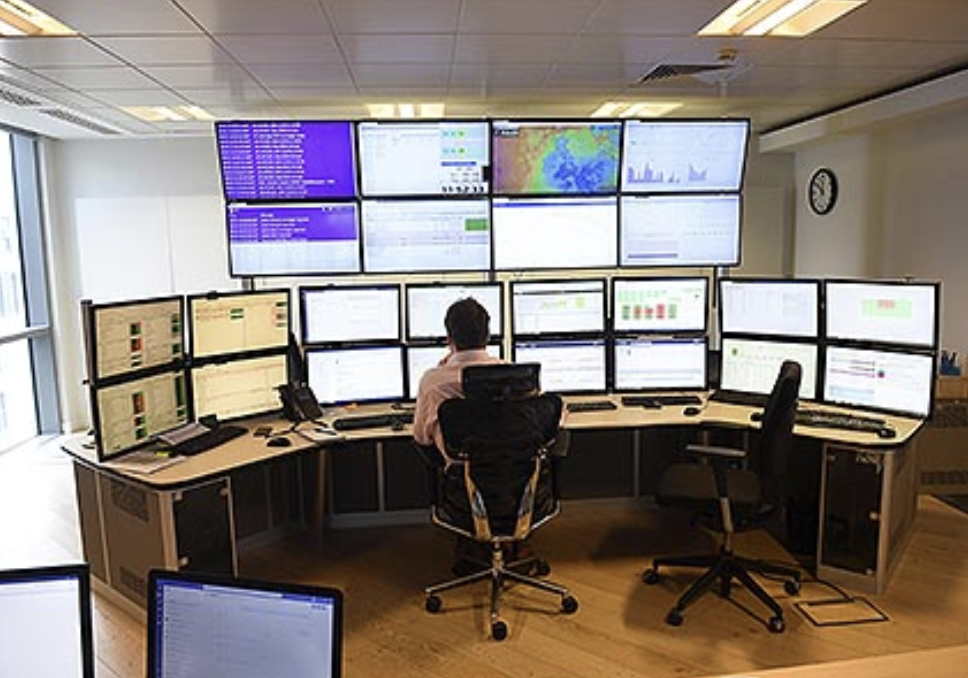
Flexitricity’s central control room. Image: Flexitricity
Much more flexibility will be needed on the grid of tomorrow, and the bulk of it will be provided by adjusting demand. With the right market frameworks, some of the money that would have been spent on additional supply capacity can instead be used to incentivise flexibility among electricity customers.
Drax Group CEO, Will Gardiner, said, “We are pleased to announce the acquisition of Flexitricity. We are ambitious about growing and developing our FlexGen business and Flexitricity’s technology and team are a strong strategic fit for us.
“Adding Flexitricity’s expertise and capability which uses AI and advanced machine learning software, delivered via their proprietary platform, supports our options for growth, particularly in our plans for a GW scale BESS portfolio as a part of our FlexGen business, while continuing to provide energy security to the UK power system and delivering new energy services for our customers.

Will Gardiner (left) and Ash Hein
Ash Hein, FlexGen business development director at Drax explained why the Flexitricity purchase made sense for the experienced operator.
“It’s very credible that they’ve been in the market for 20 years optimizing flexible assets,” Hein said. “If you look at any BESS assets and understand and think about how they trade, when you look at trades for BESS they might do 100 trades a day for one single asset, going in and out of different markets that they might trade in, some ancillary, some balancing, and some wholesale, all in the same day, switching and out of different markets.
“That ability to think about how you optimize a BESS asset, it does lend itself to machine learning, AI technology, which is exactly what Flexitricity brings.”
The FlexGen director noted that before acquiring Flexitricity, Drax lacked the AI-informed battery trading capability the company could offer.
Founded in 2004, Flexitricity provides optimization and route-to-market services for flexible energy assets. The company offers front-of and behind-the-meter solutions for grid scale assets as well as demand response services to over 900 MW of operational assets with capacity over 900MW, according to Flexitricity. These are primarily battery energy storage systems (BESS), gas peakers, renewables and demand-side response.
In response, Flexitricity, an energy flexibility expert, has taken an innovative initiative to launch FlexGO, a pioneering service helping industrial and commercial energy users, as well as operators and aggregators of domestic flexible technologies, to unlock new revenue by participating in energy flexibility markets.
As the transition to net zero gathers pace, FlexGO is an example of a straightforward way for businesses to contribute to a greener energy system without disrupting daily operations.
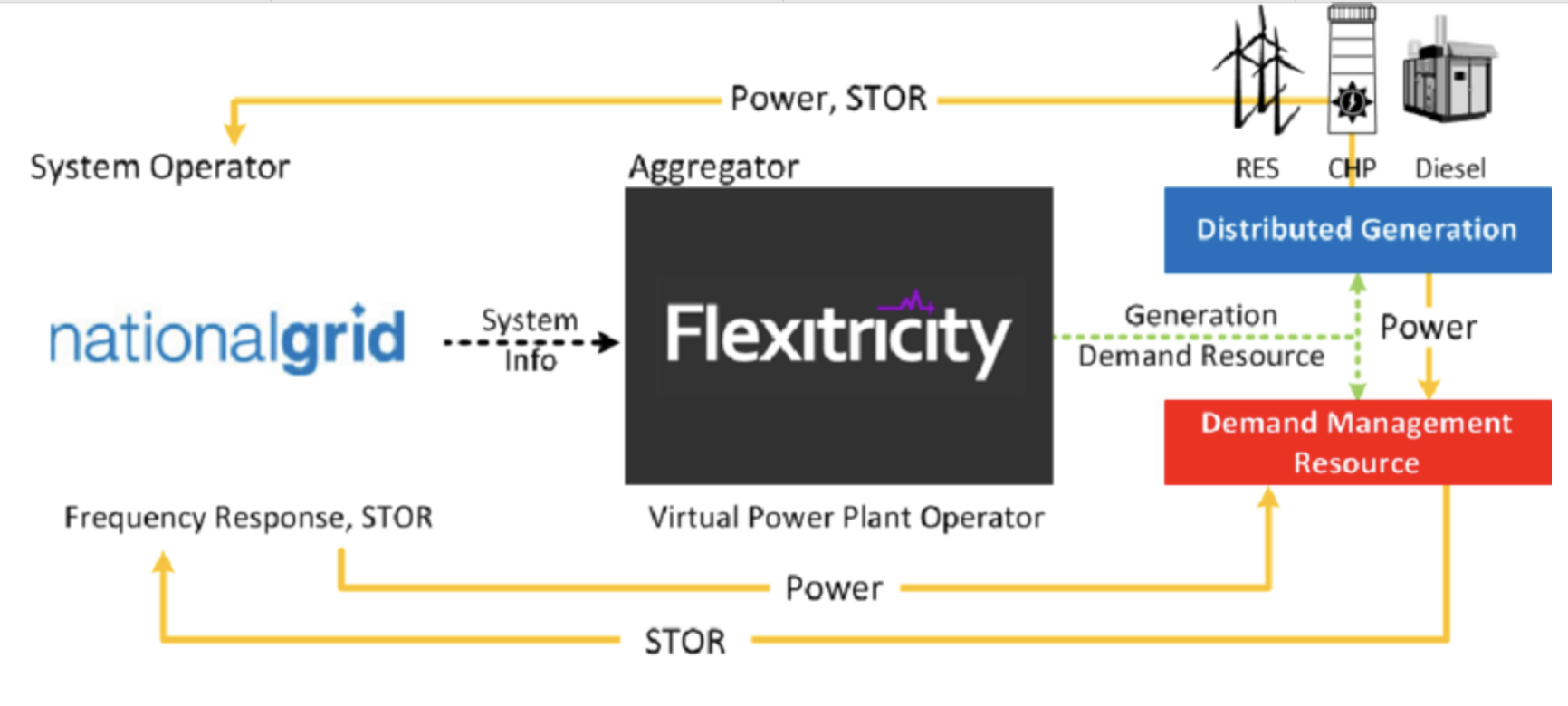
Blueprint for flexibility savings: The VPPO role explained Image: ResearchGate
This demand-side flexibility is not new. In Great Britain, after reforms over the last decade or so, customers can participate in various flexibility programmes including the balancing mechanism, the capacity market, ancillary services, and distribution constraint management – either directly or by working through the aggregator of their choice. Flexibility is a proven resource, already contributing to grid stability in many countries across the world.
FlexGO offers several key advantages. It creates new revenue streams that can help offset energy costs - potentially earning businesses tens of thousands of pounds per MW per year. It operates in full alignment with business availability, ensuring no risk to core operations. It also supports environmental and social governance ambitions by enabling businesses to contribute to a low-carbon future.
By removing complexity, it allows businesses to flex their energy use or generation whenever it delivers commercial and operational value, without complicated sign-ups or technical barriers.
It has been developed in response to the National Energy System Operator’s call for a fivefold increase in energy flexibility. Designed to support a wide range of organisations, the product is able to be applied to those operating refrigeration units, heat pumps, electric vehicle charge points, and other flexible technologies.
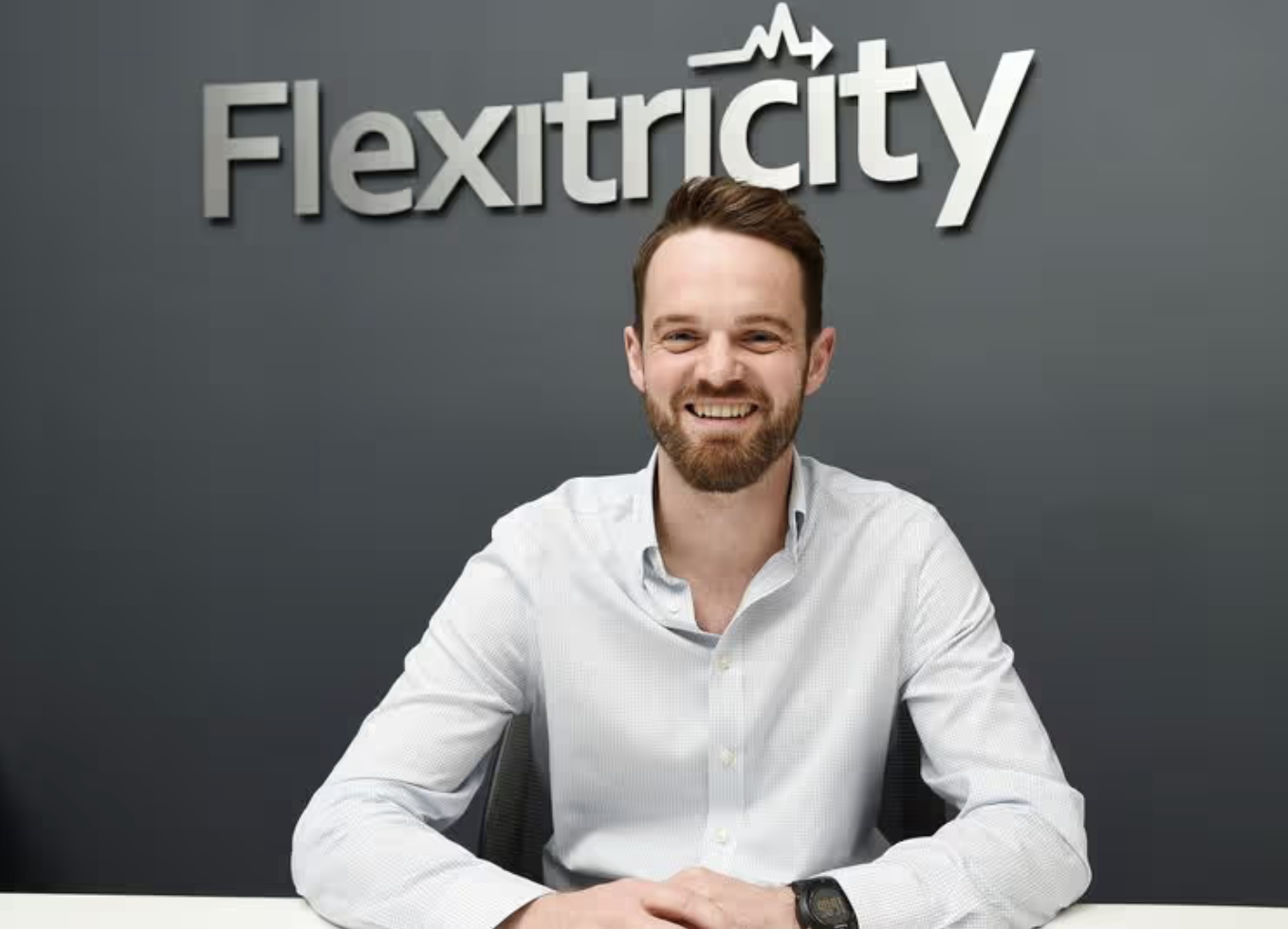
Andy Lowe
Andy Lowe, Chief Executive Officer at Flexitricity, said:
"FlexGO is our answer to the growing call for decentralised, smarter energy solutions. It enables businesses of all types to become active participants in the energy system, not by changing how they operate, but by unlocking the value of what they already have. It’s energy flexibility made easy."
Announcing the completed acquisition, Drax said Flexitricity will support its plans to develop a “gigawatt-scale pipeline of BESS opportunities.” This will include physical assets and the capability to optimise third-party BESS projects through route-to-market, floor and tolling structures.