

Engineers highlight key challenges to come on UK energy transition
The Institution of Civil Engineers’ 2026 State of the Nation report pinpoints major changes required to make Westminster’s energy plans achievable.
If the construction industry is to deliver the UK government’s hugely ambitious 10-year infrastructure strategy, urgent improvements are needed in three key areas, the ICE has warned.

Revealed in the institution’s latest State of the Nation report, they are:
supply chain capacity and productivity
innovation
collaboration
With £725bn worth of economic and social infrastructure projects scheduled over the next decade, the industry is under pressure to build large assets at pace.
“For the strategy to succeed, real progress needs to be demonstrated as soon as possible,” said ICE President David Porter.

David Porter
He adds: “Everyone in the sector must play their part if we are to deliver the infrastructure improvements that society needs so that people and the planet can thrive.”
The ICE’s energy experts were particularly concerned about the short-term challenges of completing the Hinkley Point C nuclear plant, mobilising to build Sizewell C efficiently and delivering the Great Grid Upgrade. The report sets out some of the challenges:
Hinkley Point C, delivering two 1,630MW European pressurised reactors (EPRs) at a forecast final cost of £46bn. For its projected completion in 2031, this will require a peak workforce of 15,000.
Sizewell C, delivering two 1,630MW EPRs at a forecast final cost of £38bn. For its projected completion in the mid- to late 2030s, this will require a peak workforce of 10,000.
The Great Grid Upgrade, delivering 15 transmission projects (including lines and substations) at a forecast final cost of £60bn. For its projected completion in the early 2030s, this will require a peak workforce of 50,000.
Each of these projects presents an extraordinary logistical challenge on its own – and they’re all taking place in a sector that’s set to become superheated.
This situation is unlikely to change once they’re completed, with the nation’s demand for construction resources likely to become even greater in the 2040s, but the UK’s transition to low-carbon energy presents an opportunity to retrain and redeploy the nation’s oil and gas workers.
According tro trhe report, about 120,000 people are employed directly or indirectly by the UK oil and gas sector. They include 26,000 working upstream in extraction and supply, and 23,500 in gas distribution. Many of these employees have highly transferable technical skills that the nation risks losing in its move away from fossil fuels.
These skills could be refocused on emerging areas of need in the low-carbon energy sector. For example, workers from the upstream oil and gas industry could move into offshore wind, where their knowledge of maritime operations, project management and asset maintenance would be most relevant. Meanwhile, gas network engineers could move into areas such as installing heat pumps or building hydrogen infrastructure.
Reskilling the oil and gas workforce could support a “just transition” and retain expertise in communities that might otherwise suffer a brain drain. But realising this opportunity will require coordinated action in the form of clear policy signals, investment in training, financial support for workers and collaboration between industry and further education.
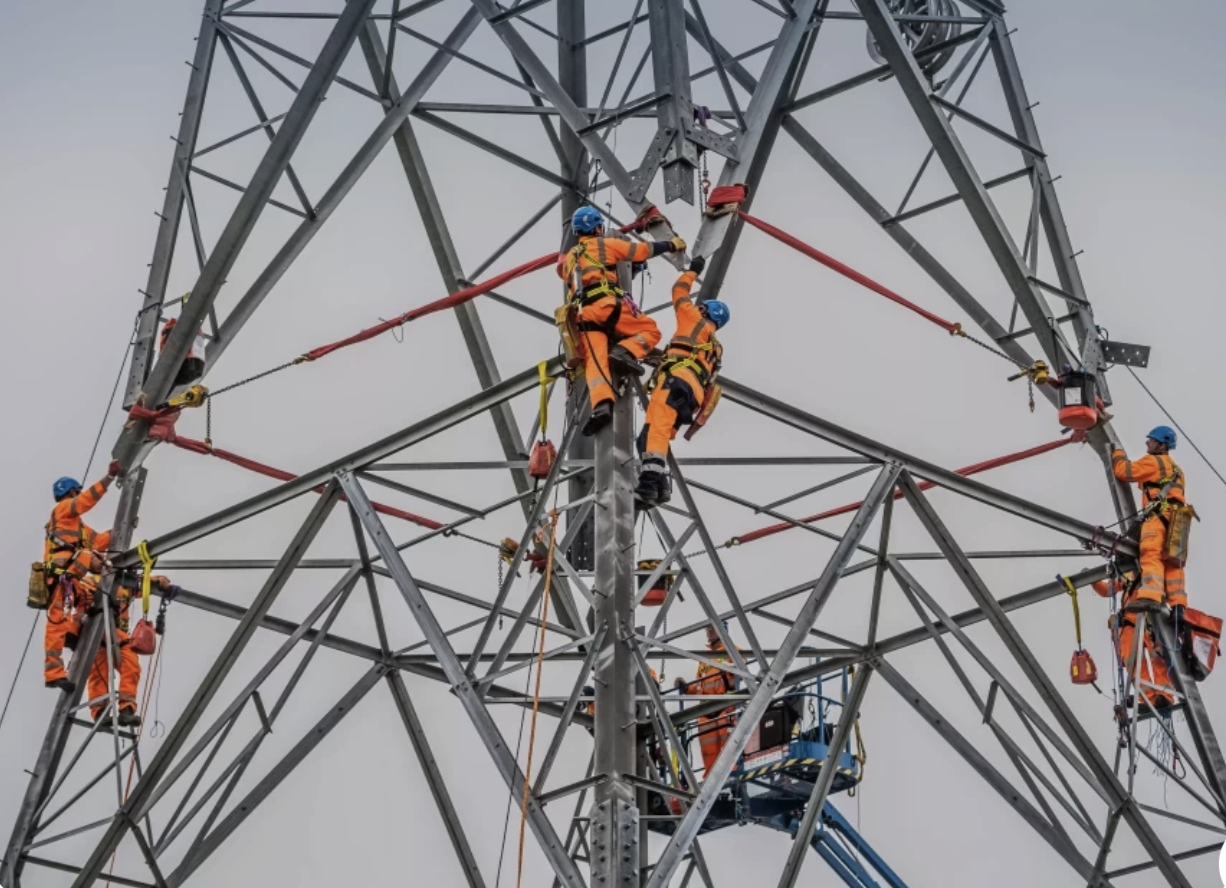
Image: Murphy
The Great Grid Partnership (GGP) is delivering about £9bn-worth of the £59bn Great Grid Upgrade programme run by National Grid, is focused on the issue by bringing seven strategic partners together to work under an enterprise model.
Design and consenting: WSP and a joint venture between AECOM and Arup.
Construction: Laing O’Rourke, Morgan Sindall Infrastructure, Morrison Energy Services, Murphy Group and Omexom-Taylor Woodrow.
The GGP covers nine accelerated strategic transmission projects and will also replace ageing assets such as the Thames Cable Tunnel. Its targeted outcomes include faster more coordinated delivery; innovations that provide better value for money; and decarbonisation.
National Grid has set up a transmission skills working group featuring 30-plus suppliers. Its role is to prioritise the jobs and skills needed to deliver the upgrade and nudge the industry (and its regulators), education providers and the government towards developing them.
AECOM-Arup and WSP are using a range of measures to secure the workers this programme needs. They’re incentivising people to move from other sectors requiring applicable skills, including road, rail and digital. Using their global scale, these businesses are harnessing talent in different time zones and creating international virtual teams. Exchanges of employees between GGP partners are becoming more common too.
Increasing numbers of apprentices are finding employment with firms on both the design and construction sides of the GGP. Many will be rotated through consultancy and construction to give them a rounded view of the programme; despite the extra admin burden this imposes.
The construction partners have so far focused on building the capacity to erect overhead lines. They will create training centres, not to directly educate the army of workers needed but to equip tutors to deliver those courses.
The GGP is creating a skills passport system that enables people to start working in a tightly limited area and gradually become more versatile by taking on new tasks and becoming proficient in those. As they add “attributes” to their passport, they gain access to more areas of a site.
In the infrastructure space, the report highlights the potential of converter station delivery.
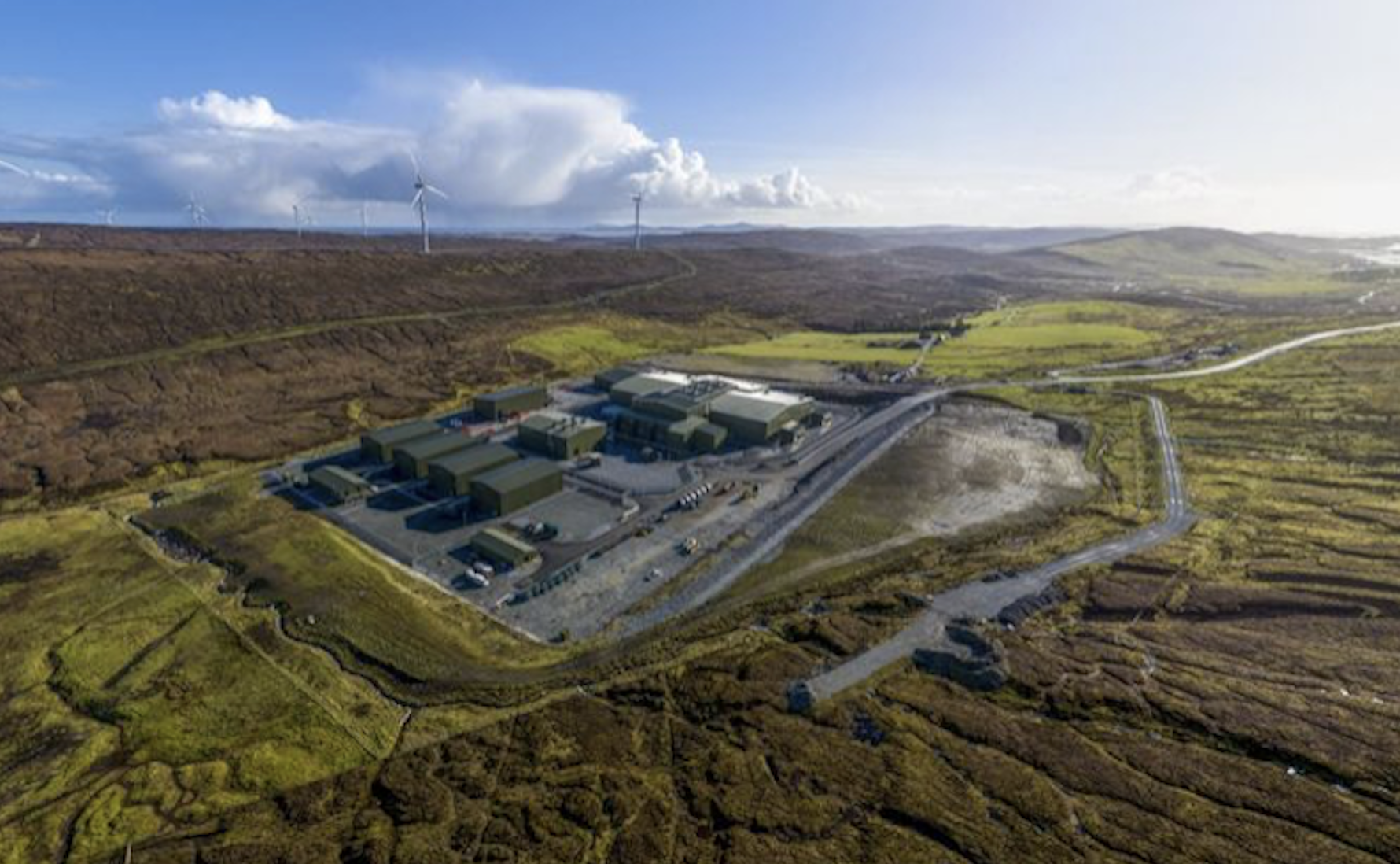
The Kergord converter station is part of a project taking electricity from Shetland to mainland Scotland (Image: SSEN Transmission)
Transmitting electricity large distances from remote wind farms requires alternating current to be converted to direct current and then back again when it’s fed into the distribution network. High-voltage converter stations do this job.
The technology is designed, supplied and installed by original equipment manufacturers (OEMs). They will usually also design and construct the buildings that house converters, along with their associated earthworks, drainage systems, communication links and environmental enhancements.
The problem is that only a few such OEMs exist. The large number of high-voltage transmission projects in progress around the world is stretching not only them but the whole supply chain.
One of the UK’s three grid operators, Scottish & Southern Electricity Networks, is disaggregating civil engineering from equipment supply to mitigate this problem, freeing OEMs up to focus on their specialisms. In 2024, it awarded Mott MacDonald an eight-year framework agreement to develop an employer’s civil design (ECD) for future converter stations.
The ECD is a standardised design that applies offsite and modular techniques to optimise the construction process, while enabling Scottish & Southern Electricity Networks to contract with the manufacturer to do simpler, repeatable work.
Its building and site model substantially reduces front-end engineering and detailed design requirements, while unlocking construction efficiencies that should result in the faster, less resource-intensive delivery of converter stations.