

E.ON and Hover trial urban microgrids
E.ON UK and US company Hover Energy have announced plans to develop and deploy a series of advanced, smart microgrid projects in urban environments.
The UK's built environment has significant green energy potential, particularly from rooftop solar, which is projected to provide an additional 9-10GW of Britain’s electricity needs by 2030.
Dallas-based Hover Energy develops technologies that combine rooftop wind and solar power sources with advanced energy management to create resilient, self-sustaining power systems that can reduce carbon footprints and energy costs.
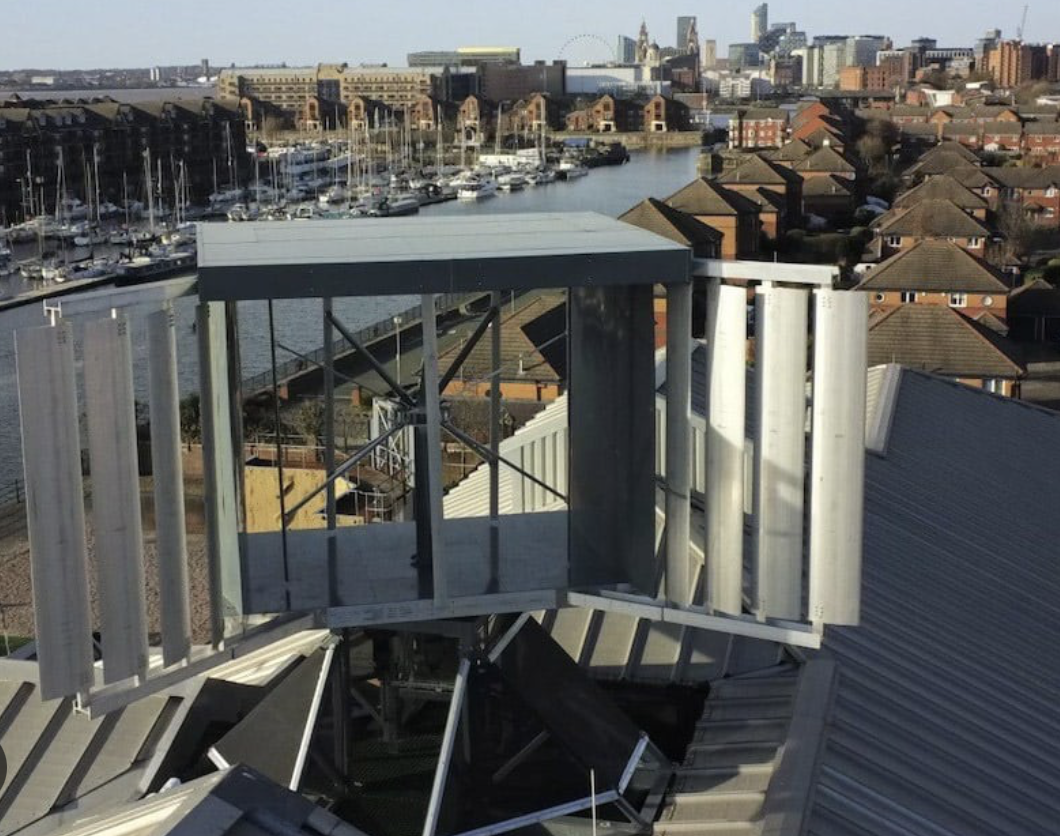
Hover’s core product is the Wind-Powered Microgrid, a system that integrates multiple renewable energy sources to create an independent power supply. Their approach aims to make microgrids the primary source of energy, shifting away from centralised electricity grids, thereby bypassing the need for transmission lines and large infrastructure.
“We’re on a mission to turn the built environment into a power source, one site at a time,” Hover CEO & founder Chris Griffin explained.
“Most of the current renewables approaches worldwide are focused on massive scale. While that is admirable, the greatest resilience and security is clearly created through distributed generation models. Our collaboration with E.ON is designed to prove the concept of a future-focused power system so we can draw a map towards modernising our distributed grid system.”

Chris Griffin
The partnership will explore ways to modernise parts of the local electricity network, making use of digital communications, renewable energy sources on community buildings, and smart meter data that can balance supply and demand on local energy networks in real time.
The collaboration will initially focus on the London Borough of Newham, building on other projects in the area, such as E.ON’s solar sharing community energy pilot at St Luke’s Church of England Voluntary Aided (CEVA) Primary School in Canning Town which is used by the school, and any surplus allotted to nearby homes at a discount – lowering bills for both. Instead of a physical connection between the school and homes, half-hourly metering data will ‘match’ consumption and production, applying a credit to customers’ bills for the solar energy they use.
Together with Lendlease, E.ON are also developing the pioneering low carbon energy network to serve the 6,500 new homes and business properties at Silvertown in east London’s Royal Docks. Silvertown will become a 5th generation heat and cooling network based on the concept of shared energy that could save approximately 4,000 tonnes of CO2 a year.

The Silvertown district heating system has been named one of three E.ON projects across Europe highlighted as a leading example of business sustainability initiatives.at COP30
The primary energy source for Silvertown will be a central energy centre which will utilise heat pumps and chillers to provide heating and cooling efficiently across the network. All buildings within the development will be interconnected, enabling them to communicate and share energy to balance their overall energy needs before any new energy inputs are needed.
Unlike traditional systems, E.ON’s innovative initiative moves low-grade energy across a shared loop, with each building using its own local heat pump to deliver the temperature it needs and has the potential to reduce overall energy consumption by 70% - ideal for mixed-use, low-carbon neighbourhoods.

Phil McDermott
Phil McDermott, cities partnership lead at E.ON, said: “One of the benefits of a microgrid is you’ve got solar when the sun is shining, roof-mounted wind turbines for power for when the wind is blowing, and batteries to store excess power ready for when it’s needed. Working with Hover we have an opportunity to create a ‘living lab’ where renewable energy, smart grids, and storage solutions work together seamlessly – combining the best elements of a range of technologies into a local energy system that can create a new energy-independent way of life”.