

London’s first community energy summit brought together the Deputy Mayor, key practitioners and stakeholders to help accelerate delivery of community-led energy projects across the city, putting power back into Londoners hands.
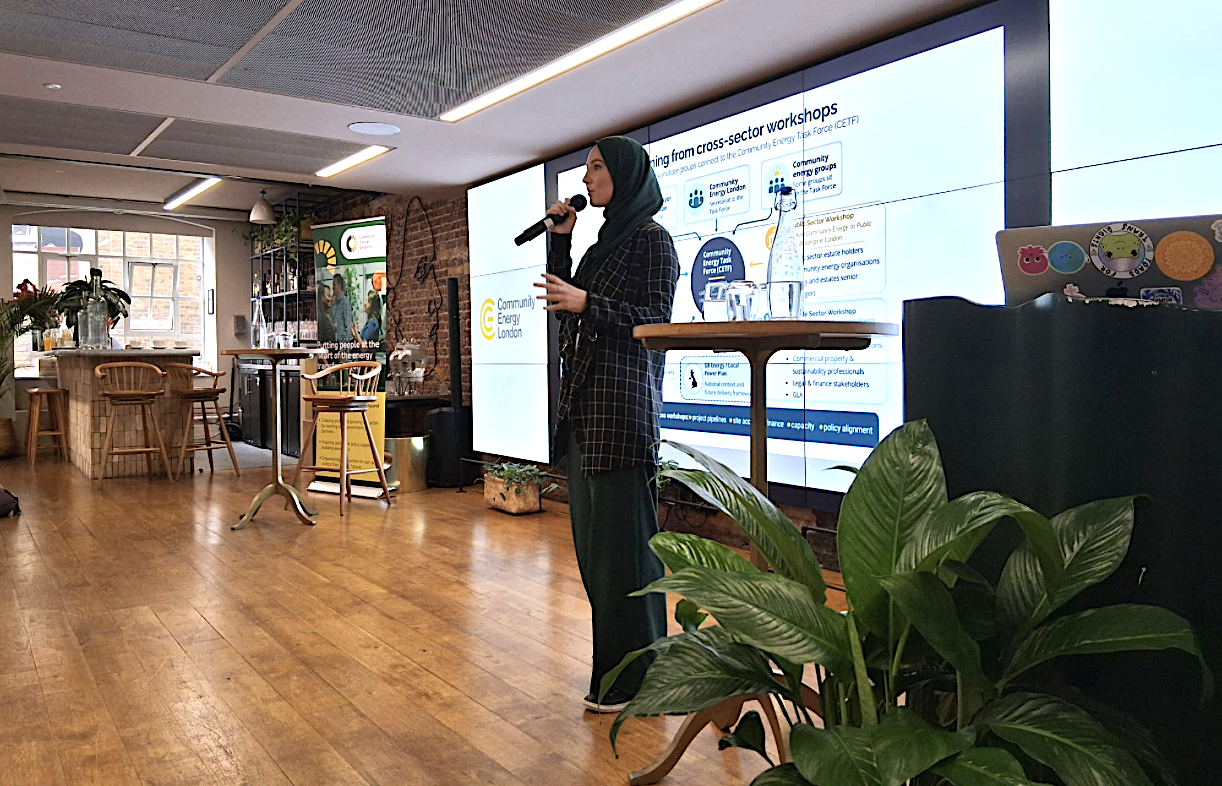
CEL Chair, Nadia Smith, presents the findings of the CETF report. Image: CEL
The Summit followed a month after the Prime Minister’s announcement of £20m new GB Energy funding to kick start a community power revolution.
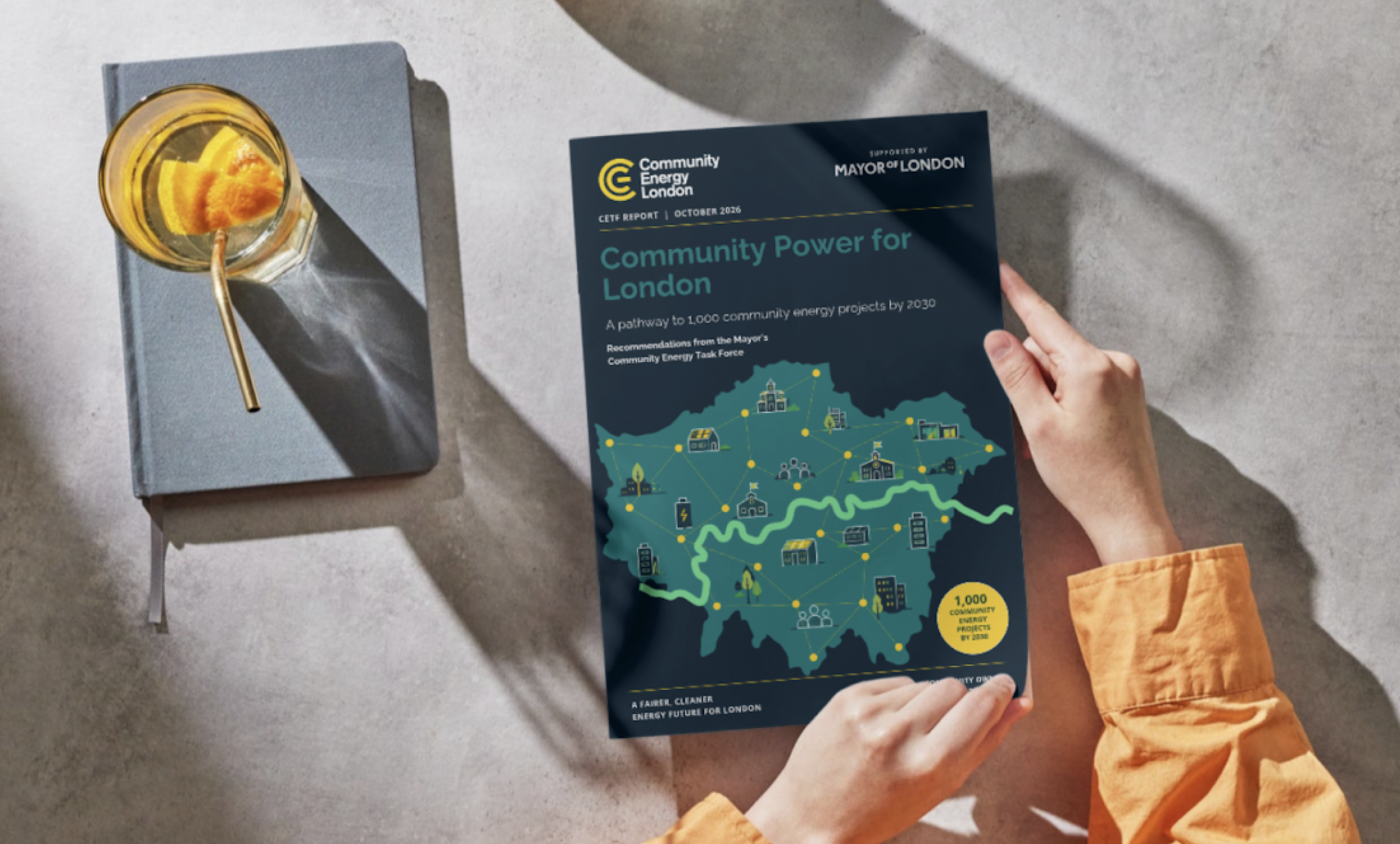
Supported by the Mayor of London, the gathering provided the platform to launch the Community Energy Task Force (CETF) report Community Power for London: A Pathway to 1,000 community energy projects by 2030, developed with cross-sector groups, which set out key recommendations to unlock the next phase of growth for community energy in the capital.
Following the recent launch by Great British Energy of major new funding for the sector, and amidst a context of global energy price rises, London’s first Community Energy Summit set out key recommendations to unlock the next phase of growth for community energy in the city, and brought together sector voices, to discuss opportunities to accelerate delivery.
The event showcased the findings of the Community Energy Task Force (CETF), a joint Mayor of London and Community Energy London (CEL) initiative.
The report sets out the key recommendations of the Task Force to support 1,000 projects across the capital by 2030, which can be summarised under the five following themes:
1. Developing large-scale community energy pipelines by bringing together projects across schools, housing estates, public buildings, faith sites and commercial rooftops, creating investable portfolios that can attract the funding needed to deliver projects at scale.
2. Unlocking more public and commercial sites for community energy by increasing confidence in the sector and demonstrating its wider social value, including local reinvestment, community engagement and support for tackling fuel poverty.
3. Mobilising new sources of finance for community-led projects by combining community investment with public funding, affordable loans and institutional capital, helping scale delivery while retaining local ownership and benefits.
4. Strengthening the capacity of community energy organisations through sustained investment in skills, staffing and technical support, enabling groups to create green jobs, build expertise and deliver more projects across London.
5. Embedding community ownership in local energy delivery by making it a core part of procurement, planning and investment decisions, ensuring the transition to net zero delivers long-term economic, environmental and social benefits for local communities.
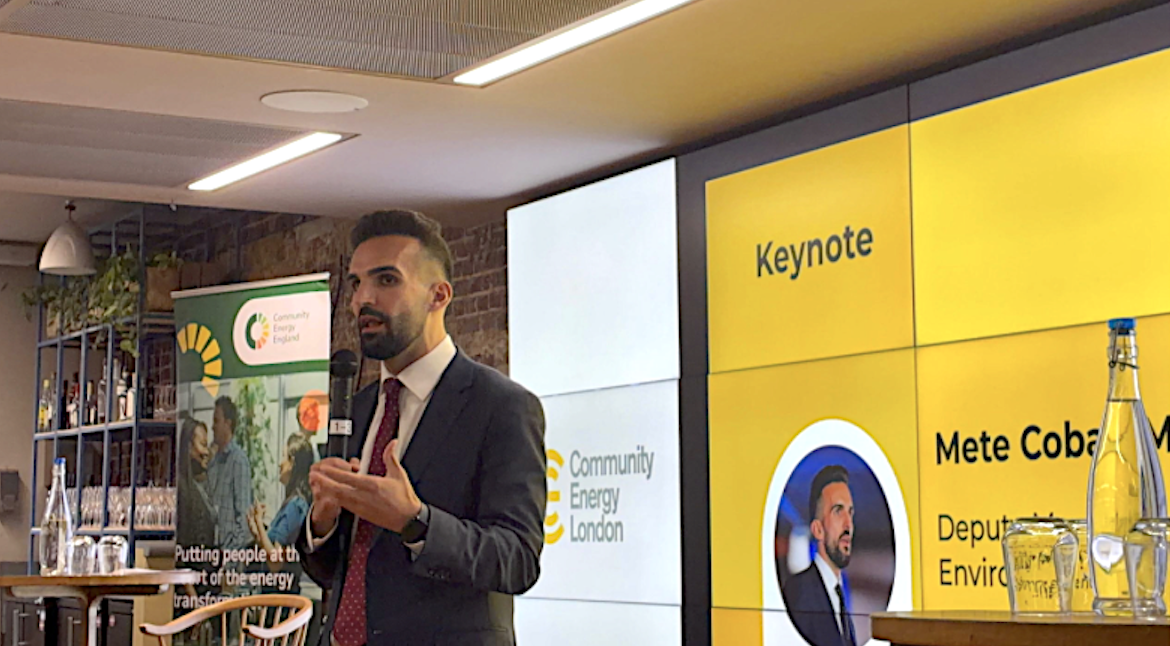
Mete Coban MBE. Image CEL
Through the London Community Energy Fund (LCEF), City Hall has provided more than £2.5 million in support to community-led projects across the capital, helping communities develop renewable energy and carbon reduction projects.
London’s Deputy Mayor for Environment and Energy, Mete Coban MBE, said:
“Community energy puts power directly into the hands of Londoners – helping to cut bills, tackle fuel poverty and deliver lasting benefits for local communities, as part of a fair and inclusive transition to net zero.
Last year I established the Community Energy Task Force and I’m proud to be here launching the findings today in an important step forward in growing community energy across our capital. The report shows what can be achieved when communities, local government, public sector institutions, businesses and investors come together behind a shared vision for a fairer, greener London.
The launch of Great British Energy’s Local Power Plan alongside the Mayor’s London Community Energy Fund presents a major opportunity to build on this momentum.
By working together and making the most of new national and local investment, we can help unlock more community-led energy projects, put more power into the hands of Londoners, and ensure the benefits of the clean energy transition are felt in every corner of our city.”

Syed Ahmed,and members of the Community Energy London team. Image: CEL
Syed Ahmed, CEO of Community Energy London said:
“The London Community Energy Summit comes at a time when the value of providing communities with the tools to help drive the energy revolution in their neighbourhoods is finally being recognised. Alongside new funding from GB Energy, the recommendations from the Task Force report published today will help create new opportunities to help achieve our goal of 1,000 projects by 2030.”
Community energy groups have worked with the Mayor and boroughs for over a decade helping deliver over 300 London projects to date.
This includes a 0.5MW solar installation, owned by South East London Community Energy (SELCE), made up of over 1,200 panels at the University of Greenwich.
The installation is set to save 500 tonnes of CO2 over its lifetime.
The London Community Energy Fund (LCEF) launched its ninth funding round earlier this year, making available just over £1.3 million to support community-led renewable energy and energy efficiency projects across London