

Floating solar offers innovative solution to land capacity challenges
Across the UK, the push to expand solar power is running into a simple problem. We are running out of land.
The House of Commons Library briefing from May 2025 made the point clearly, if the UK is going to meet its 2030 solar targets, we need a lot more rooftop and ground‑mount solar, but suitable land is becoming harder to secure.
Farmers are under pressure to protect food production, rural communities are more vocal about landscape impact and planning teams are trying to balance renewable energy with local concerns. Ground‑mount solar still has a major role to play, but it cannot carry the full load on its own, the question is no longer whether we should build more solar, but where we can put it.
Floating solar is becoming one of the most practical answers.
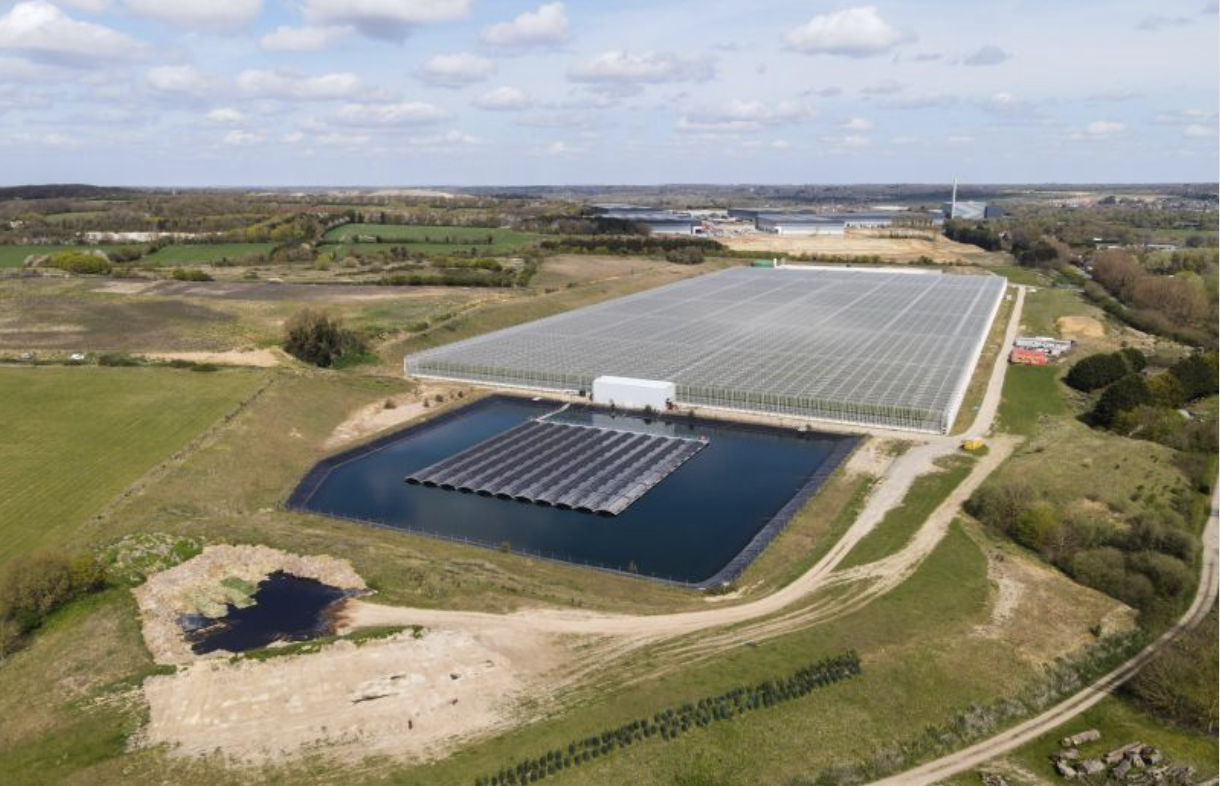
East Green Energy’s Suffolk Fresh project, near Ipswich
The UK needs a huge amount of new solar capacity, yet the space to build it is limited, agricultural land is already stretched. Many sites that look suitable on paper become difficult once planning, food production and community impact are taken into account.
This is why the industry is looking for alternatives that do not rely on large areas of open land.
Reservoirs, treatment lagoons and other managed water bodies offer a solution that avoids many of the usual barriers. These sites are already in use, already monitored and already part of operational facilities. Installing solar on water means no loss of farmland, no competition with housing and far fewer objections during planning.
For operators, the benefits are clear:
· No loss of productive land
· Lower visual impact compared with ground‑mount systems
· Fewer planning challenges
· Higher panel efficiency thanks to natural cooling from the water
· A scalable option for energy‑intensive sites with limited land
As land availability tightens, floating solar is shifting from an interesting idea to a practical and necessary part of the UK’s energy mix.
East Green Energy’s Suffolk Fresh project is one of the largest floating solar installations in the UK. It is a strong example of how water assets can support significant renewable generation without affecting food production.
The site needed a large amount of clean power to run a major hydroponic glasshouse. The surrounding land was already dedicated to growing food, so a ground‑mount system would have reduced the farm’s footprint, floating solar provided a way to deliver the energy without touching a single acre of farmland.
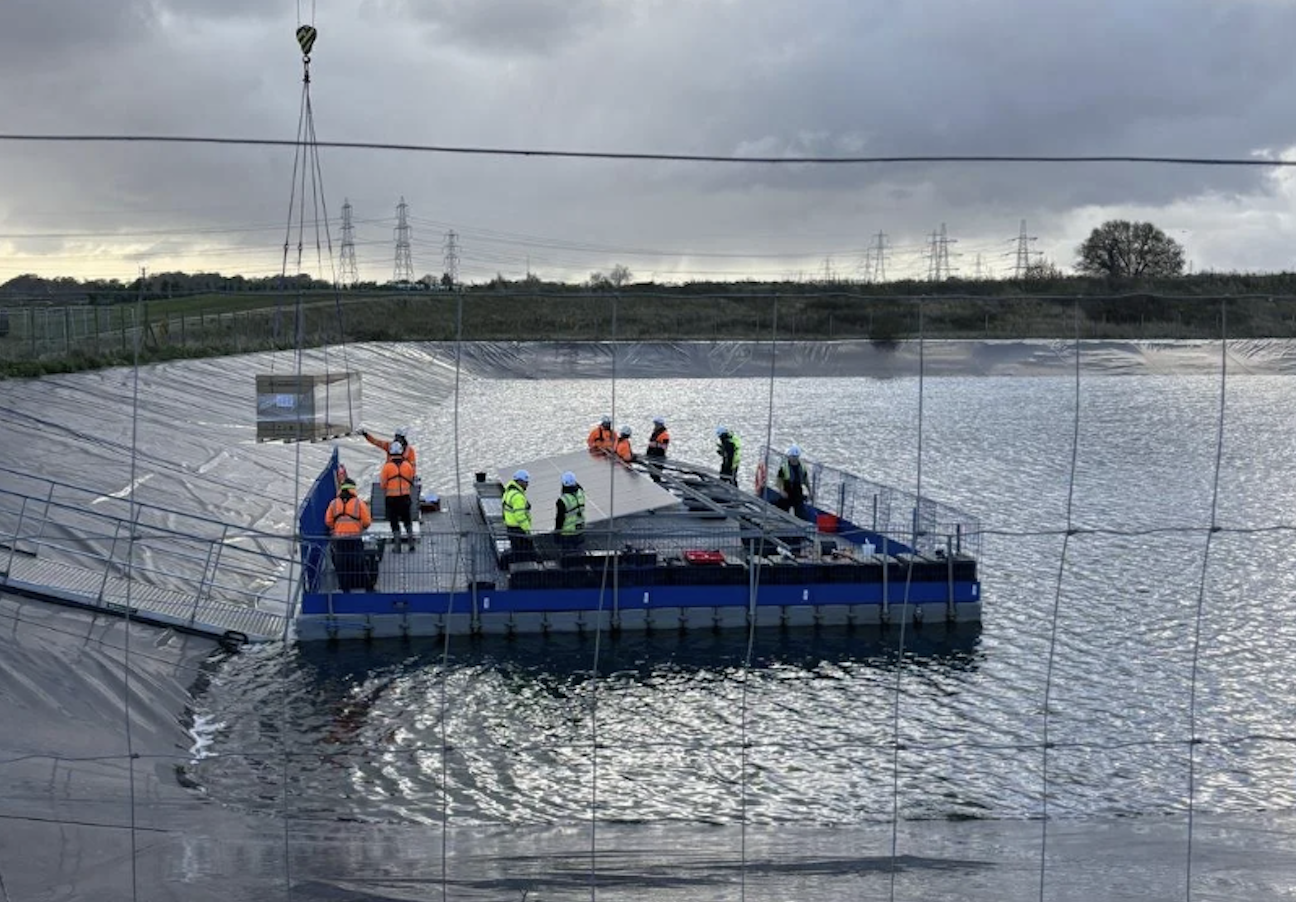
This project requires the installation of approximately 1,250 solar panels over 3,500 square metres of water. Once complete, it will supply around 20% of the energy required to power Suffolk Fresh’s pioneering nursery, the UK’s first semi-closed hydroponic glasshouse, covering 8.4 hectares (the size of 11 football pitches).
Jack Gawthrop, commercial manager at East Green Energy, said: "This is a hugely exciting step forward in combining clean energy with innovative agriculture.
"Floating solar offers a smart, space-efficient solution, and we’re proud to be working with National Pontoon and Suffolk Fresh on delivering a project that champions both sustainability and local innovation."

Jack Gawthrop
The array sits on the reservoir, designed and engineered for the site’s specific conditions, anchoring, access and environmental considerations were built into the project from the start. The result is a system that delivers reliable renewable power while allowing the farm to continue operating at full capacity.
It is a model that can be repeated across the UK, especially for utilities, agriculture, food production and other sectors where land is limited.
The UK’s solar targets are ambitious, and they should be, but meeting them will require a wider mix of solutions. Floating solar will not replace ground‑mount or rooftop systems, but it fills a crucial gap where land is scarce or contested.
As more businesses look for rapid, resilient on‑site generation, floating solar offers a route that is both scalable and sensitive to the UK’s land pressures.
With projects like Suffolk Fresh already proving what can be achieved, floating solar is no longer a future concept. It is here, it works and it can help the UK move faster towards a secure, low‑carbon future.
Many reservoirs are in or near existing population centres and the barrages can also improve water quality by reducing evaporation and impeding algae growth.
But fears have been raised that the planning system could stymie efforts to increase its use.
Currently water utilities enjoy Permitted Development Rights (PDR) that allow them to install floating solar without planning permission on reservoirs - but only if the electricity generated is for their own use on site.
If the panels are to be connected to the National Grid commercially they must go through the full planning system, which takes time and money and could see them rejected.
The report, produced for solar operator Bluefield by CBI Economics, suggests that with government support floating solar could cover 30 per cent of the UK's 65,000 hectares of water utility and other man-made water bodies - like disused quarries - by the middle of the century.
It noted: 'Reservoirs are often located near population centres and planned AI growth zones, creating opportunities to co‑locate clean generation with energy‑intensive data infrastructure.'