

Grid growth powers £20m energy order book for Midlands manufacturer
PP Control & Automation (PP C&A) has secured £20m of energy-related orders as it works with engineering partners on equipment needed to support the expansion and modernisation of the UK’s electricity network.
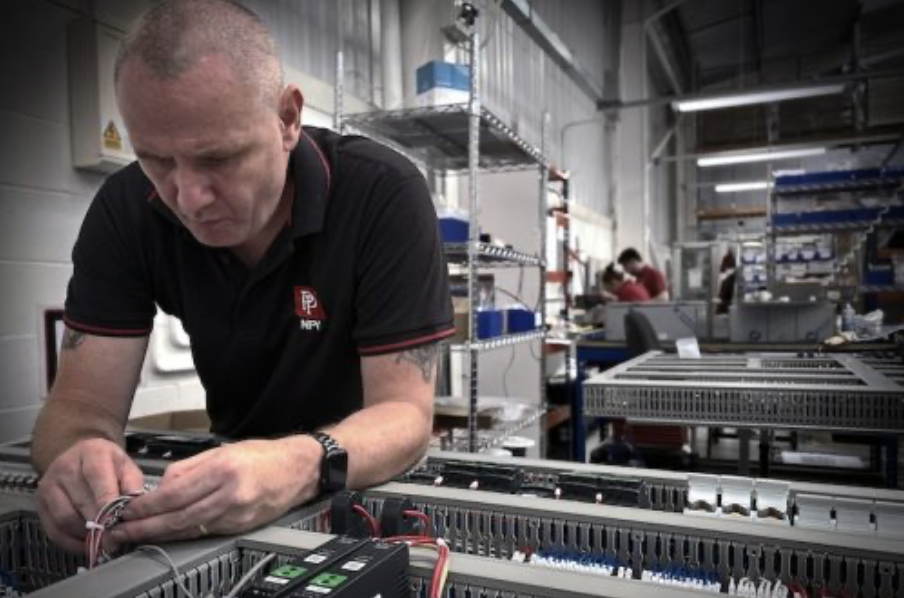
Image: PP C&A
The Cheslyn Hay-based business, which has more than 50 years of experience in control systems and electrical assemblies, is producing equipment including protection and control panels, SCADA and RTU systems, LVAC and DC battery charger panels, switchgear controls and systems for decentralised energy and storage.
The company is working with civil and structural engineering partners as demand grows across the energy sector.
Richard Spears, industrial markets specialist at PP C&A said: “Our approach is intended to reduce unnecessary handovers, improve buildability and give project teams access to scalable manufacturing capacity when internal or incumbent resources are under pressure,”
“It also allows engineering and manufacturing activities to progress in parallel, helping reduce delays without compromising the quality and compliance expected from critical infrastructure.
“The grid upgrade represents an enormous opportunity for the energy sector and the wider UK economy, but investment targets will ultimately be judged by what is successfully built and connected. That’s where we aim to come into our own and it appears the market is responding to our expertise, with £20m of energy projects currently underway at PP C&A.”
The UK electricity network is facing a major programme of investment, with more than £77bn being committed by Ofgem, National Grid, SP Energy Networks and SSEN Transmissions towards transmission infrastructure, substations and upgraded power lines.
That investment is creating challenges for the specialist supply chain, with demand for skilled workers, manufacturing space and testing capacity rising alongside the number of projects.
Grid upgrades also involve a wide range of projects running at the same time, from substations and renewable energy schemes to battery storage and industrial connections.

Richard Spears
Spears said: “Expanding permanent internal capacity may be expensive, slow and difficult to justify where project volumes fluctuate. Spreading work across multiple smaller suppliers can add interfaces, inconsistency and coordination risk.
“A more resilient model is to develop long-term relationships with manufacturing partners that can add scalable capacity around the core project team. It is this positioning that has secured PP Control & Automation a considerable share of energy sector work and it is growing.
“Importantly, this doesn’t mean outsourcing responsibility. The basis for the relationship is centred on creating a more integrated delivery structure in which design, procurement, manufacture, assembly, testing and documentation are considered together.
“Standardisation and modularisation can also play an important role. Where repeatable architectures, approved components and defined build standards can be established, project teams can reduce engineering duplication, improve consistency and make it easier to manufacture at scale.
“Protection and control may be largely hidden from public view, but it will be central to whether Britain’s grid ambitions move from an ambitious vision to operational reality.”

Image: PP C&A
PP C&A employs more than 200 people at its West Midlands facility and works as a strategic outsourcing partner for major machine builders and original equipment manufacturers.
Its services range from individual modules and assemblies through to complete machine-build production, with the company now applying that manufacturing expertise to the growing energy infrastructure market.
Contractors bidding for major government work will have to place far greater emphasis on creating jobs, raising skills and improving pay under a shake-up of Whitehall procurement rules.
From 1 January 2027, firms competing for central government contracts worth more than £5m will see social value account for 20% of bid scoring – double the current weighting.
The new Cabinet Office Social Value Model shifts the focus away from a broad range of social measures and instead rewards contractors that create quality local jobs, deliver apprenticeships, tackle skills shortages and support young people into employment.
Bidders will also score higher by offering jobs that pay above the legal minimum wage and by targeting opportunities at young people not in education, employment or training (NEETs), care leavers and people with long-term health conditions.
The changes apply to central government contracts worth more than £1m, where social value will carry a minimum 10% weighting, rising to 20% on procurements above £5m.
For major projects in key industrial sectors, departments will also set jobs and skills targets and publicly report contractors’ performance against them through annual key performance indicators.
The Government said the streamlined model would reduce bidding costs for SMEs by removing less relevant social value requirements and limiting the rules to contracts above £1m.
Cabinet Office minister Pat McFadden said the changes would ensure taxpayers’ money “creates good jobs, develops skills and backs communities across the country” while making it easier for smaller firms to compete for public contracts.
Stuart Togwell, chief executive of Kier Group, said: “This new approach recognises the powerful role procurement can play in supporting British businesses to generate positive social impact alongside economic growth.”
Andy Milner, chief executive of Amey, added: “Public investment should do more than deliver services. It should create local jobs, develop skills and open opportunities for those who need them most.”