

Iberdrola signs contract for new submarine electricity interconnector between Scotland and England
The Eastern Green Link 4 project, already approved by Ofgem and developed jointly with National Grid, will be ready in 2033 It will have a capacity of 2,000 MW and will connect Scotland to England using high-voltage direct current (HVDC) technology. Under the contract, which is worth a total of €2.3 billion, Prysmian will manufacture more than 640 kilometres of cable. Industry commentators regard this as a key infrastructure project to accelerate the electrification of the United Kingdom, strengthening the security of supply and integrating new indigenous renewable energy sources.
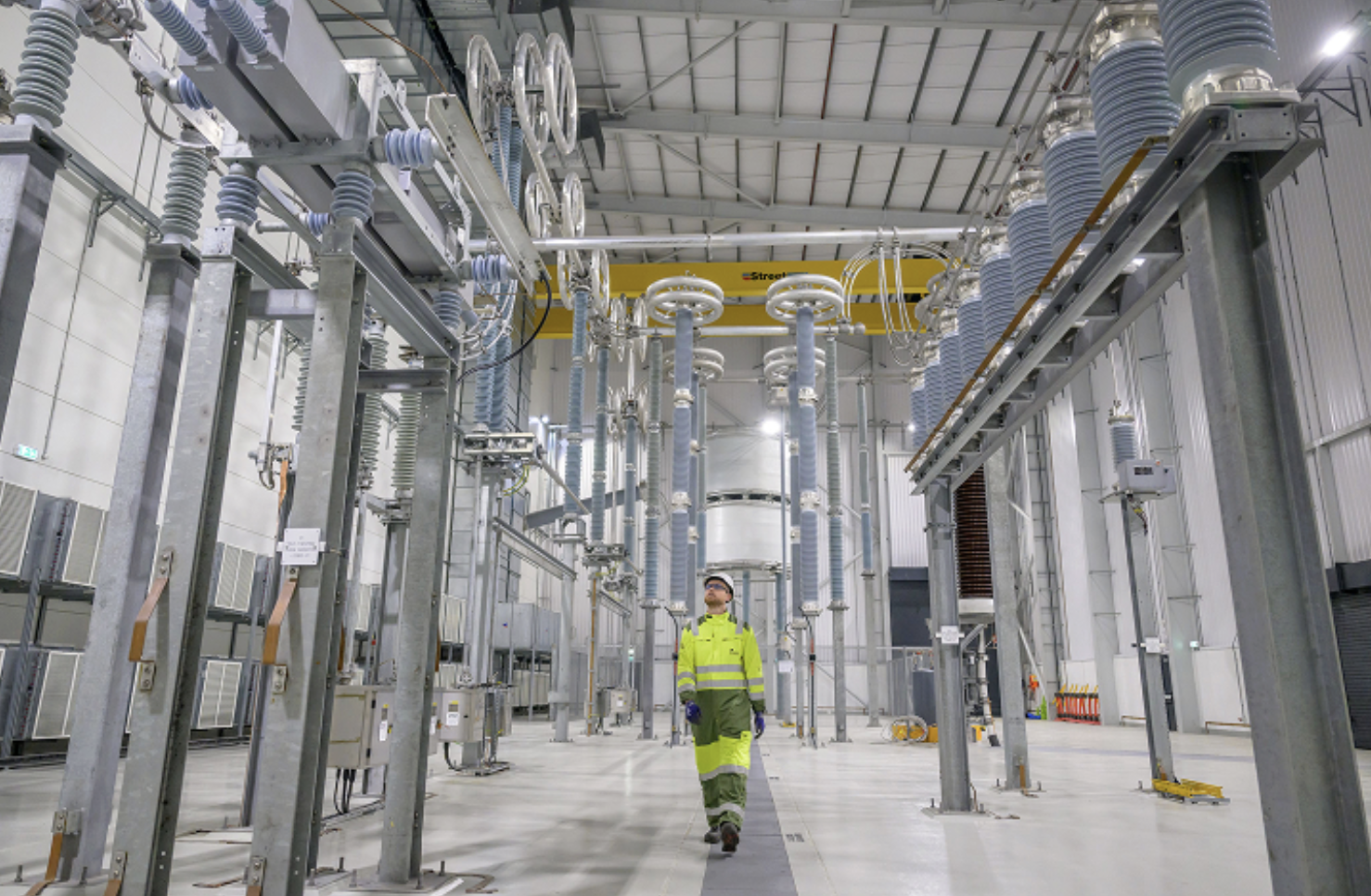
The Iberdrola Group, through its UK subsidiary, SP Energy Networks, has awarded Prysmian a contract worth €2.3 billion to manufacture the cable for the Eastern Green Link 4 submarine interconnector, a key electrical infrastructure for the future of the UK energy system.
The new link, with a capacity of 2,000 MW, will connect Fife in Scotland with Norfolk in England using high-voltage direct current (HVDC) technology. It is scheduled to come into operation in 2033 and will enable the transmission of enough renewable energy to supply more than 1.5 million homes.
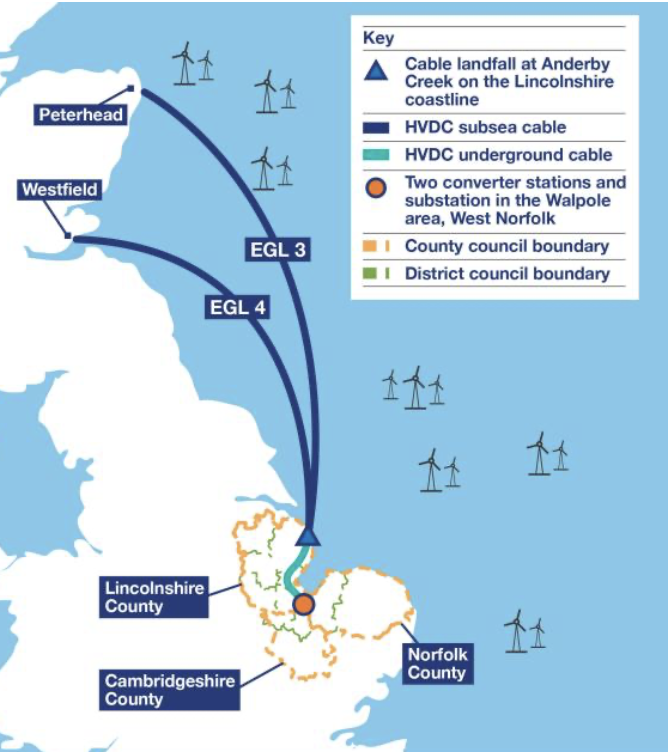
Image: National Grid
Eastern Green Link 4 will strengthen the country's ability to transfer electricity between regions, reduce constraints on electrical networks and increase security of supply. It will also facilitate the integration of new clean energy sources and support industrial development and economic growth.
Prysmian will manufacture more than 640 kilometres of cable for this project, including 530 kilometres of HVDC submarine cable and more than 116 kilometres of underground cable. This technology allows large volumes of energy to be transported over long distances with maximum efficiency, a decisive factor in advancing towards national clean energy generation targets.
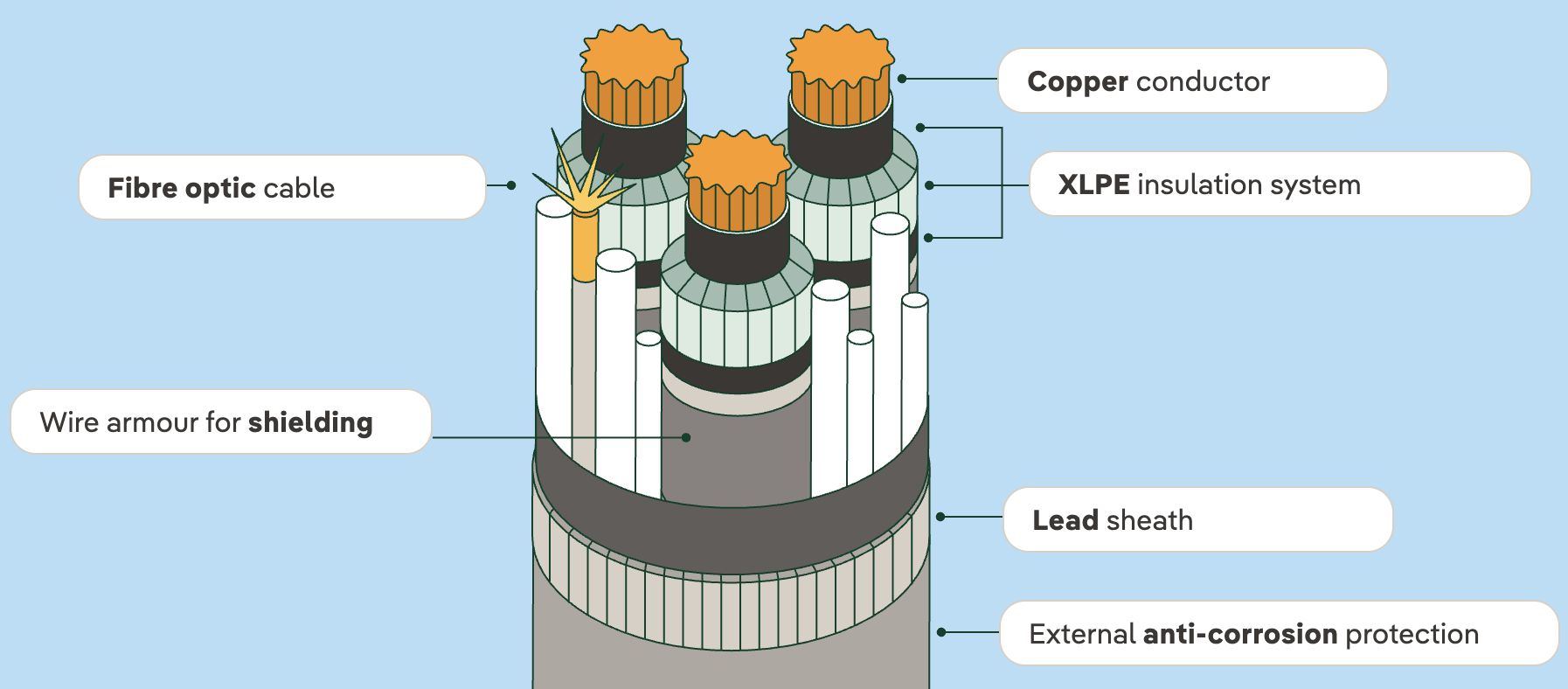
Anatomy of a three phase AC submarine power cable. Image: Iberdrola
Raul Gil, EVP Transmission at Prysmian, said: “The UK has set the standard for futureproofing its electricity connections. Utilizing the power of undersea HVDC cables to transport power between Scotland and England is a forward-thinking step – and one that many countries are now replicating. Prysmian has been entrusted to support several major HVDC links in the UK, playing a vital part in bringing clean energy to homes and businesses right across the country in a fast and cost-efficient way.”

Raul Gil
Planning applications for the project, developed by SP Energy Networks and National Grid Electricity Transmission, will be submitted in Scotland and England throughout 2026. Following approval by the Secretary of State for Energy Security and Net Zero, construction is expected to start in 2029, and the interconnector is expected to come on stream in 2033.
SP Energy Networks and National Grid are also working on Eastern Green Link 1, another 2,000 MW link whose construction began in 2025 and which will connect Torness in Scotland with Hawthorne Pit in England.
In December 2025, Ofgem authorised ScottishPower to invest around €14 billion in the modernisation and expansion of the electrical networks in central and southern Scotland.
ScottishPower will build two submarine links using HVDC technology, Eastern Green Link 1 and Eastern Green Link 4, which will connect Scotland and England via the east of the British Isles. In addition, the Western Link 2 project, still in the study phase, will connect Scotland and Wales via a submarine link to the west of the country. These actions will be rolled out until 2031 and triple the investment allocated in the previous regulatory period. With these initiatives, Iberdrola is moving forward in line with the electrification targets set by the UK government in its 'Clean Power 2030’ Plan.
The United Kingdom is one of the Iberdrola Group's strategic markets. The company plans to invest €20 billion until 2028, focusing primarily on the development and modernisation of distribution networks and renewable energy projects. In this way, the company is helping to strengthen the country's energy security and autonomy and promote a more sustainable and competitive system.