

Largest ever single investment in the UK transmission system to capitalise on Scotland’s generating capacity
Labelled as the largest ever single investment in the UK transmission system, the approximately £4.3bn Eastern Green Link 2 (EGL2) is part of a portfolio of projects that will support the country’s energy transition by providing additional capacity to transmit renewable energy produced in Scottish wind farms, hydro stations and solar farms.
Constructing the 505km electricity superhighway between Scotland and England contains hidden challenges – but it also offers valuable lessons for future projects engaged in enhancing the UK’s clean energy transmission capacity.
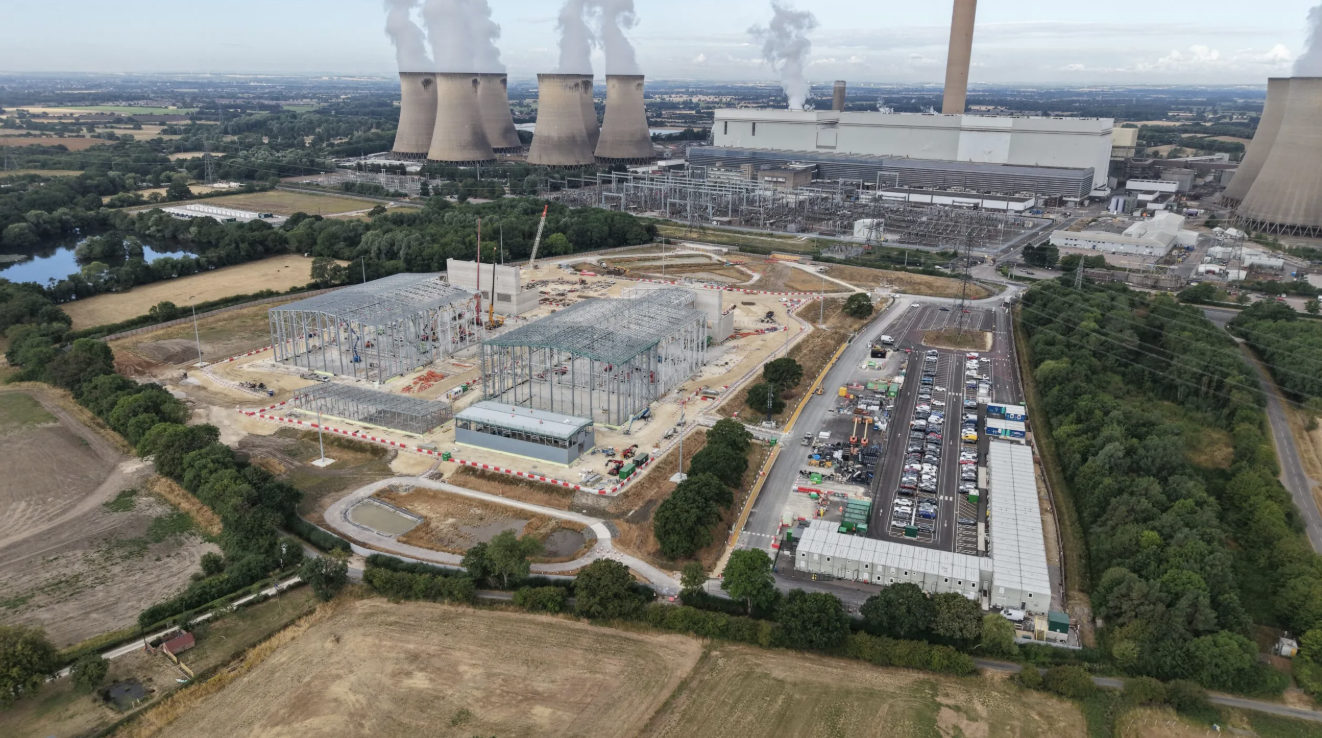
A 68km onshore cable will be installed to connect the Wren HallI converter station to the southernmost location of the subsea cable in Bridlington Image: NCE
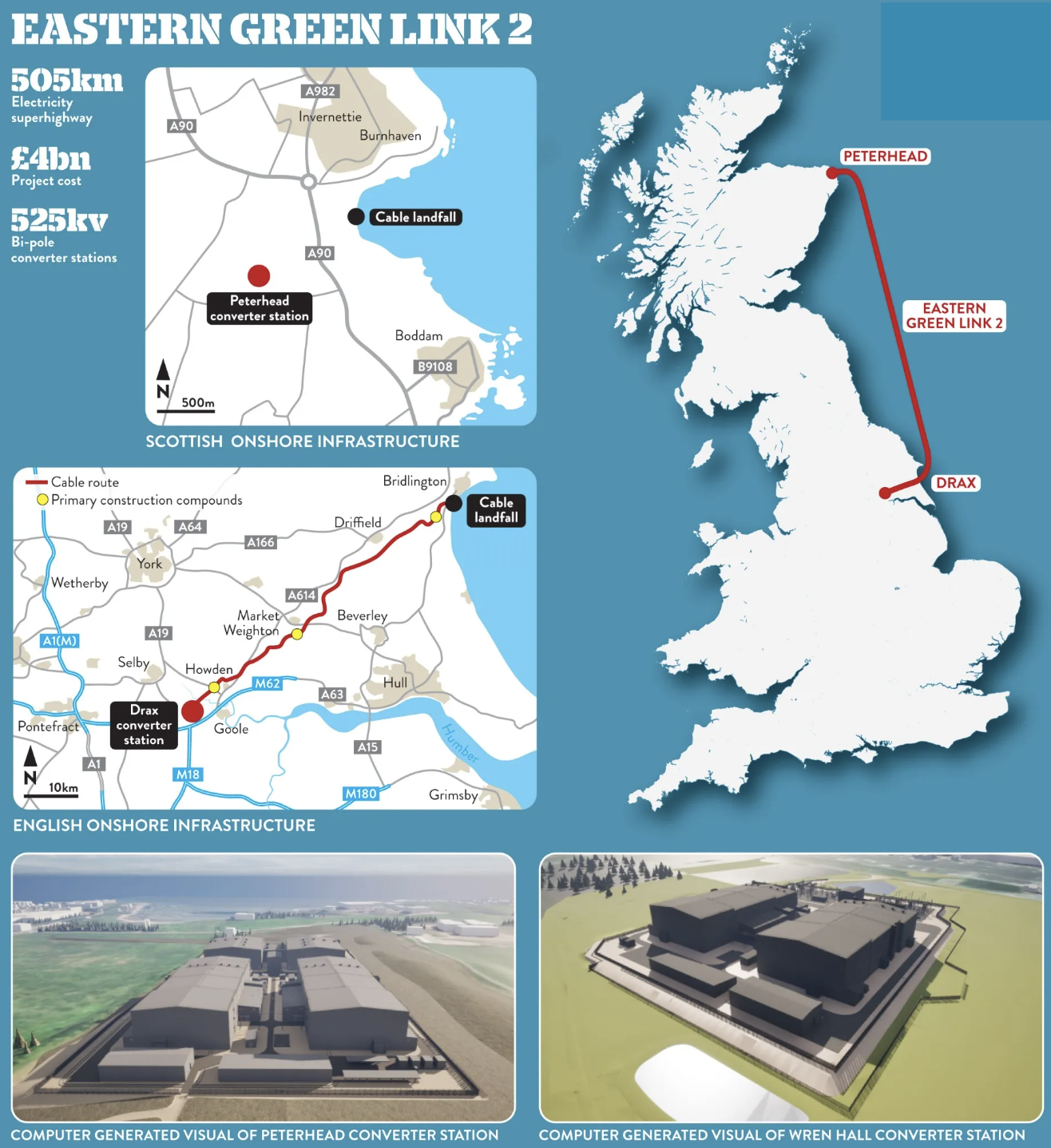
EGL2 will connect Peterhead on the northeast coast of Scotland to Wren Hall in Drax, North Yorkshire, using 505km of 2GW, high voltage direct current (HVDC) cable – with 436km of the cable to be laid offshore and the remainder onshore.
It is being delivered by the first joint venture between National Grid Electricity Transmission – which owns and manages the electricity transmission network in England and Wales – and SSEN Transmission, which does the same in the North of Scotland.
“EGL2 is strengthening and growing the network. It will carry enough electricity to power two million homes,” says EGL2 project director Fionán Doonan SSEN’s EGL2 Project Director.
“In the north, we’ve got a lot of offshore wind power and at the moment there is a constraint on that power because there isn’t enough grid infrastructure to take it to centres of demand across Great Britain.”
The project also involves the construction of a 525kV bi-pole converter station at each end of the “electrical superhighway”, which will convert electricity between alternating current (AC) and direct current (DC).
The electricity generated by renewable sources will be sent through the AC network to the Peterhead Converter Station, where it will be converted to DC and transmitted via the HVDC subsea and onshore cables. Once it reaches the converter station at Wren Hall, it will be converted back to AC and introduced into the wider transmission network.
“The great thing about HVDC is that there are minimal electrical transmission losses, between Peterhead and Drax compared to an equivalent AC connection. So for long distance routes, a DC connection is particularly efficient,” says Doonan.
The bi-pole technology provides advantages compared to more traditional converter stations.
Gunilla Cedergren, portfolio director of Hitachi Energy – which provides the technology – says: “It offers better redundancy and resilience. If there is an issue on one side of the converter stations, they can still operate at 50% capacity.” She adds that with the growth of energy demand, it is important for the network to be less susceptible to supply issues.
The project started in earnest in 2019, alongside EGL1.
“We carried out high level development work, identifying efficient options to provide additional capacity at appropriate points on the electricity network in Scotland and England,” says EGL2 deputy project director Neil Lyons, who works for National Grid.
“Through system design studies, we identified Peterhead and Drax connection points for the EGL2 project. We then carried out more detailed system studies and a significant amount of development studies of potential cable routes and locations for the converter stations.”
In terms of the subsea cable routes, the project team initially carried out a desktop study to gather information on the geological conditions of the seabed.
“There is significant existing information about the North Sea,” says Lyons. “After the initial desktop exercise, we carried out a constraint mapping exercise, looking at areas we need to avoid and identifying existing services that we need to cross. We used that to identify a broad route corridor that was then surveyed in 2020 and used that to finesse the final route selection.
“This work was carried out simultaneously with the EGL1 project, driving efficiencies and ensuring we used the same information at the same time. Survey data which identified a route corridor was used to inform the overall cable contract, tender specification and marine cable contract.”
In early 2024, a consortium between BAM UK & Ireland and Hitachi Energy was awarded the contract to carry out engineering works and supply technology for the two converter stations, with Mott MacDonald providing design services.
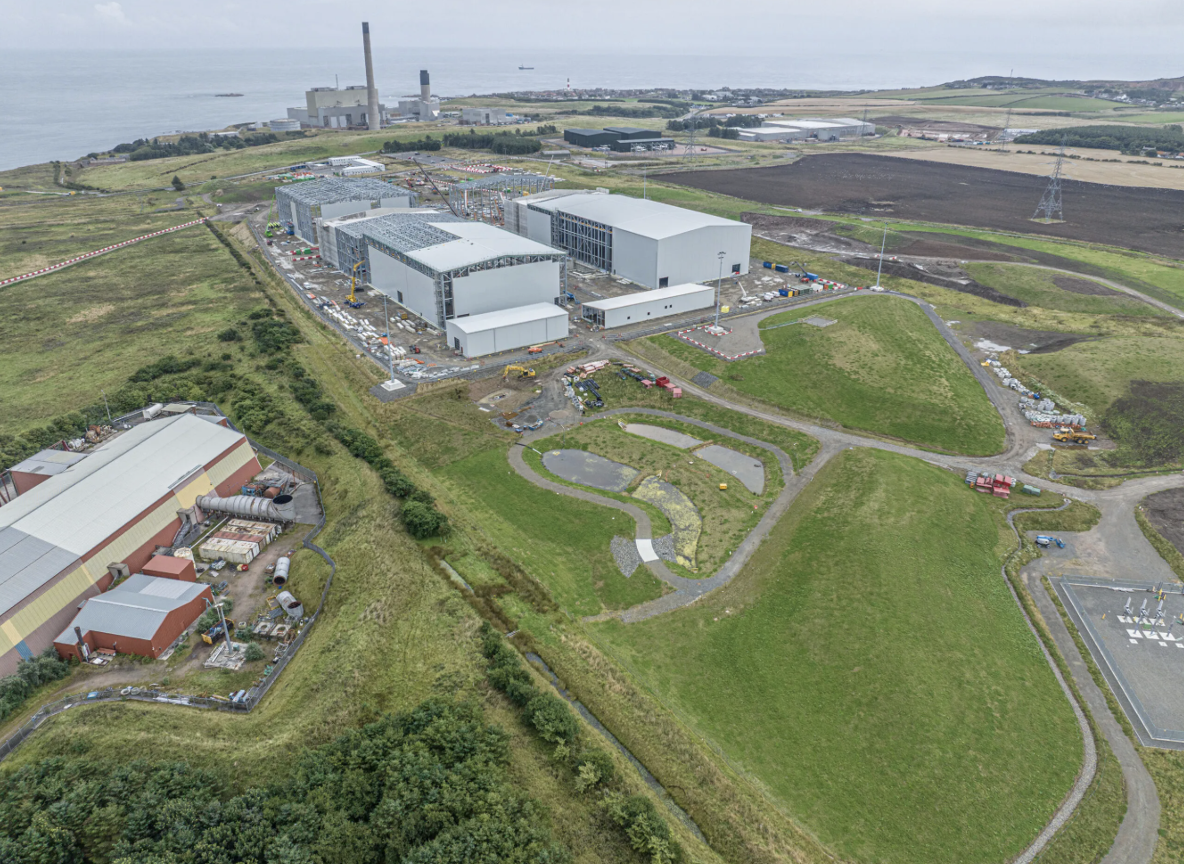
With the Peterhead converter station being near the coast, only 1km of onshore cables needs to be installed to Sandford Bay where the subsea cable's journey will commence Image: NCE
The Prysmian Group was appointed to design, manufacture and install the HVDC cable, while Balfour Beatty was subcontracted by Prysmian to install the onshore underground cable.
With the Peterhead converter station being near the coast, only 1km of onshore cables needs to be installed to Sandford Bay where the subsea cable’s journey will commence.
In England, 68km of onshore cable will be installed between Bridlington in Yorkshire – the southernmost location of the subsea cable – and the Wren Hall converter station site.
Slipform construction of both transformer buildings has been completed and the works for the rest of the year focus on structural steel and cladding for the buildings which are up to 28m high
BAM project director Simon McCormick says the contractor has been working with SSEN Transmission on the construction of substations for over a decade. On this project, it is responsible for the buildings and surrounding infrastructure, as well as the installation of the specialist HVDC equipment.
“These are very complex projects from a design perspective; from our side of electrical design but also civil design,” says Cedergren.
Hitachi Energy has offered the technology in other projects before, for example the Dogger Bank Wind Farm, however Cedergren says each project is unique because of the grid connections as well as client requirements.
“We don’t take off-the-shelf solutions and that is why it takes a long time to really ensure that we comply with the specifications. We carry out studies to make sure we understand what the network around it looks like.”
Carrying out construction works while design is still not finalised is challenging, with McCormick highlighting the need for collaboration between the teams to ensure that construction works can be carried out in a timely manner.
“The Hitachi Energy design is evolving, and we have to evolve the civils design with that. We’ve got to make judgments along the way as to how mature the Hitachi Energy design is and build flexibility into the civils design to match that,” he says.
“It’s all about the collaboration and understanding where the other party is at, how far they have progressed and therefore being able to act quickly based on that information.”
Cedergren says there have been no major changes to the design so far “which shows how well we have identified the critical interfaces and how we are also managing risk together. Such changes would have taken time and added to the cost”.
BAM’s team was mobilised on the two sites in September 2024, with earthworks carried out until April 2025. “The earthworks had to be really well thought through in terms of water run-off and coping with that, especially during the winter,” McCormick says.
“Peterhead was a conventional cut and fill. Wren Hall is in a flood plain, so the first thing we had to do was to lift ourselves out of that floodplain. We created a 4m-high platform that will provide the base for the converter station and remove any risk of future flooding.”
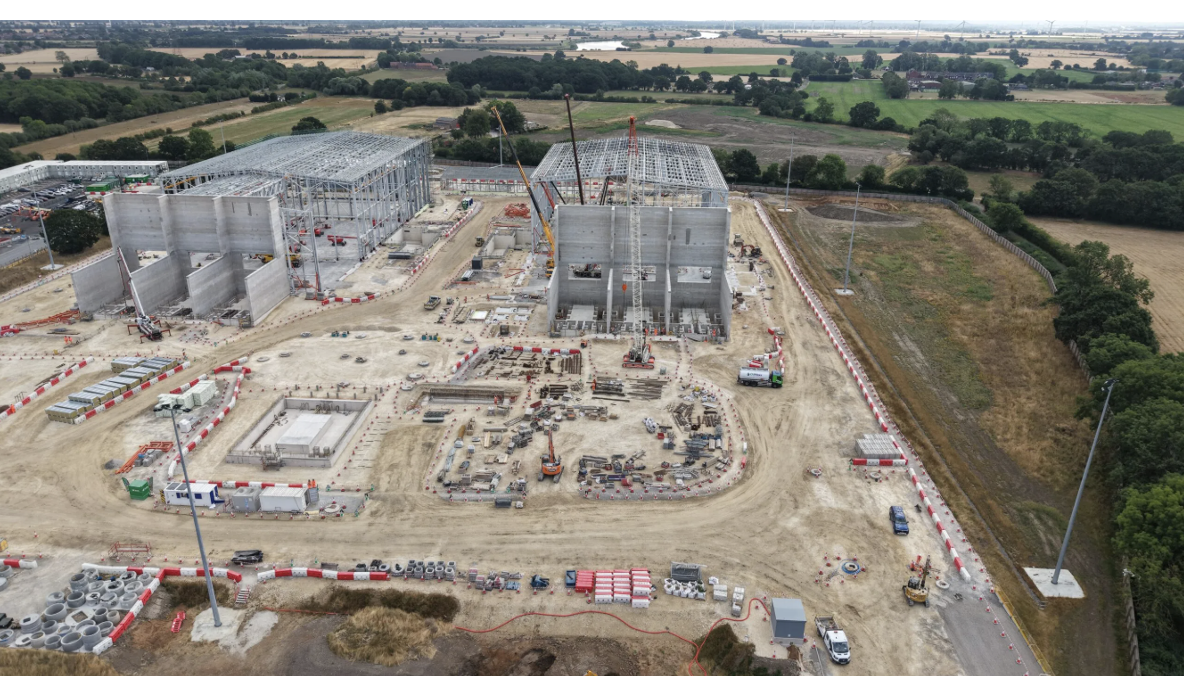
Slipform construction of both transformer buildings has been completed and the works for the rest of the year focus on structural steel and cladding for the buildings which are up to 28m high Image: NCE
Slipform construction of both transformer buildings has been completed. “A lot of planning went into it,” says McCormick. “At one point we were running up to 100 people on each shift for this element of the works. Getting these in the air was a really good start to 2026.”
The works for the rest of the year focus on structural steel and cladding for the buildings, which are up to 28m high. “We are hoping to be in a position by the second quarter of 2027 to welcome the first of Hitachi Energy’s equipment,” McCormick adds.
As to the main challenges of the project, he says: “It’s the sheer scale of it, the logistics of getting the resources and the supply chain there on time. The other challenge is keeping the whole construction programme moving when we are trying to tie in with our consortium partners to make sure our build is going to suit Hitachi Energy’s design along the way.”
With the Peterhead converter station being near the coast, only 1km of onshore cables needs to be installed to Sandford Bay where the subsea cable’s journey will commence
More surveys were carried out over the years to verify the desktop study’s results of the marine cable route and refine it. In addition to Unexploded Ordnance surveys, further surveys were commissioned to gather more detail about the seabed, for example the existence of boulder fields.
Doonan says: “We do geotechnical surveys at the bottom of the ocean as well to determine the integrity of the ground. We will trench the cable into the seabed, circa 1.2m deep.”
Doonan believes that the installation of the offshore cable in 2028 will be one of the project’s most challenging works. “Working in the North Sea through the winter of 27/28 will be a challenge but one we are preparing for.”
The project team is currently finalising the horizontal directional drill in Sandford Bay near the Peterhead Converter Station, which will extend 1.2km into the North Sea.
In preparation for the drilling, sheet piling was carried out to allow the entry pit to be excavated, and two steel casings were installed.
Once completed, the process will be repeated in Bridlington.
On the English side of the project, there will also be a number of small horizontal drills to take the cable under roads, canals and railways.
A 68km onshore cable will be installed to connect Wren Hall converter station to the southernmost location of the subsea cable in Bridlington.
EGL2 is expected to be operational in 2029. EGL1 – a joint venture project being delivered by National Grid and Scottish Power – is a 196km electricity link that will run from the Torness area in East Lothian to Hawthorn Pit in County Durham and is also currently in construction with more Green Link projects programmed.

From left : Ricky Saez, Niklas Persson and Matt Barton.
For the first time, GRID-UK is proud to be welcoming three of the most senior and influential executives associated with delivering Britain’s Green Link family of vital strategic clean energy infrastructure - Ricky Saez, Projects & Programmes Director at SSEN, Niklas Persson, CEO - Grid Integration, Hitachi Energy and Matt Barton, HVDC Portfolio Director at Scottish Power Energy Networks. Meet them in separate sessions at the inaugural event at Excel, London on 1 & 2 October. Admission is free subject to advanced registration. Don’t miss out! Sign up here.