

Renewed focus and leadership on reform to address ‘hundreds’ of projects facing grid connection delays
The National Energy System Operator (NESO) has made some senior appointments to drive connections reform to address bottlenecks in the system.
Almost two-thirds of the projects that are meant to connect to Britain’s energy grid by 2027 risk being delayed, including renewable energy generation projects.
Last year, NESO revealed that more than 300GW of capacity had been removed from the connections queue, primarily consisting of projects which were not ready for delivery or those not aligned to national targets.
But observers predict regulator Ofgem will keep pushing for their progress to be kept on track.
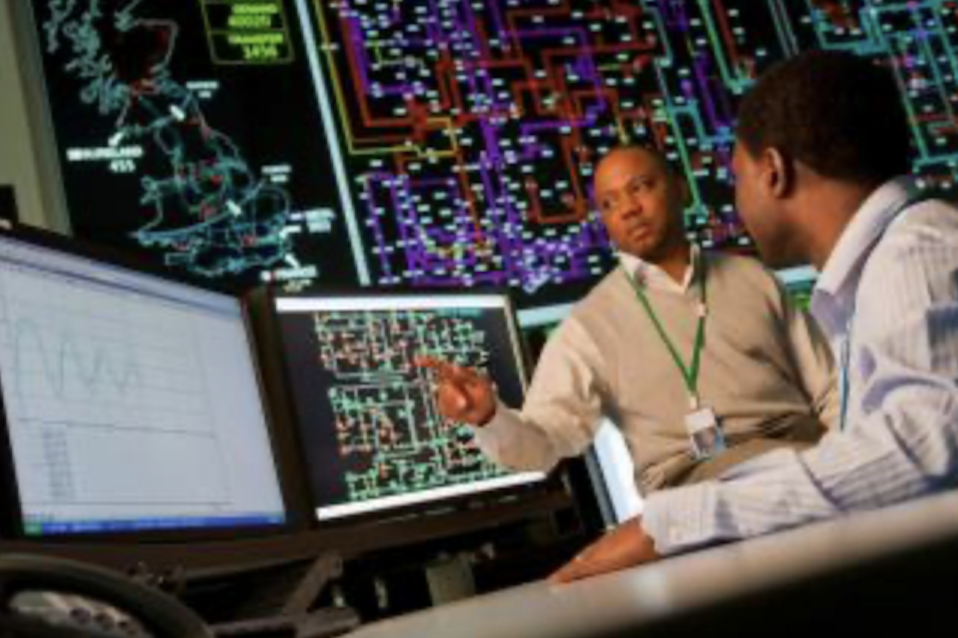
Image: NESO
The queue for demand connections to the transmission network has been swamped with applications, growing by 460% in the 6 months to June 2025. Speculative applications have been inflating the pipeline, delaying connections for strategically important projects.
Some commentators referred to these as ‘zombie projects’ or ‘queue blockers’.
This has contributed to waits of up to 15 years for some projects to connect to the grid.
To address this, the government is adding extra impetus, consulting on additional measures to tackle speculative applications, addressing the oversubscribed queue, and accelerating viable projects that will benefit Britain.
This includes data centres and AI Growth Zones, EV charging hubs and electrified industrial sites to revitalise Britain’s industrial heartlands.
The outcome will support the government’s clean energy superpower mission and maintain energy security by consistently tackling backlogs in the queue, while unblocking projects that are vital to innovation, economic growth and decarbonisation.
As well as prioritising connections for key projects, the reforms aim to create a fairer, more efficient system by:
· strengthening the conditions for joining and remaining in the queue, to tackle speculative applications. Ofgem will shortly be consulting on its preferred conditions, which could include increasing the financial requirements for developers in the queue, such as deposits or fees which would be payable if key milestones are not met
· enabling government to publish a list of strategically important projects including AI Growth Zones, which will be at the front of the queue as capacity is freed up or created
· moving to a strategically aligned process for data centre connections, so the government can deliver on its AI ambitions while balancing the needs of the energy system. For example, prioritising connections for facilities that are close to parts of the grid with high capacity, reducing the need for unnecessary new infrastructure
The government is also delivering the Connections Accelerator Service, an Industrial Strategy commitment which is supporting key projects, from data centres and manufacturers to prisons and hospitals, to secure a faster connection – with further updates expected later this year.

Eleanor Warburton
Eleanor Warburton, Ofgem Director for Energy System Design and Development said:
“There must be bold action to deal with the growing bottleneck in demand projects connecting to the grid. Ofgem is consulting on tough reforms to block or remove unviable, stalled or speculative projects from the queue - and these are important further steps from government in prioritising and fast-tracking those projects which will drive growth, jobs and innovation”.

Matt Magill (left) and Colm Murphy
Leadership on connections reform at NESO will be shared by Matt Magill, returning to his role as Director of Engineering & Customer Solutions and Colm Murphy.
Over the past nine months, Matt has led the connections reform team on an interim basis, through the transformation of the previous connections queue into Great Britain’s new delivery pipeline.
Colm Murphy will take up the new role of Director of Connections on a permanent basis. Colm brings over a decade of experience in the energy sector, having overseen the major transformation project that established NESO, as well as the programme to deliver new balancing systems into the Electricity National Control Centre.
The move follows NESO’s notification to regulator Ofgem that it may not meet its connection obligations for 210 energy projects out of a total 340 awarded ‘protected’ status under the Gate 2 energy project provisions.
Image: National Grid
Gate 2 projects are intended to connect by 2027.
NESO have said the delays were predominantly network-related or related to developer-side delays, with 75 projects delayed solely due to developer issues.
Ofgem stated that if existing connection dates are not met, transmission owners (TOs) and NESO must offer ‘their best view of the most ambitious date possible’, as it would not be ‘practical, efficient or in consumers’ or developers’ interests’ to continue with unachievable connection agreements.
The Gate 2 grid reform process was created to speed up grid connections for renewable energy projects.
Priority, the reforms meant, will now be given to projects that contribute to the UK government’s Clean Power 2030 target.
Under these reforms, protected projects would keep contracted connection dates in either 2026 or 2027 as part of the process created to prioritise those projects already ready for grid access.
Following publication of the reform process, some critics have argued that grid infrastructure expansion would be required to accompany new project development to ensure the process would succeed.
In response to NESO’s notice, Ofgem stated:
“We are both frustrated and disappointed that it is not possible for TOs and NESO to meet existing connection dates and points of connection for all projects qualifying for this Protection, particularly given the widely recognised importance of ambitious and reliable connection dates.
“At this time, no relief from NESO/TO obligations in relation to the connection offers for these affected Protected Projects will be granted.”