

Solar Roadmap transforming commercial and domestic applications
The UK government’s announcement of the Solar Roadmap last year has signalled a decisive turning point for the nation’s clean energy ambitions, forecasting the creation of up to 35,000 new skilled jobs in the sector.
The strategy set out to significantly expand commercial solar energy deployment, with a strong emphasis on maximising the solar PV potential of rooftops nationwide, and set an ambitious target: of boosting solar capacity from today’s 18GW to 45–47GW by 2030.
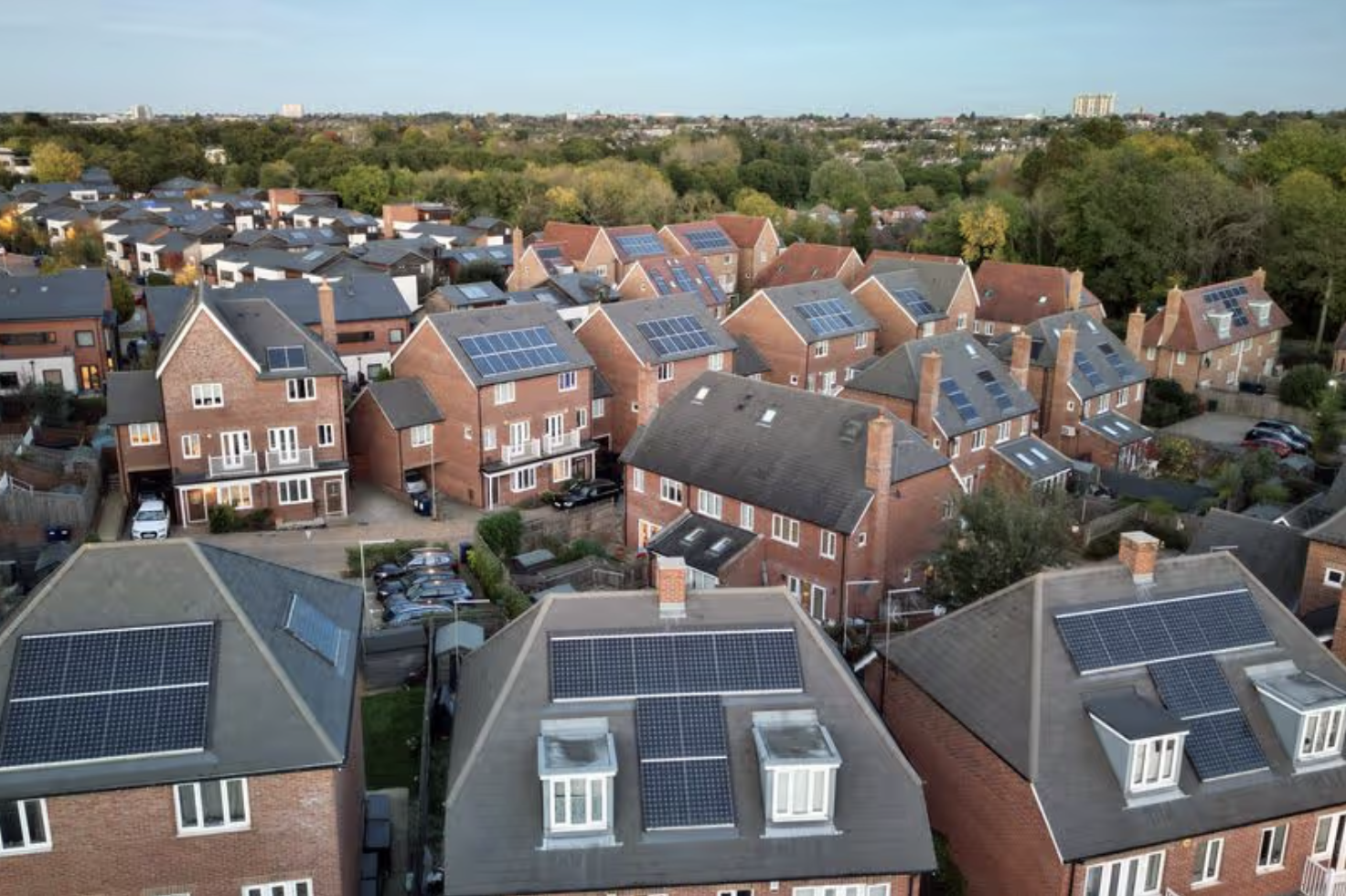
At the heart of this expansion is the adoption of rooftop solar in the UK.
For businesses, this means: lower energy costs, improved sustainability and economic growth.
The government’s own figures show rooftop solar systems can cut household bills by £500 annually. For companies using bespoke commercial solar energy systems, the potential savings are even greater.
Commercial rooftops represent one of the UK’s most underused assets for energy generation. Installing rooftop solar systems allows businesses to produce their own renewable electricity, immediately reducing reliance on the grid and insulating themselves from market volatility.
Although conventional silicon-based panel manufacturing is concentrated in China, the roadmap says there is scope to grow the production of transformers, inverters, switchgear, supporting bracketry, battery storage, and cabling in the UK, and one British business has already spotted an opportunity
Neil Spann, CEO of Durham-based Power Roll, said that to fulfil the ambition set out in the roadmap of tripling solar deployment in the UK, solutions for the one-in-four commercial rooftops that cannot support traditional solar PV panels will be needed.

Neil Spann
According to Spann, the solution is a new thin film product researched and developed by his company using lightweight perovskite technology.
The company's commercial approach is described as a “dual strategy,” manufacturing products in the United Kingdom and licensing the technology internationally to drive growth.
“With Power Roll now in the pilot-scale manufacturing phase and beginning to generate early-stage licensing revenues, we are optimistic about our contribution to global CO₂ reduction targets and improved energy access,” said Spann.
With the Solar Roadmap bringing incentives, streamlined planning, and improved grid access, installing solar panels has never been more accessible. According to energy analysts, the benefits go beyond reduced electricity bills and include Increased property value enhanced appeal to tenants and investors and a positive impact on sustainability credentials
The Energy Saving Trust’s Policy Manager, Abigail Ward said: “With solar being a central part of Clean Power by 2030 and reducing the UK’s reliance on fossils fuels, the roadmap is a welcome outline of the steps the UK Government will take to roll out solar at scale.

Abigail Ward
“As the roadmap rightly points out, households installing solar panels will feel the benefit of notably lower energy bills. We know that households are interested in solar. Our recent research also revealed that more than half of people in England would consider installing solar panels if money were no object”.
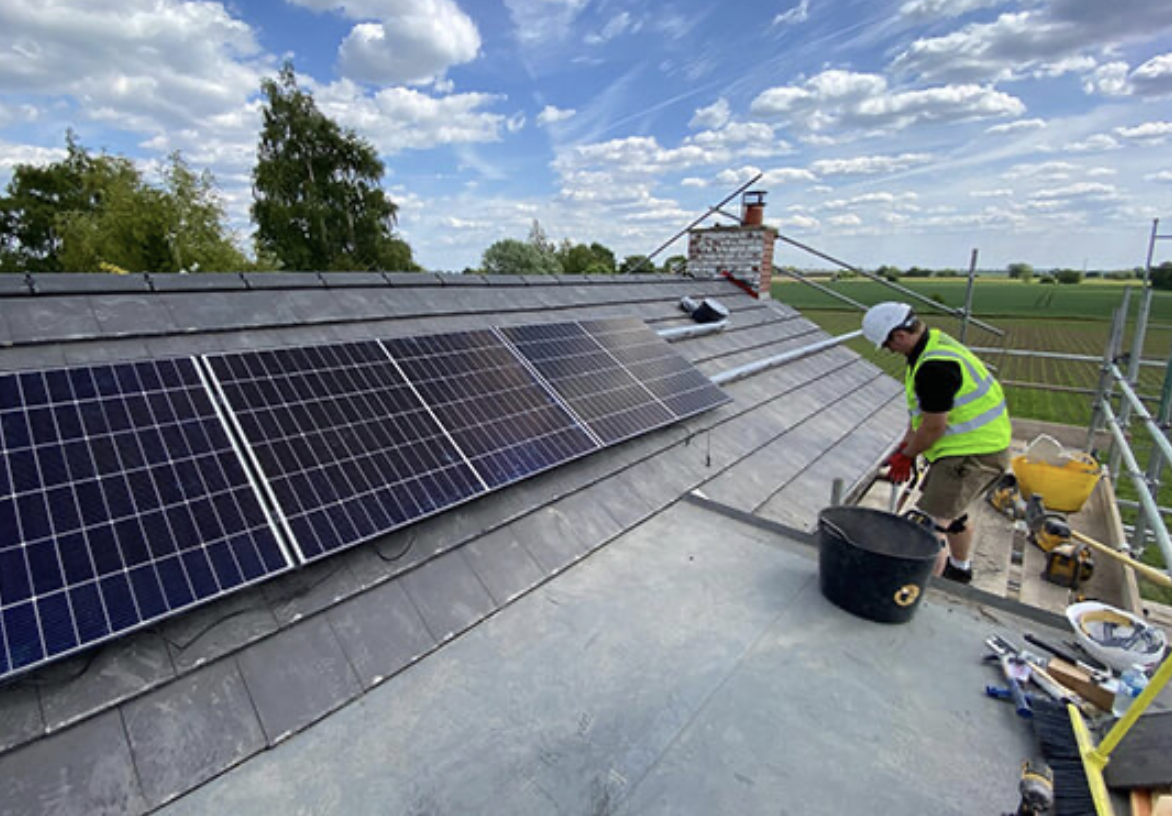
Adopting rooftop solar energy systems is more than just an environmental choice. It is a long-term strategic investment that can transform how a business manages energy costs, sustainability commitments, and operational resilience. Achieving maximum return on that investment requires more than simply installing panels. Businesses need to plan carefully, anticipate potential hurdles, and take a proactive approach to overcoming them.
Connecting to the grid can be a complex and time-consuming process - coordinating with the DNO, securing permissions, and navigating local distribution regulations, which minimises risk and avoids costly delays.
Selecting the right funding model is essential. Businesses are increasingly opting for power purchase agreements (PPA’s), asset finance, or lease models to avoid large upfront costs.
The Solar Roadmap 2025 and the wider Net Zero agenda have paved the way for innovations such as on-site EV charging, battery storage, and participation in local energy markets. Businesses investing now can expect to be well-positioned to benefit from these future opportunities, thereby enhancing their resilience and unlocking new revenue streams.
By anticipating challenges and working with a specialist advisor who actively manages them, businesses can join and thrive in the UK’s rooftop solar revolution.
Case studies illustrate the point. For example, The Verwood Hub is a vibrant centre for live music, theatre, art, conferences, workshops and community projects, run as part of the Dorset Council Partnership. As a busy, multi-purpose venue, the hub faces significant ongoing energy demands to power its diverse range of cultural and community activities.
In line with Dorset Council’s commitment to sustainability, the authority sought a renewable energy solution that would not only reduce operating costs but also demonstrate environmental leadership to the local community.
To meet these goals, Good Energy designed and installed a 67 kWp SolarEdge optimised solar PV system featuring 194 JA solar panels. The installation harnesses the latest solar technology to deliver optimum performance and reliability.
Generating an estimated 63,508 kWh annually, the system is set to provide annual electricity savings of around £7,990, while reducing the hub’s carbon emissions by approximately 35 tonnes each year.
Working with Sustain Commercial Solar, Custodian Capital, a commercial property asset manager, was able to secure a forecasted £4,792,281 in lifetime savings and reduce the energy costs of their Cambridge tenant, ThermoFisher, by 15%
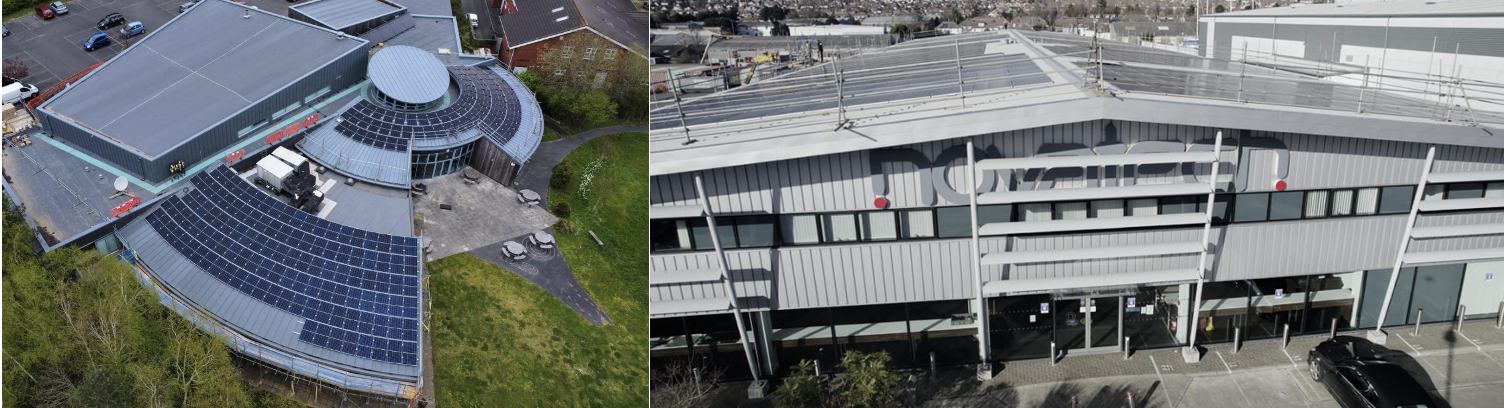
The Verwood Hub (left) and Novatech, Portsmouth
Infinity Energy’s 404.3 kWp solar installation with 825 x 490W mono-crystalline solar panels and 3 x 110 kW inverters is projected to achieve an exceptional financial return, with substantial electricity bill savings of over £50,000 per year and an incredible profit after 20 years of over £1,000,000 for client Novatech at their Portsmouth showroom.