

The landmark project removing pylons from views across Eryri National Park
A once-in-a-generation scheme is underway to improve the landscape around the Dwyryd Estuary in Eryri by re-routing power cables underground. The existing overhead lines are a highly visible and intrusive feature in one of the UK’s most celebrated protected landscapes (formerly Snowdonia National Park).
National Grid’s flagship Eryri Visual Impact Provision (VIP) project is addressing this by constructing a 3.4km underground tunnel beneath the estuary between Minffordd and Llandecwyn, allowing the removal of 3km of overhead lines and 10 electricity pylons.

A visual representation of how a north Wales landscape will look before (left) and after pylons are removed in the next few years (Image: Network Rail)
With specialist expertise in railway tunnels, Network Rail’s asset protection team is supporting the project by working closely with National Grid and its contractor, Hochtief UK, to provide engineering assurance for works on and near the railway.
The collaboration is helping the project to "progress safely and efficiently, protecting vital rail infrastructure while minimising impacts on the railway, local communities and the national park environment through careful coordination of access arrangements, construction safety and environmental compliance."
Tunnel construction is underway with Network Rail so far supporting works where the tunnel passes beneath the railway at Minffordd and Penrhyndeudraeth.
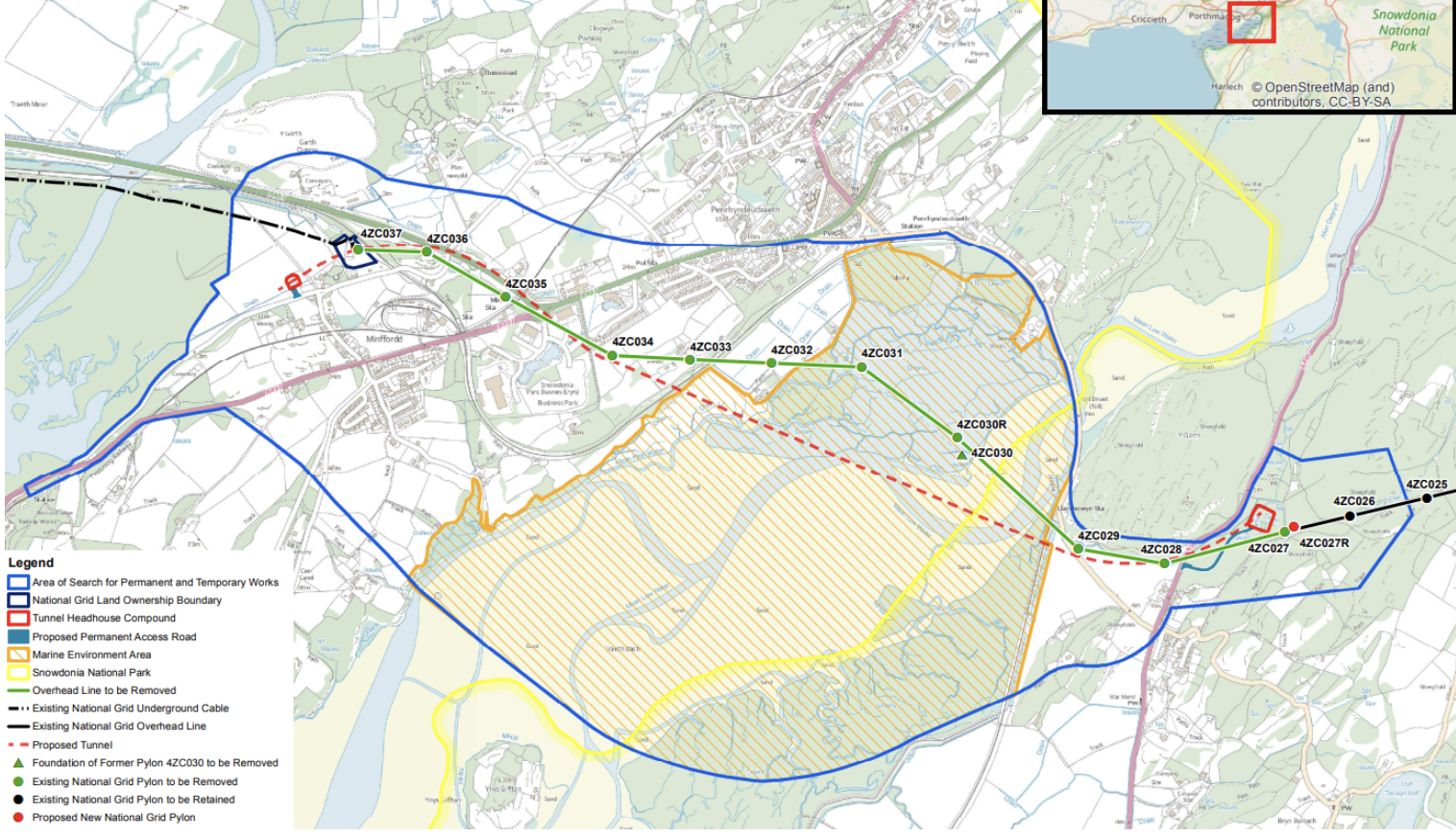
The route and pylons to be removed
In March, the asset protection team will again work alongside National Grid during further tunnelling activities at Llandecwyn.
The pylons and overhead lines are due for removal in 2029.
The section of overhead line, constructed in 1966, is part of the 400kV electricity route connecting the 400kV Pentir substation near Bangor with the former Trawsfynydd Power Station, now a 400kV substation.
The Eryri project is the only VIP scheme underway in Wales, and one of just five across the UK - alongside schemes in the Dorset National Landscape, Peak District National Park, North Wessex Downs National Landscape and the Cotswolds National Landscape.

Nick Millington
Wales and Borders route director for Network Rail, Nick Millington, said: “We’re proud to support the Visual Impact Provision project in Eryri, which aligns with our commitment to sustainability, community engagement and protecting the environment.
“Wales and Borders is more than a railway - and the contribution of our specialist engineering teams to this complex work shows how we work with partners to deliver lasting benefits for our beautiful landscape, while keeping passengers and freight moving safely and reliably.”
Located close to the Cambrian Line and key community access points, the project required tight coordination between National Grid, its contractors and Network Rail to plan safe construction routes, cable delivery operations and overhead line removal - all while keeping disruption to a minimum.
The Cambrian Line remains open during the work.
Network Rail says it has also worked closely with the Eryri National Park Authority and National Grid’s environmental teams to support access planning and mitigate environmental risks.
This includes protecting sensitive habitats and to allow well-used walking routes - including the Wales Coast Path - to remain accessible throughout the works, wherever possible.
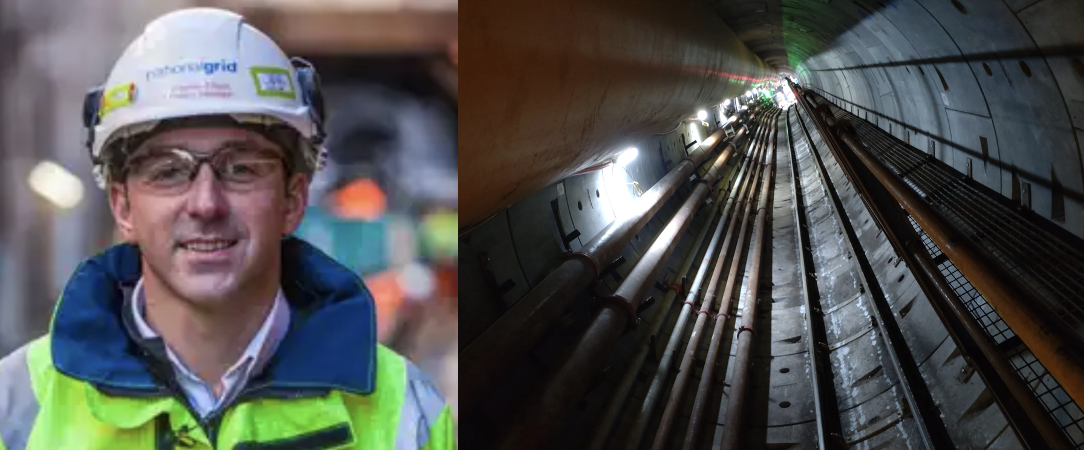
Steve Ellison and a first look at a completed section of the tunnel
Senior project manager for the Eryri VIP at National Grid, Steve Ellison, said: “We’re proud to have completed this important and delicate stage of our tunnelling journey without issue. This is testament to the close working relationship we have with Network Rail and the high level of skill and expertise within both teams.”
The tunnel boring machine (TBM) was originally going to be launched from a 15m diameter shaft. However, as the project team had a larger area to work with and based on lessons learned from previous projects, it chose a launch box excavation instead.
The geology across the area consists of mixed superficial soils, including fluvial glacial deposits, tidal flat deposits and alluvial soils, which overlay the bedrock.
The tunnel is going to be driven almost entirely through solid geology.
“The solid geology is dominated by the rocks of the Mawddach Group, consisting of rhythmically interbedded Upper Cambrian and Ordovician mudstone and siltstone meta-sediments, and they’re from the Maentwrog, Ffestiniog Flags, Dolgellau and Dol-cyn-Afon formations,” Ellison explained.