

Tidal energy is growing in popularity as companies worldwide invest in innovative clean energy solutions in the pursuit of a green transition. Unlike solar and wind energy, tidal power is highly reliable. In the past, the slow uptake of tidal power technology has made some companies wary of investing in new projects. However, several success stories in recent years have encouraged greater investment in the sector, with several projects planned for 2026.
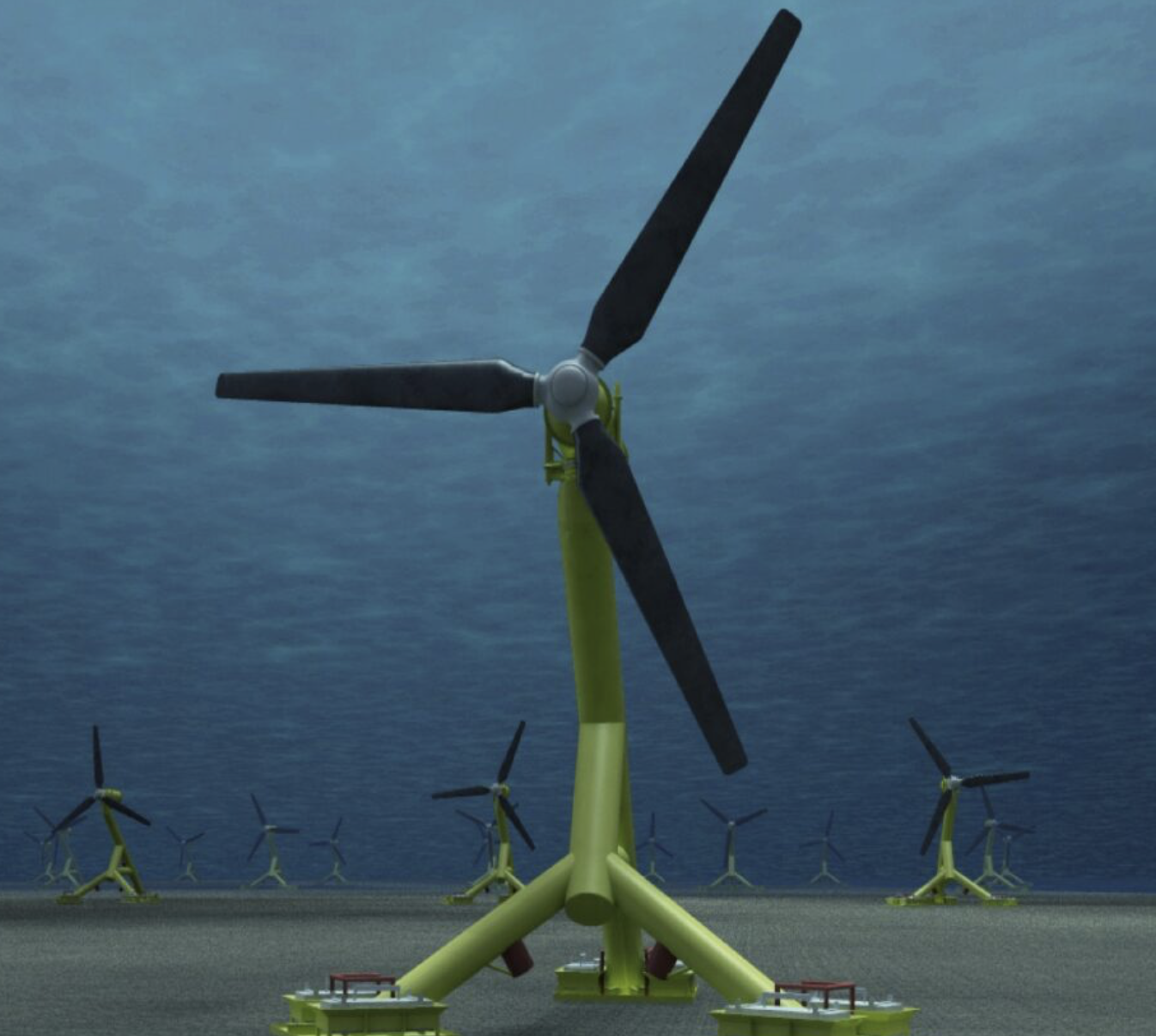
Tidal power is a form of renewable energy that uses the tides to generate electricity. There are several types of tidal. The first is tidal power, which relies on the rise and fall of the tide, using the movement of water to produce electricity. Second is wave power, which uses the movement of the waves for the same purpose. Third is current power, which uses the kinetic energy of marine currents. Finally, there is thermal gradient or ocean thermal energy conversion, which relies on the temperature difference between surface waters and deeper waters. Tidal energy is becoming increasingly popular, as it allows operators to produce clean power, and it is highly reliable owing to the predictability of the tides.
In December, the market research firm DataM Intelligence published a report that forecast the global wave and tidal energy market to grow to $1.85 billion by 2032, from $983.11 million in 2024, expanding at 8.23 percent between 2025 and 2032.
The increased rollout of tidal energy is expected to boost grid reliability in several regions of the world, thanks to the predictable generation cycles, which are known years in advance. This helps utilities to manage the advanced planning of grid power. In addition, as coastal nations prioritise domestic energy security, several countries are looking to reduce dependence on both foreign energy and fossil fuels.
Tidal power offers localised clean energy generation, which could help reduce dependence on long-distance transmission.
The report states that tidal energy systems contributed around 58 percent of the global market in 2024, or around $570 million. This is most likely because tidal energy systems are viewed as more predictable and having higher capacity factors and lower technology risks, compared to wave energy, making them more reliable for utilities. However, DataM Intelligence suggested that wave energy systems are expected to grow in popularity after 2028 as the technology improves.
The company stated: “Tidal energy systems will remain the primary commercial driver through 2031, while wave energy will play a critical role in long-term market expansion and technology diversification.”
At present, the UK leads the world in tidal power capacity, with favourable regulatory frameworks encouraging development. Some of the most powerful tidal turbines are in Scotland, which has become a hub for tidal power projects thanks to the extensive expertise in a region that is well-known for its oil and gas operations, as well as major offshore wind projects.
In 2025, one Scottish project achieved a major milestone after more than six years of operation. The MeyGen tidal energy project consists of four tidal turbines submerged around 40 metres under water, which produce around now 1.5 MW of power each and can now collectively power around 7,000 homes a year.
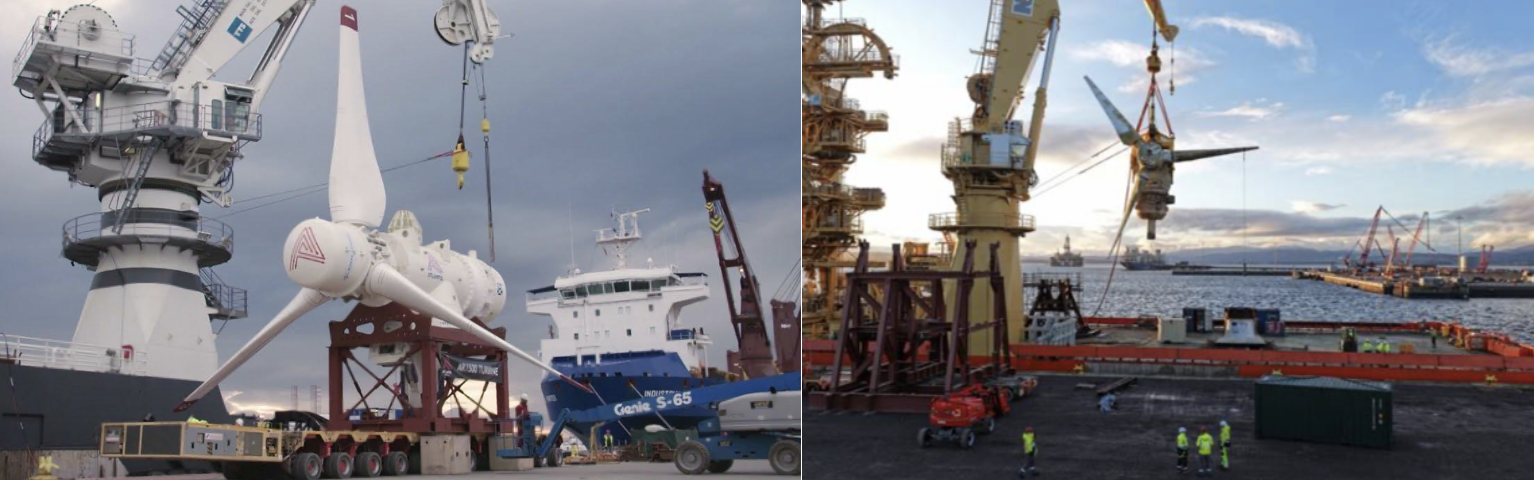
MeyGen turbines arriving on site
For years, regulators and energy companies have been sceptical about whether tidal turbines can operate effectively in the long-term. Many did not believe that the turbines would be able to endure the harsh conditions of the seawater.

Andrea Copping
Dr Andrea Copping, senior research scientist and an expert in marine renewable energy development, explains:
“Sceptics, and that includes investors, and governments, said, ‘How on Earth are you going to operate these things, especially for any length of time in this very tough environment?’ And that’s what I think MeyGen proved.”
The firm’s turbines are located in the Inner Sound of the Pentland Firth, a narrow channel between the Scottish mainland and Stroma Island known for strong tidal currents. Tidal power systems require strong currents to efficiently generate electricity, which makes for harsh conditions. MeyGen now plans to add 20 turbines to the project by 2030, once upgrades to the grid are completed.
The MeyGen project owned by Ampeak Energy has been awarded a Contract for Difference (CFD) in Allocation Round 4, 5 & 6 for 59MW with target commissioning dates of 2027, 2028 and 2029 respectively, and the company reports the successful completion of serving works involving three of the four turbines, and a series of inspection, maintenance and redeployment operations were successfully completed. Two of the three turbines (TTG 2 and TTG 4) were serviced offshore and returned to operation, whilst the third (TTG 1) was returned to Nigg for servicing and will be redeployed at a future date. No intervention was required on TTG 3, which has now accumulated seven years of operation, maintenance-free.

Fraser Johnson
Fraser Johnson, MeyGen Director of Operations & Assets, said:
“Every stage of the MeyGen journey is a step towards large-scale deployment and unlocking the full potential of tidal stream. For all involved, seeing first hand the capabilities and opportunities makes it clear that tidal stream can and should play a major role in our energy future. It is scalable, and has the potential to be cost-competitive with other forms of predictable generation.”