

Five years after entering operation, North Sea Link (NSL), the subsea electricity cable connecting Blyth in Northumberland to Kvilldal, near Stavanger, Norway, has shared more than 37TWh of electricity between the two nations, providing flexibility and supporting energy security in both countries.
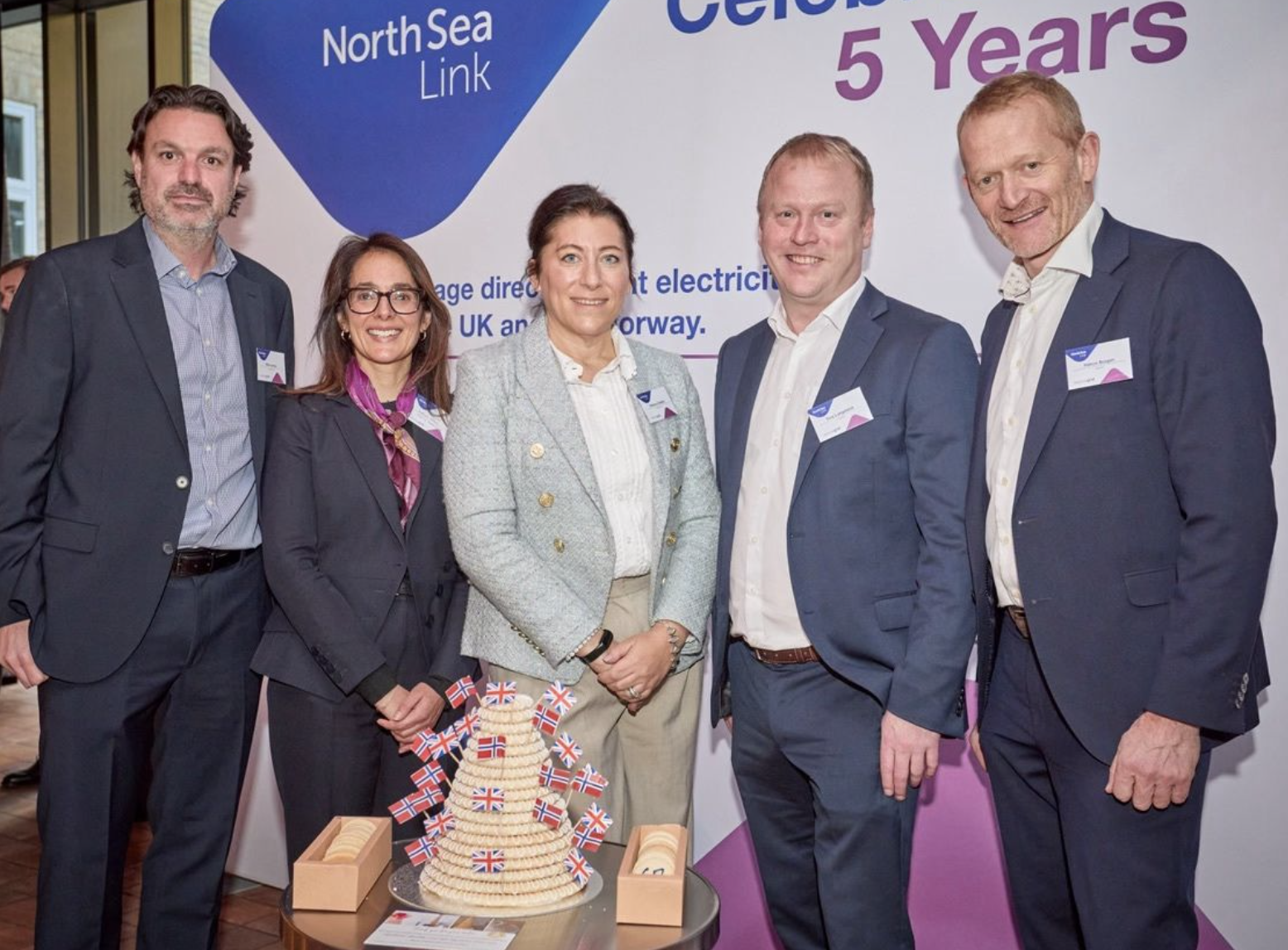
Rebecca Sedler (centre) with Tore Langeland Executive Vice President of Statnett marking the fifth anniversary of NSL. Image: National Grid.
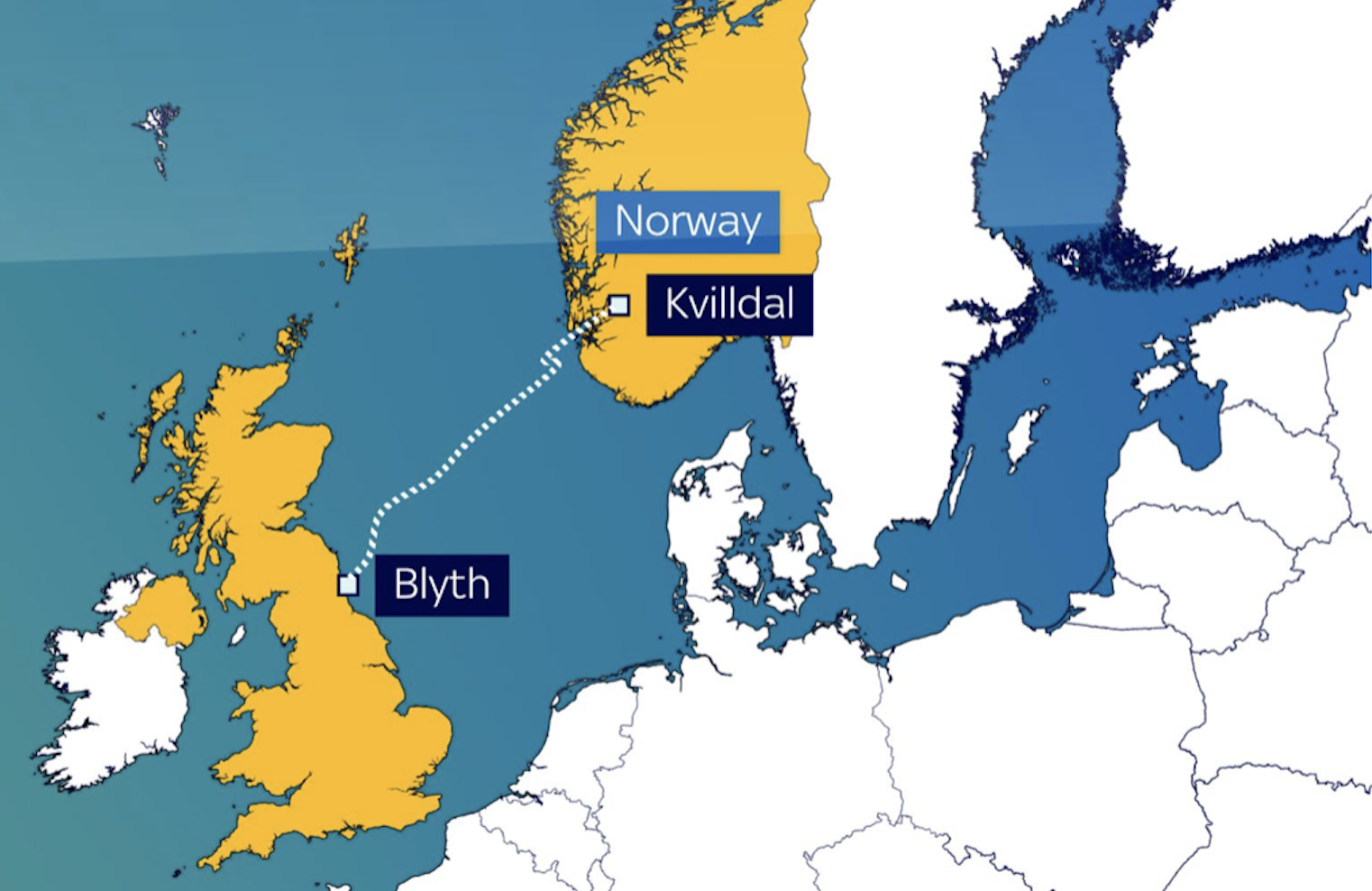
Hitachi Energy designed, engineered, supplied and commissioned the enabling technology for the interconnector – two HVDC Light® converter stations and since opening in 2021, the 450-mile, 1.4GW interconnector (the longest in the world) has become an important link between the British and Norwegian electricity systems.
HVDC Light® is a voltage source converter technology developed by Hitachi Energy, which was launched over 25 years ago. It is the preferred technology for many grid applications, including interconnecting countries, integrating renewables and “power-from-shore” connections to offshore production facilities. HVDC Light’s defining features include uniquely compact converter stations and exceptionally low electrical losses.
Since becoming operational, NSL has shared enough electricity between the two countries to power approximately 2.5 million British homes each year, while helping balance changing supply and demand. According to our analysis, North Sea Link and our five other interconnectors have helped deliver £2 billion in net benefits to British consumers since 2023, compared with traditional gas generation.
Over the past five years, North Sea Link has also shown the value of sharing electricity as market conditions change. In 2026, Great Britain mainly imported power from Norway until February, before becoming a net exporter due to increased Norwegian demand caused by cold weather and low Nordic hydro reserves. As gas prices rose in March, power flows switched back to mainly flowing towards Great Britain. These changing flows demonstrate how interconnectors respond to conditions across connected markets.
Rebecca Sedler, President of National Grid Ventures UK, said:
“Five years on, North Sea Link shows that two-way electricity sharing can deliver flexibility and energy security which benefits consumers in both Britain and Norway. It's an essential link, and I'm delighted to mark this milestone with our partners, Statnett”.
North Sea Link was a major engineering achievement, it required more than four million working hours over six years to deliver.
The cable passes through fjords and mountains, stretches across the North Sea and reaches depths of up to 700 metres, making it one of the most significant electricity infrastructure projects undertaken between Great Britain and Norway.
Niklas Persson, Managing Director of Hitachi Energy’s Grid Integration business said:
“North Sea Link is a cornerstone of Europe’s carbon-neutral energy future, interconnecting national power grids and enabling the flow of electricity across borders and seas”
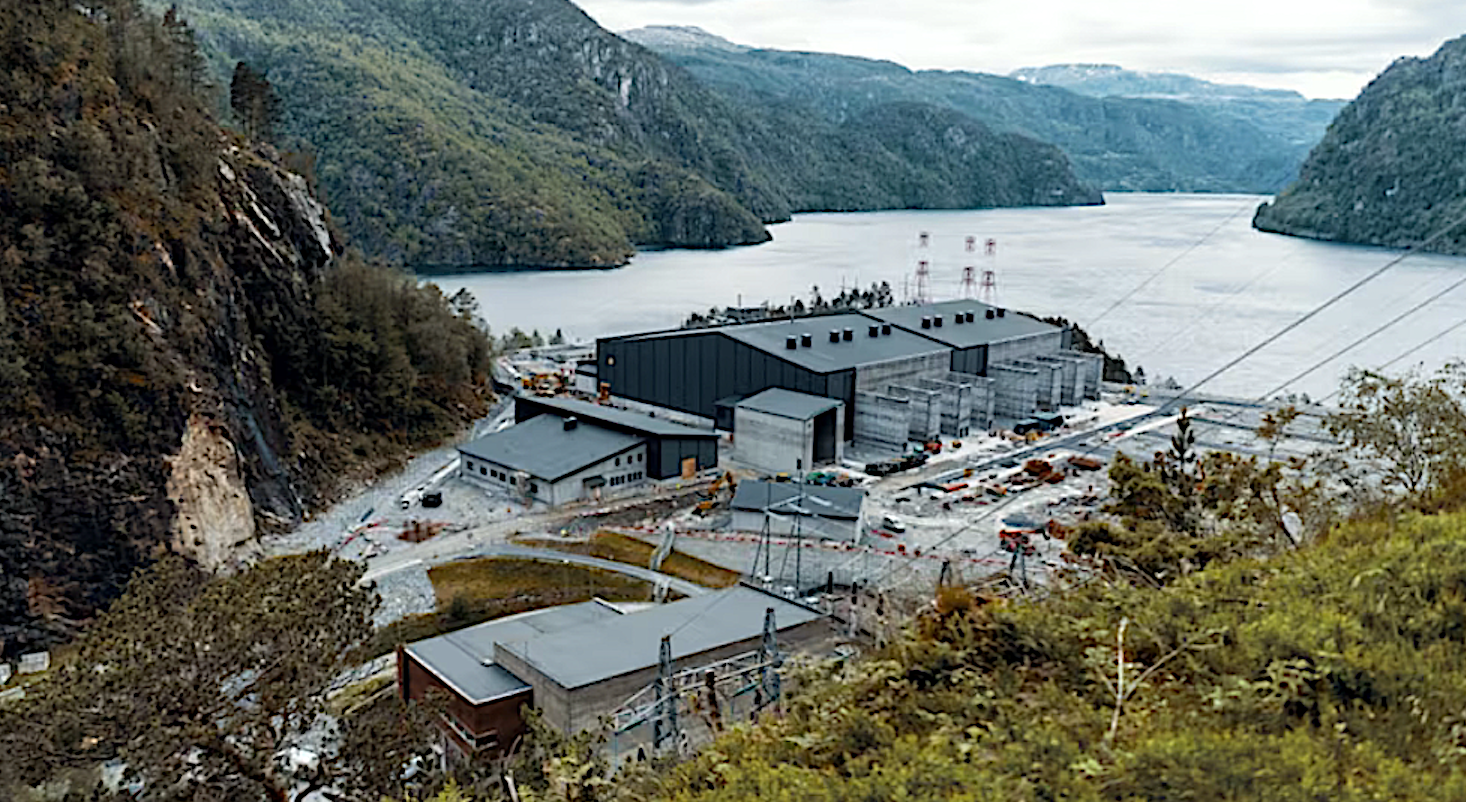
The Kvilldal converter station where the enormous Blåsjø reservoir and the biggest hydro power plant in Northern Europe sit amongst the Norwegian fjords Image: North Sea Link
North Sea Link provides additional transmission capacity for electricity to be traded more efficiently, and contributes to downward pressure on electricity prices when demand is high on one side of the cable.
Norwegian power generation comes predominantly from hydropower plants connected to large reservoirs. Such generation is flexible and very quick to respond to fluctuations in demand compared to other major generation technologies. The water level in reservoirs is, however, subject to weather conditions and so production varies throughout seasons and years.
North Sea Link enables both countries to maximise the use of these natural resources for the benefit of consumers in Norway and the UK.
When wind generation is high and electricity demand is low in the UK, North Sea Link allows up to 1,400MW of power to flow from the UK, conserving water in Norway’s reservoirs.
When demand is high in the UK and there is low wind generation, up to 1,400MW can flow from Norway, helping to ensure secure electricity supplies.
National Grid estimates that the North Sea Link will save 23 million tonnes of carbon by the end of the decade and it represents a major source of green energy for Energy Central - a unique port-based service, investment and growth cluster for companies operating in the offshore energy, subsea, decommissioning, battery manufacturing and renewable energy markets.
It offers nearly 200 HA of strategic, quay linked, development sites with access to low carbon power.
Energy Central is a partnership between Advance Northumberland, Port of Blyth, Northumberland County Council and the Offshore Renewable Energy (ORE) Catapult aimed at attracting inward investment into the area, including Northumberland Energy Park.
The energy park currently has a power capacity of up to 100 MVA, making it capable of supplying facilities which require large-scale energy use, and renewable energy sources provide much of Energy Central’s power.