

GRID-UK Day One Highlights: Distributed networks drive market opportunity
Building distributed networks offers untapped potential for influencing costs was the message from Cathy McClay Managing Director of National Grid DSO and the UK Governments’ Flexibility Commissioner in her GRID-UK conference chat with Guy Newey, CEO of Energy Systems Catapult.
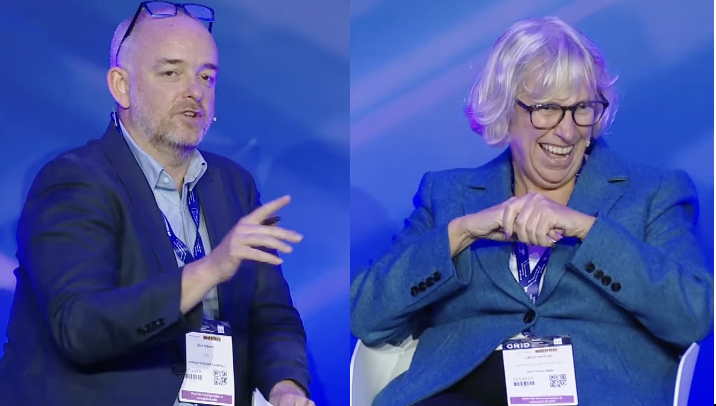
Guy Newey and Cathy McClay
Flexibility was essentially a tool for managing risk - both a s a device for keeping the lights on as well as ensuring new grid investments were not overspecified to avoid wated resource she said.
A flexible system could facilitate more manageable balancing and potentially offer energy retailers the opportunity to develop more specialised products for different segments of the consumer market, though bespoke pricing strategies.
As the UK government’s Commissioner for Flexibility, McClay had a role of looking for synergies and opportunities to make the market more responsive to the needs to consumers and was working with transmission and distribution partners to investigate synergies for further efficiencies including grid supply points.
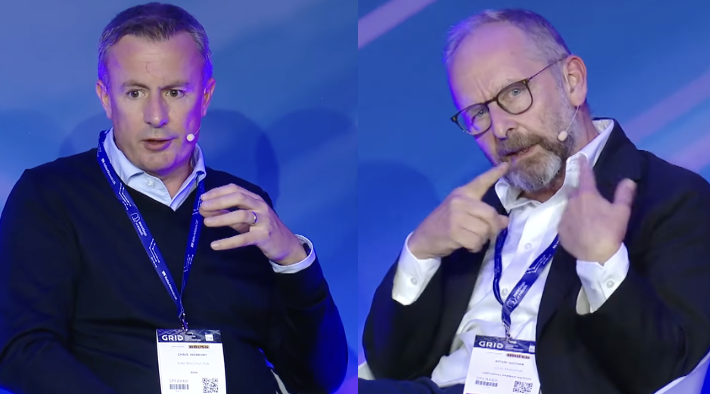
Chris Norbury (left) and Adam Scorer
The potential of flexibility and aggregation to contribute to addressing fuel poverty was a theme taken up by Chris Norbury CEO of E.on Next when discussing interventions his company has made to address consumer affordability in Coventry, Glasgow and through a unique collaboration with Northern Powergrid which he claimed was helping to reduce needy consumer bills by around £300 per year.
His company was committing another £5 million investment in residential batteries to address need and grid constraints.
In conversation with Adam Scorer, CEO of the charity, National Energy Action, both shared common ground on the need for more joined up policy from government to address the issue of energy debt, forecast to reach £7bn by the end of the year and estimated to be affecting some 3 million ‘difficult to reach” domestic customers.
The people who needed help most had complex issuses and an inherent mistrust of the authorities best placed to support them, so building engagement and trust to understand and respond to their circumstances was challenging and needed to be approached at a local level with appreciation that energy issues were impacted by other social problems relating to health, access to education, housing and mobility.
Both commended government action on the Warm Homes Plan but described the present speed of deployment as “glacial”.
More thought was needed in the policy space to link short term solutions with long term policy.
Striking an optimistic note Norbury suggested the solution would be a combination of system investment and market design illustrating the point that the deployment of 660 000 domestic batteries could deliver up to £4bn savings in operating costs.
The theme of innovative thinking was developed further by Laura Sandys CBE, Chair of the Innovate UK Network Innovation Taskforce, who spelt out the fundamental changes taking place which would rewrite the traditional view of the linear grid system.
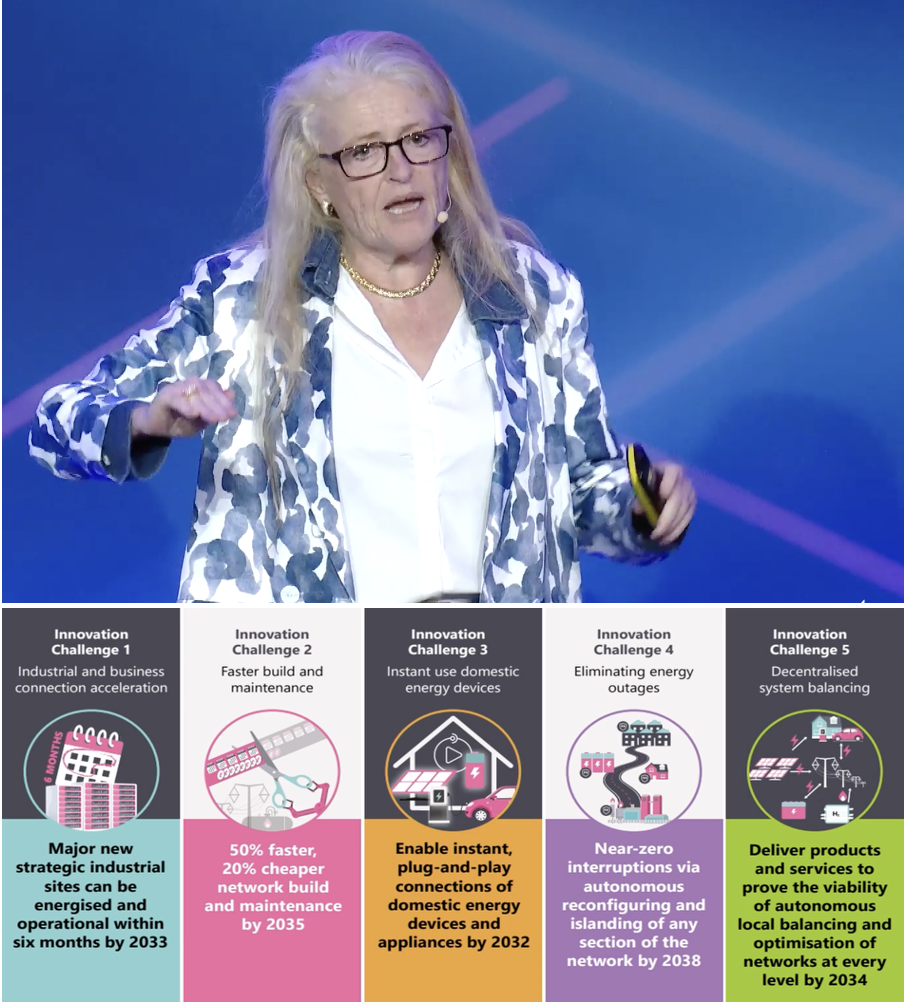
Laura Sandys CBE and the 5 Strategic Innovation Fund Challenges
The present arrangements were operated by around 400 entities but the new disaggregated UK energy market will comprise of up to 100 million actions or assets on the system. Market forces are creating a dynamic period of change which will force society to see energy as either a barrier or a driver of growth.
Consumerism would change customer perceptions as demands became more sophisticated as a result of the growing adoption of EVs, PVs, air conditioning, domestic batteries and heat pumps.
Large scale manufacturers would be considering off grid energy solutions to ward energy market uncertainties and the DSO’s finalising their ED3 submissions needed to take account of unprecedented demand for new electrically powered equipment which would be scaled in particular clusters.
Laura Sandys questioned whether industry was prepared for the scale of change to come with interdependencies between users and providers not fully mapped.
She warned against “creeping pilotisation” where so many tried and tested energy systems innovations had been filed away, never to see commercial application and addressing these concerns was the focus of the revised UKRI Strategic Innovation Fund backed by a £500 million investment from Ofgem.
Sandys also noted the challenge of understanding the energy system from a customer perspective and much more effort was required by the industry to explain how it operates and its cost structures.
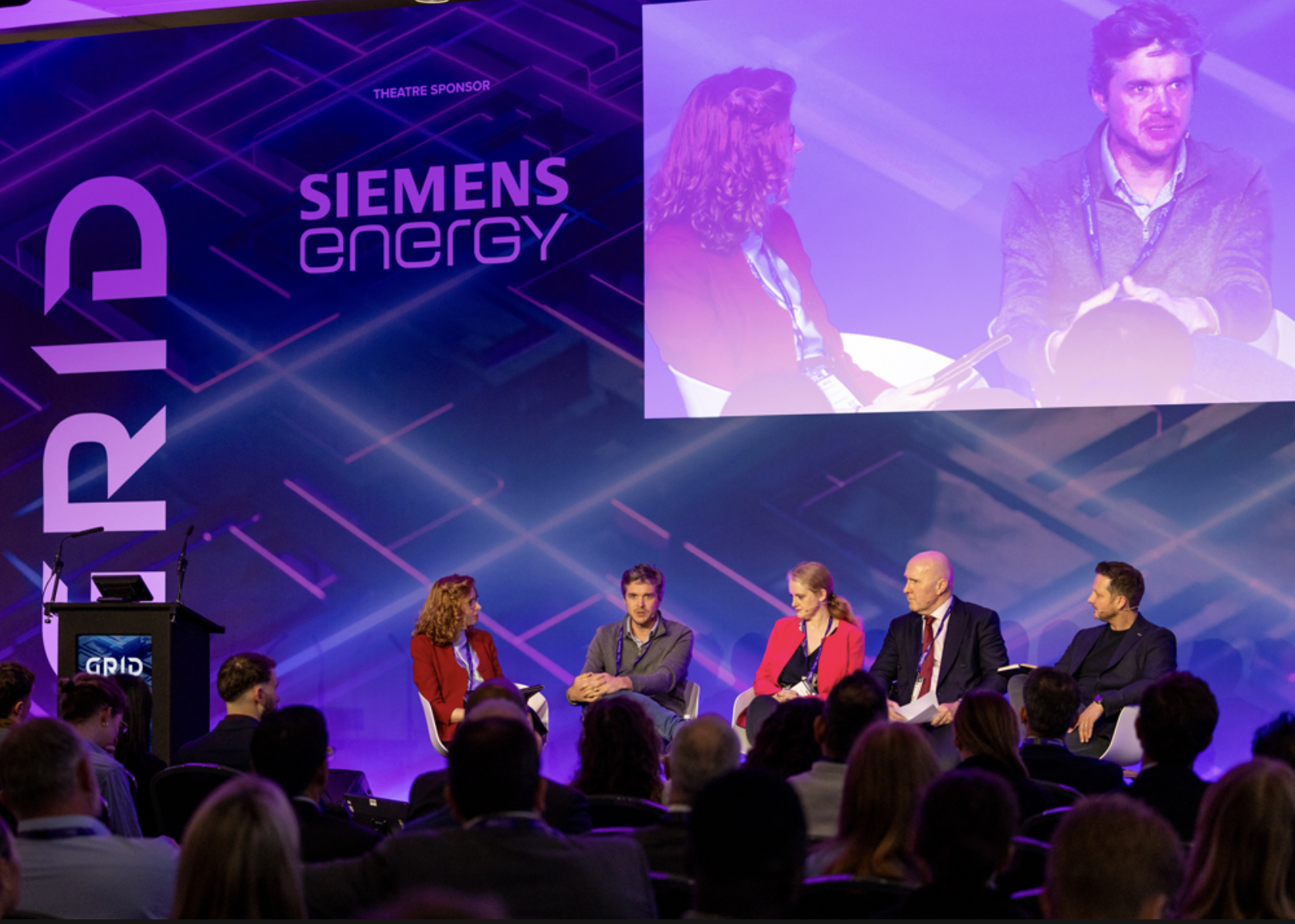
The panel looking at the potential of AI to assist and accelerate the decarbonisation of the UK market, especially for the industrial/manufacturing sector saw the potential for AI to inform investment decisions identify new synergies and contribute to reducing costs for consumers.
A stellar line up of AI brains already engaged in different aspects of the market, was led by Rich Hampshire of CGI ,Camilla Winlo of Talan, Steven Steer from Zuhlke and Stefan Van Der Berg of Amazon Web Services.
Together these companies were at the forefront in helping to apply technology solutions to the rapidly changing market described by Laura Sandys.
Presently the focus was looking at repetitive predictive maintenance and administrative services in the energy market that can drive down costs through standardisation and better risk management, but as with most potential AI applications the predicted tech contribution was likely to become much more significant.
The challenge for applying AI in energy scenarios remains around the use of data and its potential regulation.
If AI solutions were to become trusted it would be important to ensure human oversight, accountability and enforcement measures which were challenging when the applications were still in their infancy.
Another area ripe for innovation to drive growth is procurement.
This was the focus of a discussion led by Nicolas Pitrat CEO of BRUSH Group, the firm behind a £150 million collaboration with National Grid, with Pinder Kang (OCU Group), Iain Smith (Balfour Beatty), Pierre Gerbeaud (Tikehau Capital), and Grant Thompson (Kismet Insight).
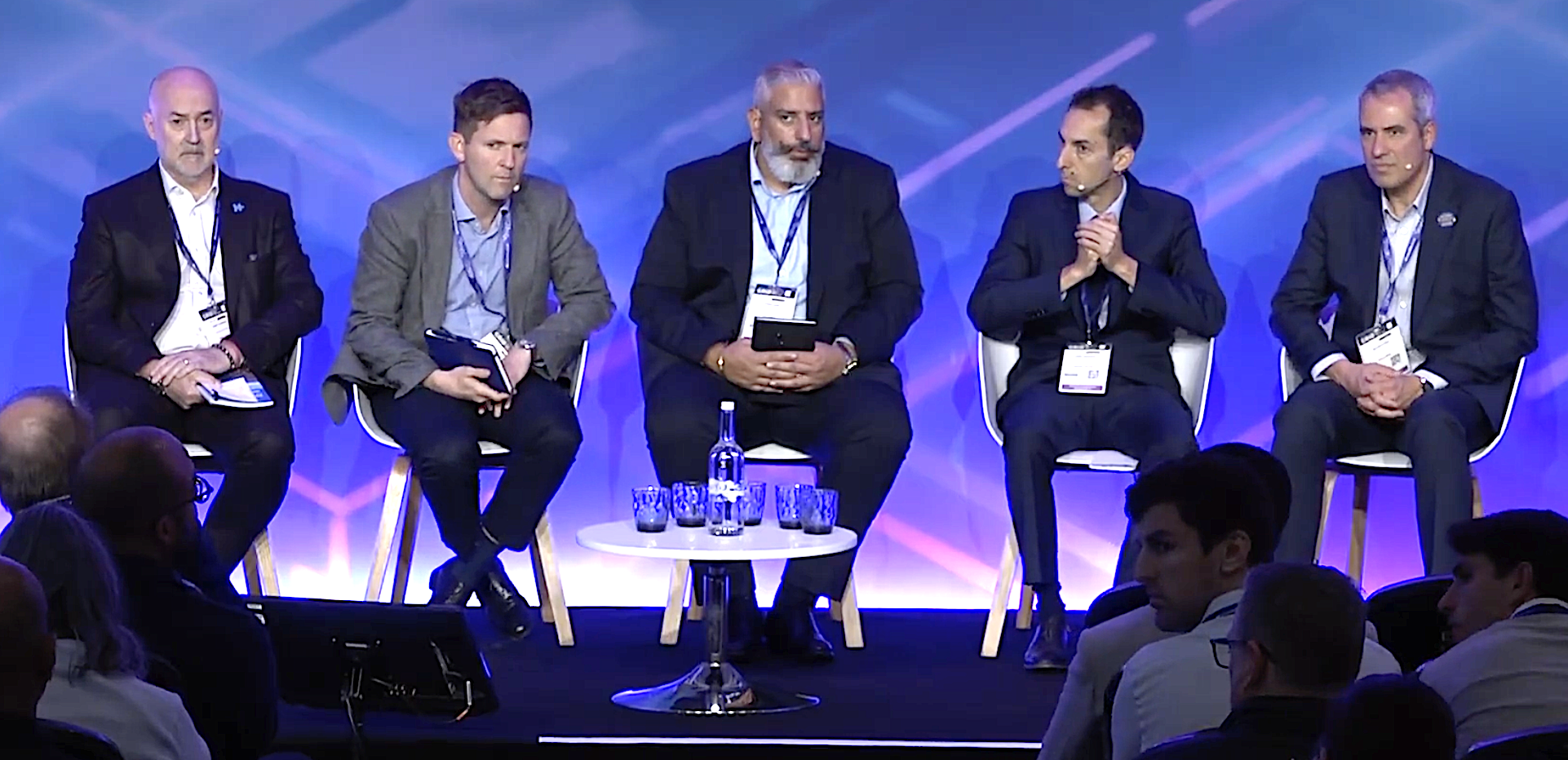
Growth could be promoted by opening up supply chains on major projects and already the market was moving from transactional frameworks to collaborative joint ventures.
More companies were valuing the participation of diverse partnerships from OEMs to consultative relationships in complex problem solving but there was much work still to do in the UK energy market.
A number of speakers referenced the commitment of Sumitomo to making a highly visible commitment to the UK establishing its own plant at Nigg in the North of Scotland and the general view from the platform was this type of entrepreneurialism was the most effective way of building long term growth.
For industries not dependent on locating close to the project, the potential involvement of local authorities to assist in the development of an industry skills culture in their areas such being developed on the Humber would be attractive to businesses looking to extend their supply chains.