

Toby Uppington, SVP of Global Energy at AECOM opened the Day Two plenary with a review of whole systems thinking as an approach to ensuring accelerated outcomes and managing risk on major energy projects.
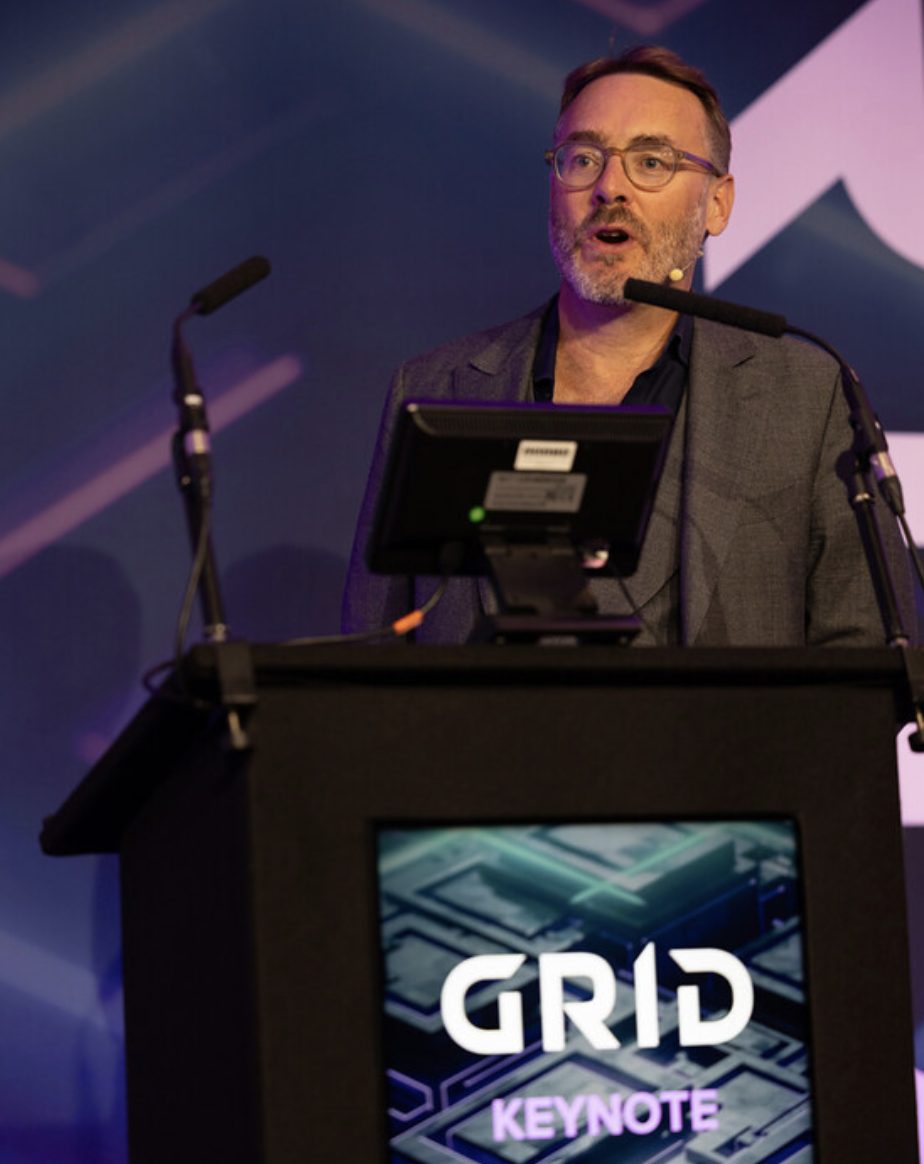
Toby Uppington Image: Vicki Sharp
At a time when major infrastructure projects in the UK were being challenged by their ability to be completed on time and on budget there was a need to adopt a more holistic strategy.
It was clear the grid upgrade was happening in a complex operating environment and new thinking about project management would be required to accelerate delivery.
His views on whole systems thinking and rewiring the energy system provided a technical slant on a preceding presentation from Dr Matt Vickers, CEO of Community Energy England whose “Edgy Innovation” focused on the contribution communities could make to the development of new capacity building operating models.
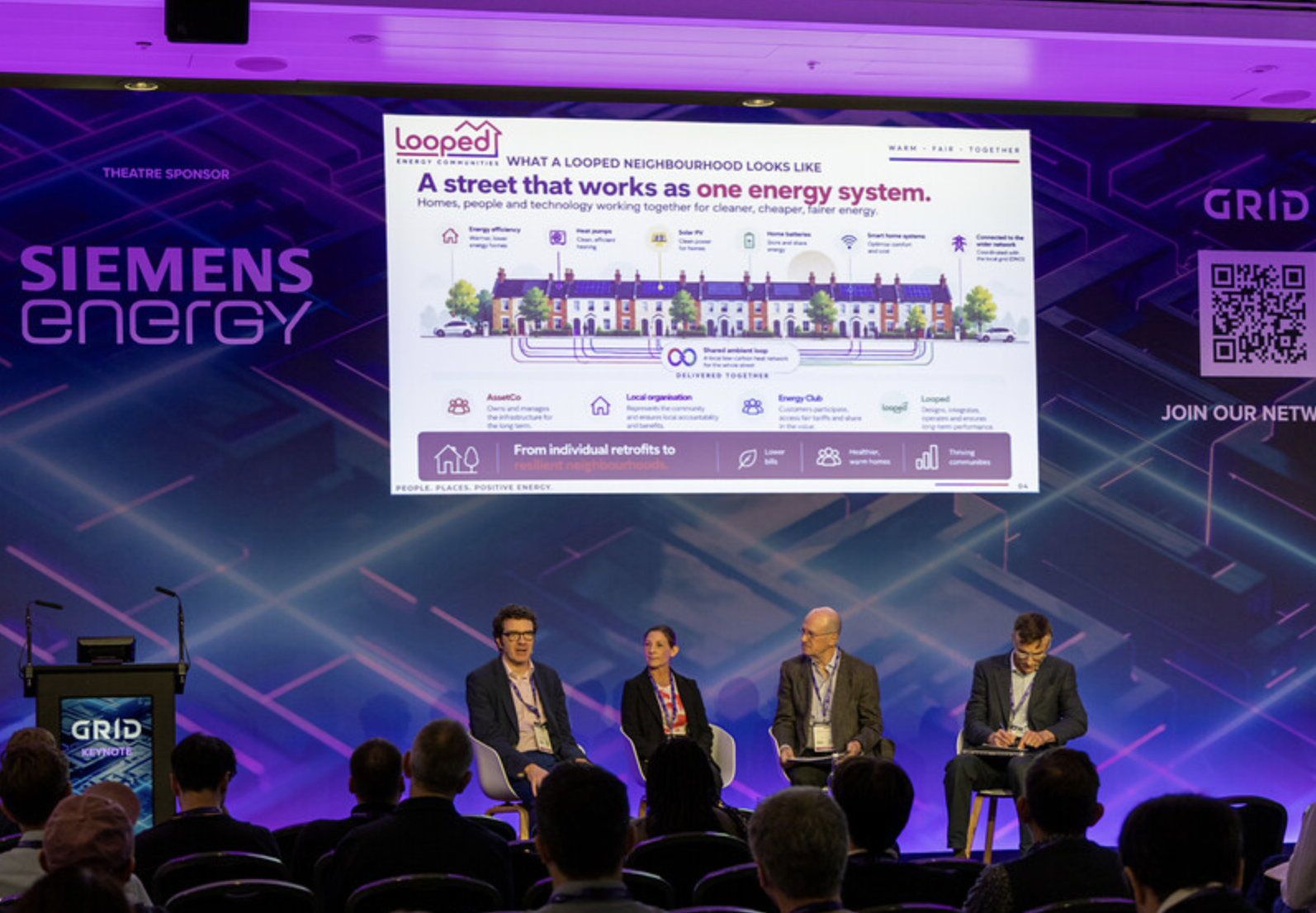
(From left) Dr Matt Vickers CEO Community Energy England, showcasing community energy ‘Edgy Innovation” with Kate Gilmartin, Net Zero Terraced Streets, Charles Bradshaw Smith, SmartKlub, Nottingham and Tom Day Head of Energy and Low Carbon, Essex County Council. Image: Vicki Sharp
Vickers called for a new way of thinking supporting a “place based” approach on co-operative principles, known to be favoured by the Prime Minister featuring closer engagement with local authorities.
Present regulatory structures for community energy were holding the sector back, with “behind the meter” solar initiatives being the principal source of present community energy activity which was not valuing the potential of local generation.
Energy distribution companies should be embracing community assets in their ED3 submissions.
Uppington saw a whole systems approach as the most prudent way of managing risk and his message was simple - collaboration would not happen by chance but needed to be baked in to operational processes and practices at the earliest stage.
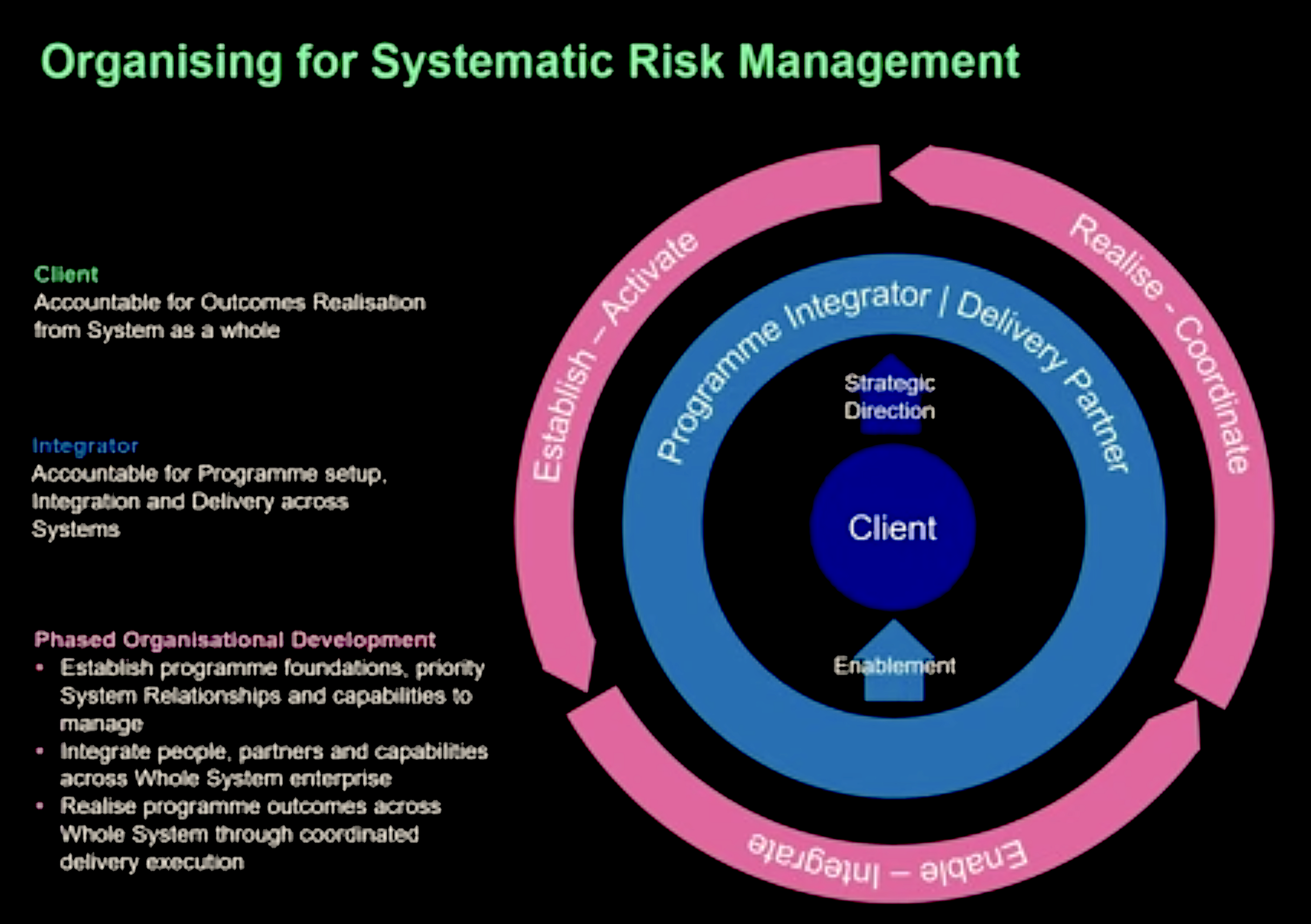
Whole systems thinking. Image: AECOM
Systems thinking needed to be applied consistently across infrastructure lifestyles and he commended the Institution of Civil Engineers for championing the cause.
Confidence was a recurring theme of the session but that was more than applying science to construction. Retaining positive sentiment around the climate for investment was an understated contributor to the delivery of the Clean Power vision.
GRID-UK was proud to welcome three senior representatives of overseas based international investors and employers in the UK energy market who talked candidly about the attractiveness of the opportunity.
Alice Barrs from German giant, RWE the renewable specialist, pointed to the UK’s long history of promoting sustainable energy solutions dating back to the Non-Fossil Fuels Obligation from the 1990’s, successive governments’ development of two-way CfD’s (Contracts for Difference) and recent “bankable” adjustments, including extending their duration from 15 to 20 years, which had lowered the commercial risk outlook and addressed the impact of inflation.
Alun Rees of French headquartered ENGIE who recently acquired UK Power Networks, focused on the stable regulatory environment and the Climate Change Act which had done much to lay a solid foundation for long term growth together with independent regulation.
A slightly different emphasis was taken by Maria Tjader, from another major French owned international business, Schneider Electric (SE). Her company was a major manufacturer of equipment and components for the energy sector and had made one of its earliest acquisitions in the UK back in the 1930’s, taking over Yorkshire Switchgear.
She referenced the UK’s reputation for manufacturing excellence and commitment to technical innovation led by some of the country’s top universities.
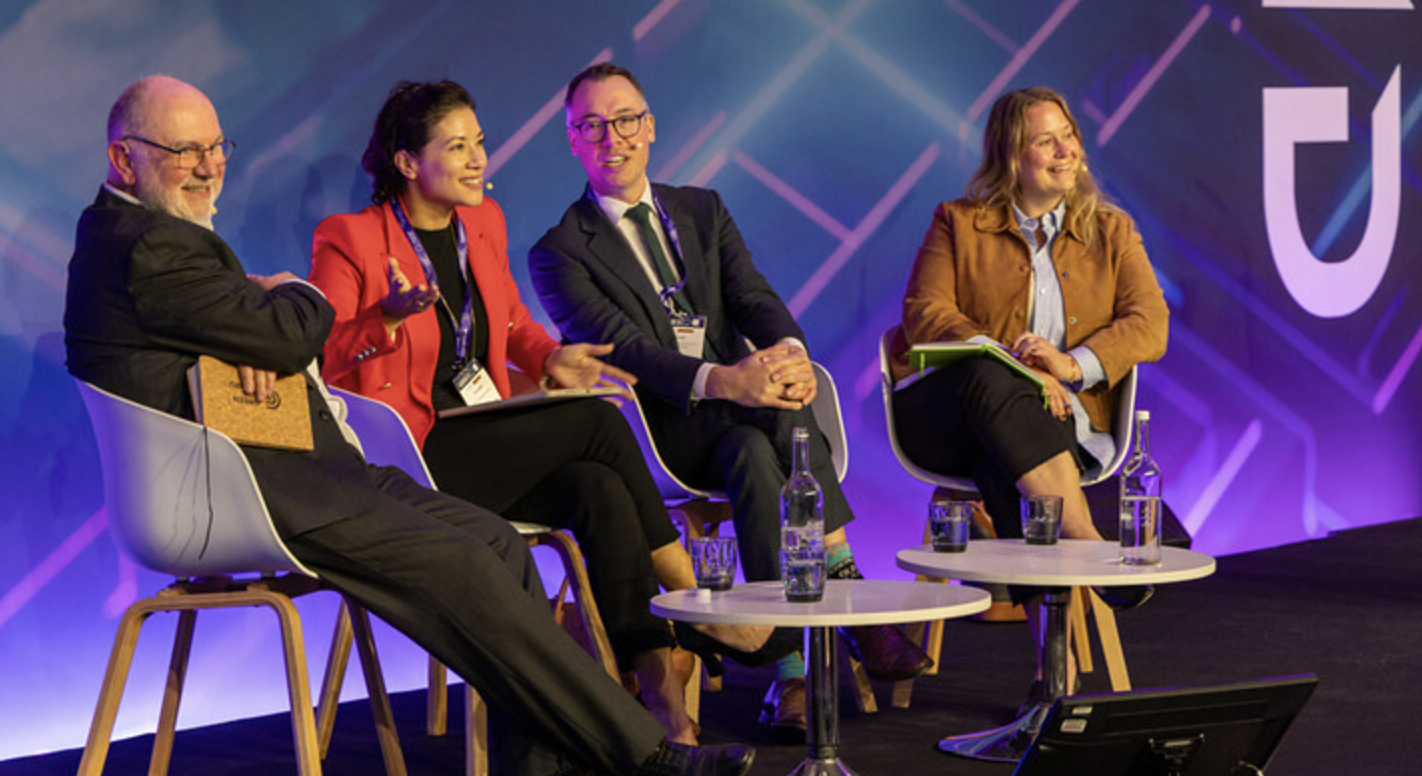
(From second left) Alice Barrs, Alun Rees and Maria Tjader. Image: Vicki Sharp
All three were upbeat about the future provided the government maintained policy stability.
There was a concern about policy consensus fragmenting in the political space and the impact of decarbonisation on affordability.
The industry as a whole needed to improve its communication, emphasising the role of public control, local participation and industrialisation.
The appetite for innovation would continue but not just from a technical perspective but through the development of energy industry clusters which could facilitate new local supply chains and partnerships.
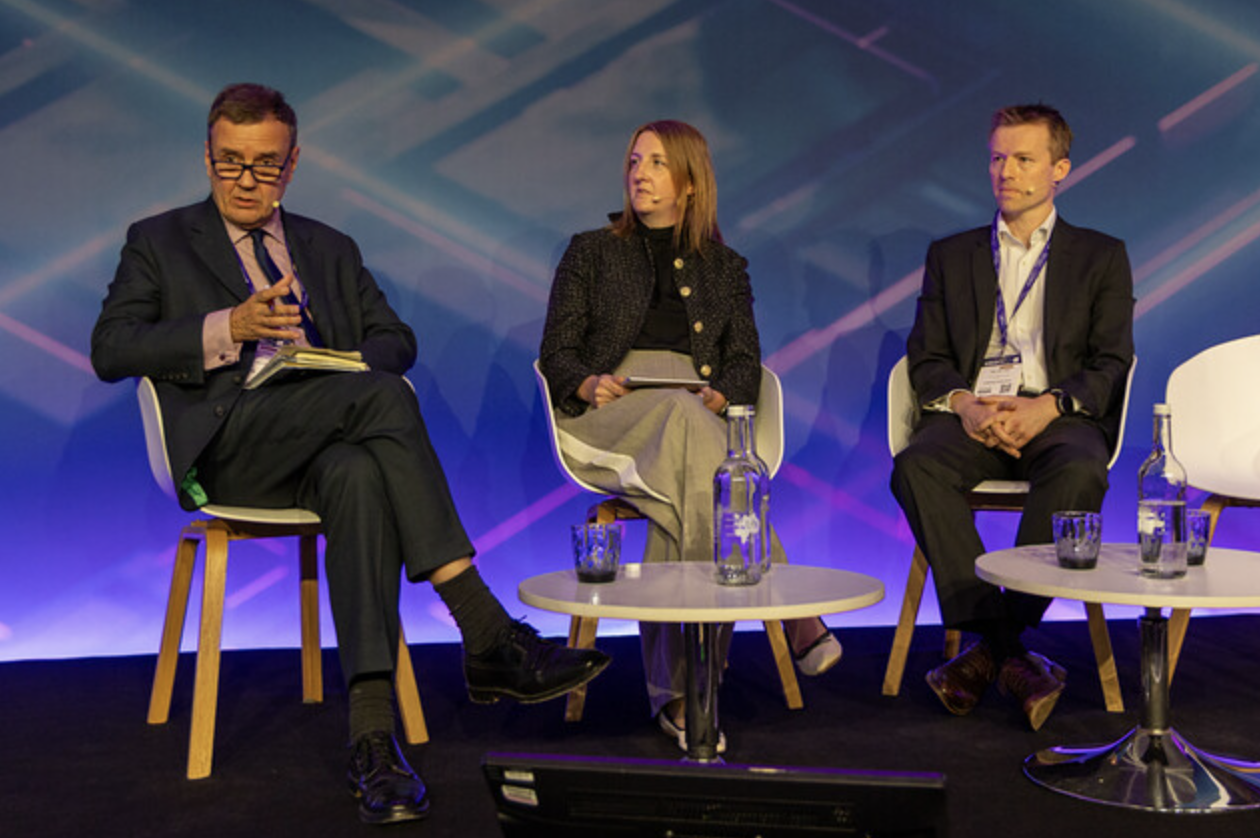
(From left) Sir Greg Hands, Alex Howe and Niall Mottram. Image: Vicki Sharp
Alex Howe from the Energy Networks Association and Niall Mottram of Capgemini owned Cambridge Consultants joined GRID-UK advisory board chair, Sir Greg Hands to share their thoughts about some of the key messages emerging over the two days of the conference.
They talked about how energy was now starting to feature in the public consciousness owing to geopolitical issues and affordability but also referenced the need to be better at explaining the role of the energy sector as an engine for growth..
They echoed Toby Uppington’s call for a broader whole systems approach to energy investment and agreed with Laura Sandys’ message that there needed to be a clearer explanation of the stakeholders, roles and interdependencies in the marketplace, so customers could differentiate between investment cost and systems cost.
Mottram noted many of the challenges of the energy sector were being faced by providers of other public services, utilities and telecoms.
The big opportunity for the future would be the development of a system of systems which would ultimately contribute to cutting consumer bills and building new efficiencies.
Sir Greg Hands closed the conference by thanking all participants for their contributions which had made the inaugural GRID-UK such a success, and the “behind the scenes” Meetings of Minds team who had produced the event.
“We look forward to doing it again next year.”, he observed.
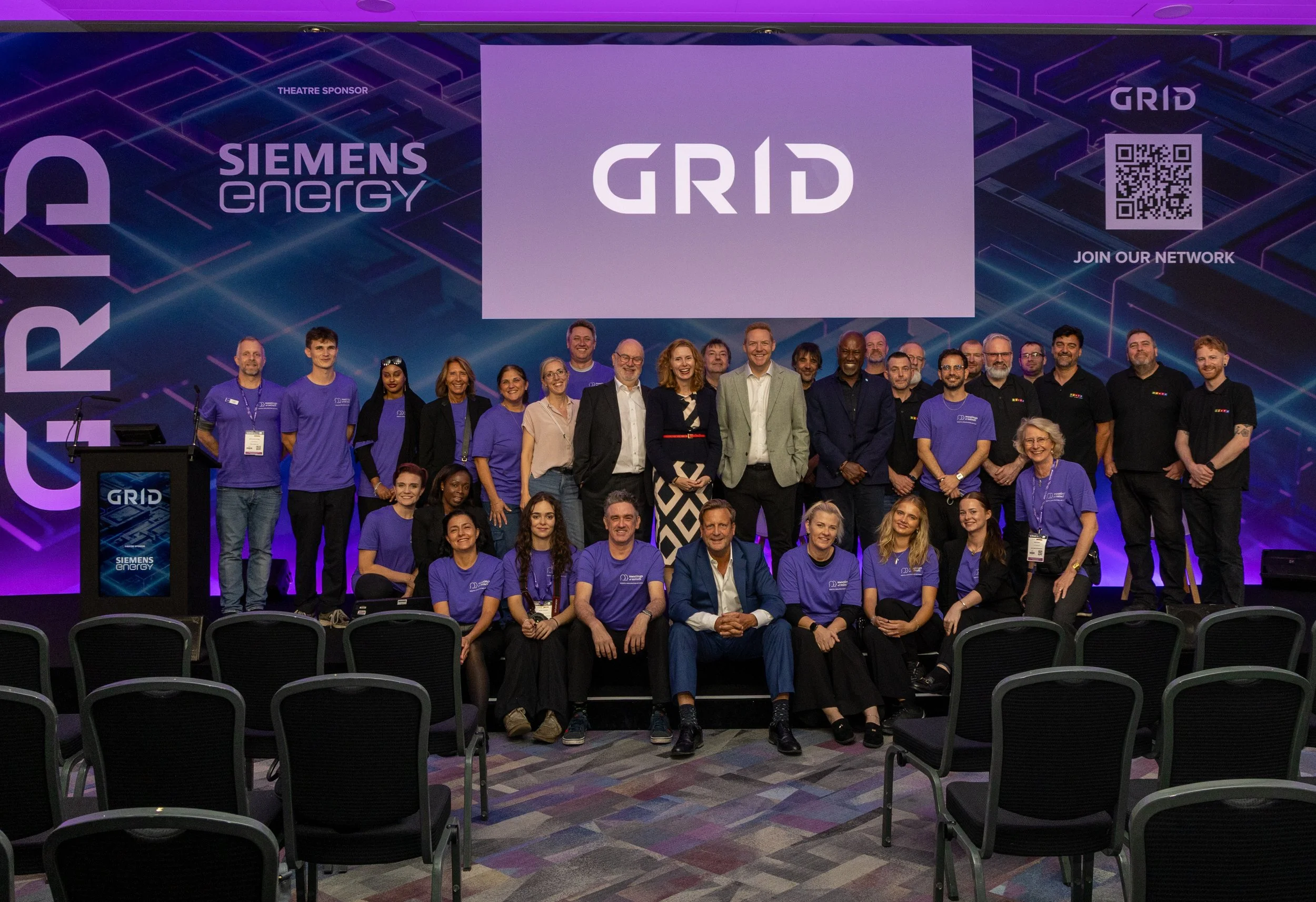
The GRID-UK 2026 production team. Image:Vicki Sharp