

The electricity distribution companies are putting the final touches to their business plans for the five year “control period” from 2028 ahead of their submission to Ofgem next month.
These ED3 plans are likely to be the most detailed and important in the history of the network setting out how investment in electrification and energy capacity is going to translate to economic growth across the country SP Energy Networks has a particularly influential role, not only by being part of the triumvirate of national transmission companies but the only electricity distribution business operating in all three GB nations.
The ED3 process must also be compatible with the National Electricity Systems Operators plans for connections and spatial planning.
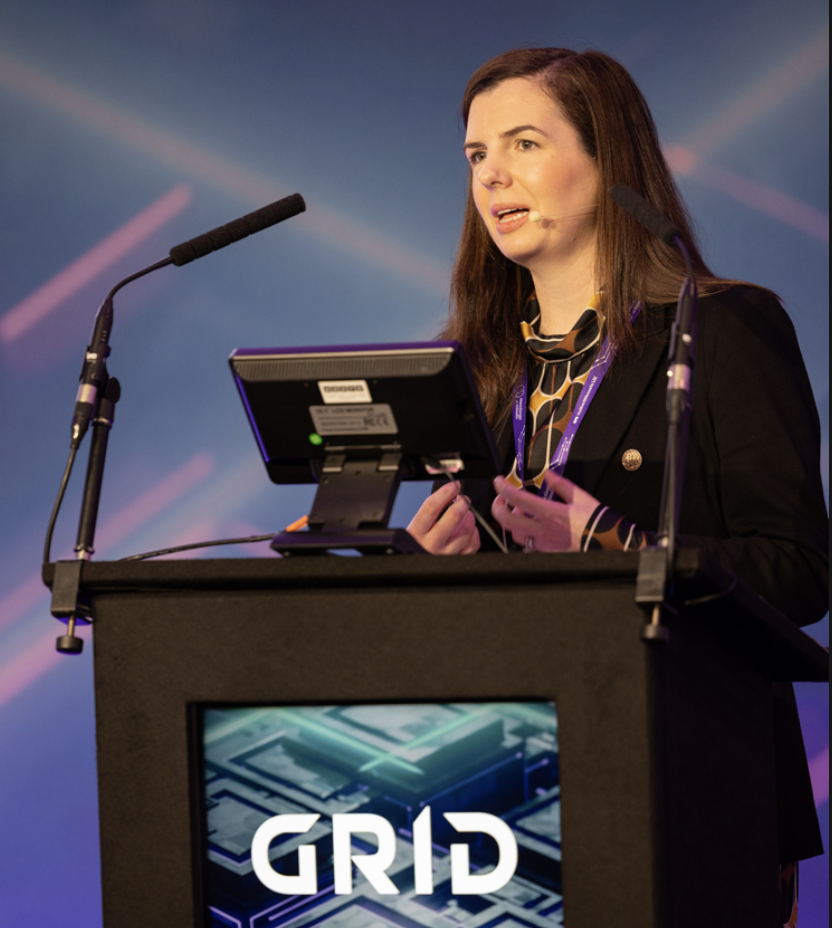
Stephanie Anderson. Image: Vicki Sharp
SP Energy Networks ED3 Director Stephanie Anderson set out her company’s approach to unlocking value for its constituent communities.
The industry was projected to be releasing an investment of some £50bn from ED3 enabling wider value timely capacity, supporting productive investment with additional flexibility supporting improved utilisation and co-ordinated delivery. Taken together this will put downward pressure on costs and the risk of future constraints.
Resilience was an issue often talked about in the energy industry as a physical side effect of the delivering of electricity is now starting to become a broader concern, requiring all stakeholders in the system to take control of the risk factors that affect them.
Transmission companies, distributors, retailers and consumers are increasingly starting to quantify the risk of a system malfunction and what it might mean for them in an operational context.
This is not just about the use of hardware and software, or the reliability of aging equipment but its interface with our changing climate and other human induced environmental phenomena.
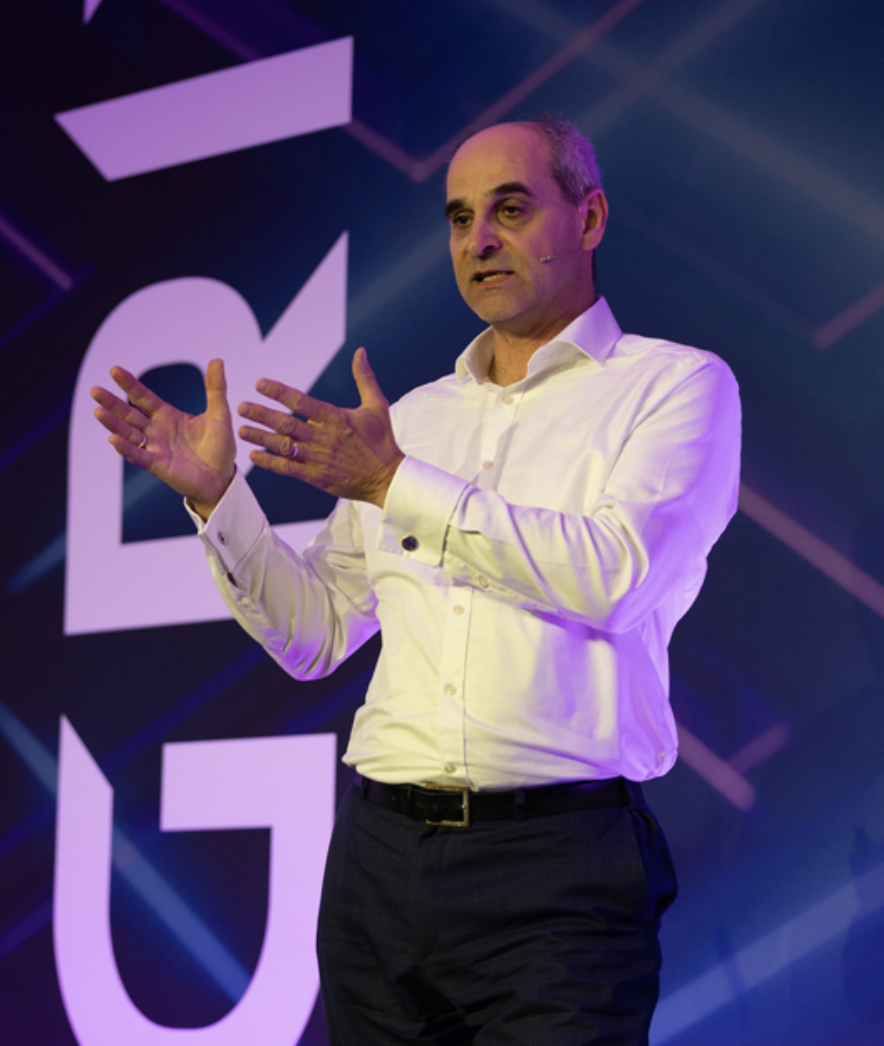
David Wright. Image: Vicki Sharp
Dr David Wright, Co-Chair of the Energy Resilience Partnership, a pan industry body saw the need for stakeholders to adopt a resilience plan relevant to their circumstances, to stress test their scenarios, to adopt a resilience framework of actions and to use and review it. Despite the well-known electricity outages at Heathrow and on the Iberian Peninsula not enough businesses were preparing contingency plans and this was an example of how collaboration and best practice scenarios could impact on operational risks.
Energy UK CEO Dhara Vyas came together with Shevaun Haviland CBE, CEO of the British Chambers of Commerce to think about how the energy transition was affecting customers. Understandably their biggest preoccupation was around costs with Shevaun making clear that it was unrealistic to expect business to be making a bigger contribution than it was already making.

Shevaun Haviland CBE and Dhara Vyas. Image: Vicki Sharp
The high level of costs being charged to business had produced a direct consequence many firms did not have the head room to invest for the future, although she recognised the Prime Minister understood the situation and was looking to address it.
It was hoped the government may look at further tax interventions to support business such as the British Industrial Competitiveness Scheme to reduce the cost of electricity for manufacturers due to come into force next April. One of the areas where it was hoped to see greater support from the government was in skills and training.
It was understood by most of the conference presenters that the issue of managing people and finding ways of engaging diverse sections of communities to engage with the sector was oine of the most significant unqualified risks of the enterprise.
GRID-UK responded by bringing together its largest panel of expertise to consider practical solutions.
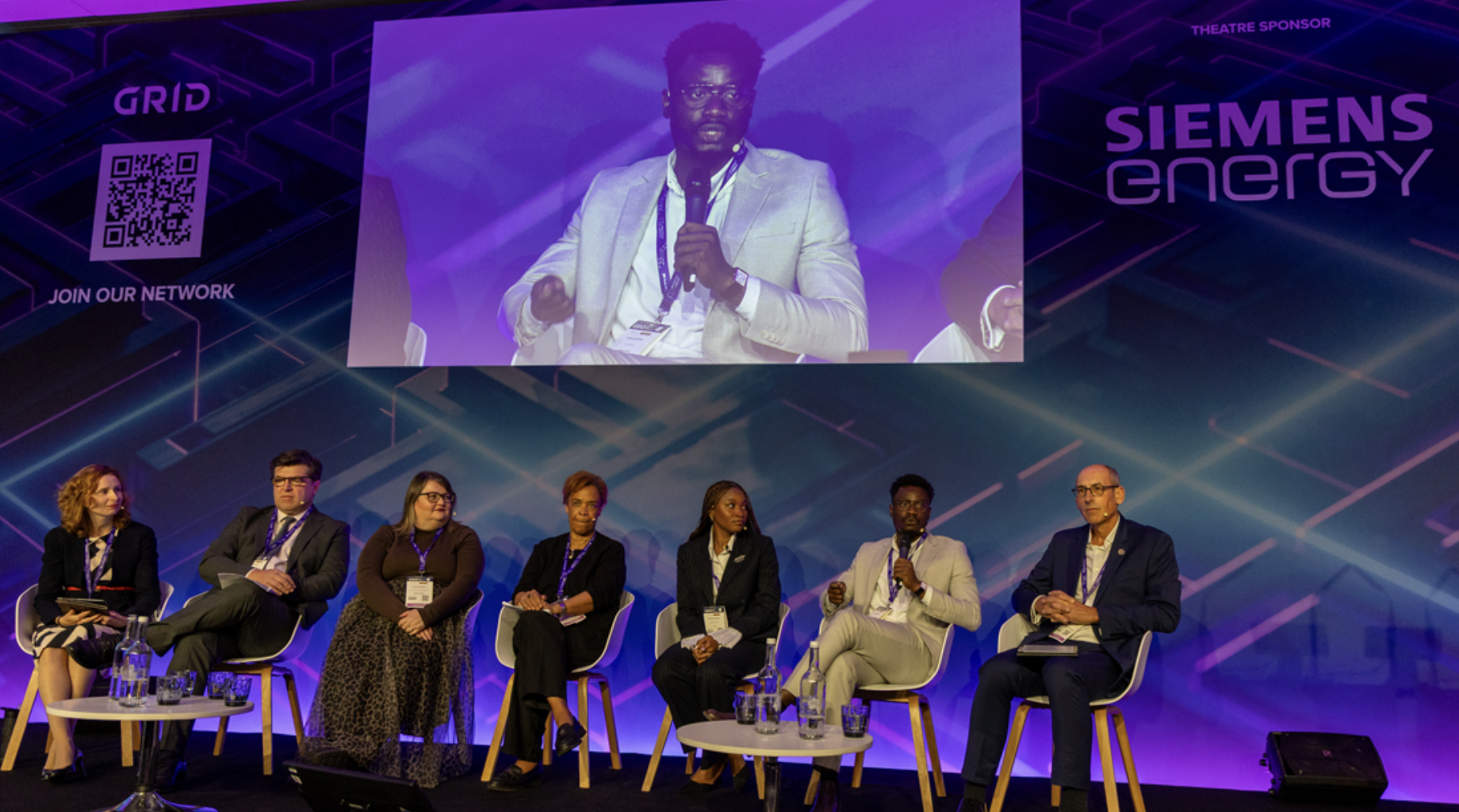
The GRID-UK Skills Panel (from second left) Phillip Bryant (Energy & Utilkity Skills), Jennifer Barriball (Siemens Energy), Dr Marilyn Comrie (Verciti.com), Beatrice Siyanbola (Shell) Edwin Ehirobo (Eneryzblack), Douglas Chisholm (Institute of Civil Engineers). Image: Vicki Sharp
A key objective to underwrite momentum was to consider how skilled and qualified people from related sectors could transition into energy, and people in. the oil and gas industries were among those identified as having the greatest affinity to making the move. Employers were taking a share of responsibility for skills development.
Siemens Energy now had 10% of its workforce in apprenticeships and graduate training schemes which was considered to be market leading.
Aspirations of job seekers were changing too, with many focused on five-year career targets as a means of accelerating their skills and market value.
People plans were also ripe for innovation.
Energyzblack had used the devise of a hackathon amongst interested researchers to profile career opportunities in energy.
Verciti.com was exploring how technology could be harnessed to provide bespoke volume training to meet sector demand.
The government’s shared data strategy would open up more possibilities for collaboration between local authorities training providers and employers which would be vital to assessing individual training needs in the future.

Colm Murphy Image: Vicki Sharp
Colm Murphy Connections Director at the National Energy Systems Operator (NESO) provided insight into the progress being made on connections reform.
The issue was one of the most challenging aspects of delivering the clean energy future ensuring the existing system remained operational through a period of unparalleled change, whilst putting in place the necessary resources to develop future capacity. Although NESO owned the process, its effectiveness depended on high levels of cooperation and coordination across the industry and was in itself evolutionary.
Together with its partners, NESO had been able to confirm over 6GW of connection offers over the past year equivalent to the present power consumption of Scotland alone. Anticipating the scale of change outline by the government, NESO was attempting to address a connections queue of 800 GW, equivalent to four times the present GB energy needs by 2030. Investigation had indicated some two thirds of these applications were not ready to be developed because funding was not in place or the supply chain was not mobilised.
These “phantom” projects were creating bottlenecks which prevented fully structured proposals to be enacted.
As a result, NESO has the connection queue down to 300 GW with a clear pipeline for development to 2035, offering investors a steady and predictable planning environment. Some 75% of projects required to need the government’s Clean Power targets were now approved and programmed and the pace of delivery was increasing.
From a domestic perspective innovations in technology were adding to demand pressures.

(From left) Phil Steelke, Bean Beanland and Tom Pakenham Image: Vicki Sharp
Phil Steele, Energy Technology Evangelist from Octopus, Bean Beanland from the Heart Pump Association and Tom Pakenham from Hive came together to explain how recent introduced products were building a consumer appetite to move away from gas.
At the heart of the changes were the development of smart meters, now fitted to around 70% of homes which provided more accurate data on consumption with some systems linked to battery charging, programmed to use electricity at low periods od demand when prices were cheaper. With the right equipment it was now possible to charge an EV on an average annual mileage at £200 per annum.
The burgeoning market for solar panels is attracting consumers not just from their money saving potential but also their ability to offer households security of supply. Now the front line was promoting the wider adoption of heat pumps.
It was estimated that 99% of customers with appropriate tariffs have saved money changing from gas boilers to air sourced heat pumps and more were being attracted to the market by government incentives. Innovation in the sector was moving at pace with new clean power tariffs and installation of battery systems.
Yet the industry would face a point of consolidation whereby simplified processes to connect monitor and co-ordinate different systems would be introduced, offering clearer choices to manage energy consumption.
Consolidation was a topic raised in a debate around the demand pressures for datacentre development chaired by Kaie Davies of techUK. It was estimated that at present there around £90bn available for datacentre development and there was a question around how much of that investment pie the UK could access.
The UK was facing a severe constraint with its connection queues.
Data centre developers could build out a site in around three years but often the infrastructure environment required to support it could take 15 years. This situation could not persist if the UK wanted to deliver on the commitment made in its Industrial Strategy.
A number of panellists saw problems in assessing demand queues and expected to see better mapping. Did anyone know what was the appropriate number of datacentres needed? Some saw a link to the government’s stated ambition of reindustrialisation.
Yet in the view of MAKE UK such a movement was unlikely, given present punitive energy costs being faced by business. Thomas Smith of AECOM noted the planning policy vacuum.
The absence of a planning policy statement on datacentre development meant that, in the foreseeable future, planning applications would need to be determined via the Development Consent Order process for Nationally Significant Infrastructure Projects, itself a cumbersome and time consuming instrument for making objective planning determinations.
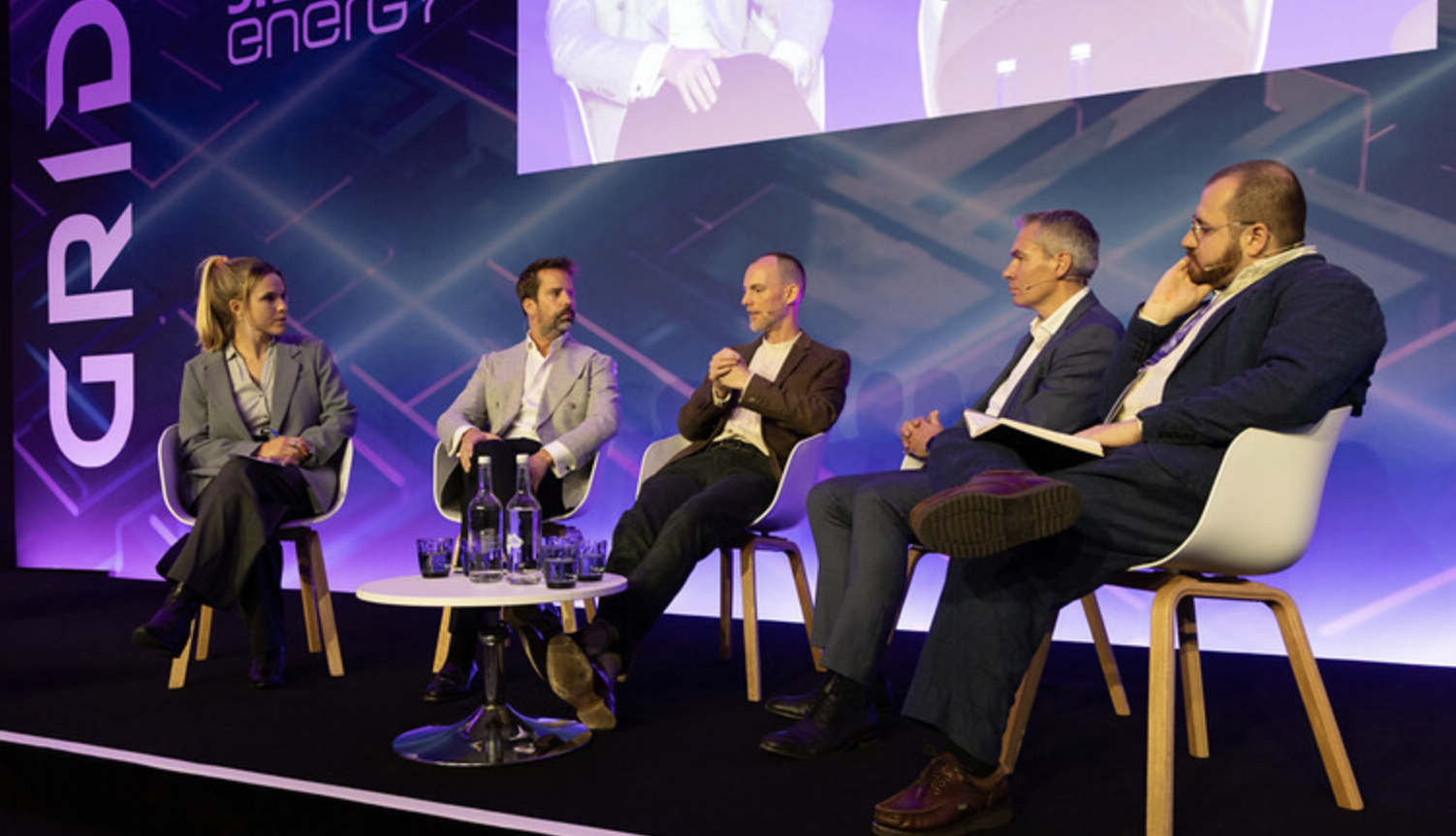
Talking datacentres (from left) Katie Davies (tech UK), Taco Engelaar (Neara) Thomas Smith (AECOM), Daniel Bentham (Vantage Data Centres), Patrick Matthewson (MAKE UK). Image: Vicki Sharp