

Plan for households to cut energy bills with free plug-in power banks
The UK Government is reported to be investigating the possibility of giving households facing fuel poverty free plug-in batteries to allow them to store power to help cut their energy bills.
The plug-in battery acts like a power bank to store cheap electricity when demand is low, and release it later when energy prices are higher.
The Department for Energy Security and Net Zero (DESNZ) has worked up a proposal which would see the Government bulk-buy the devices and distribute them to low-income homes.
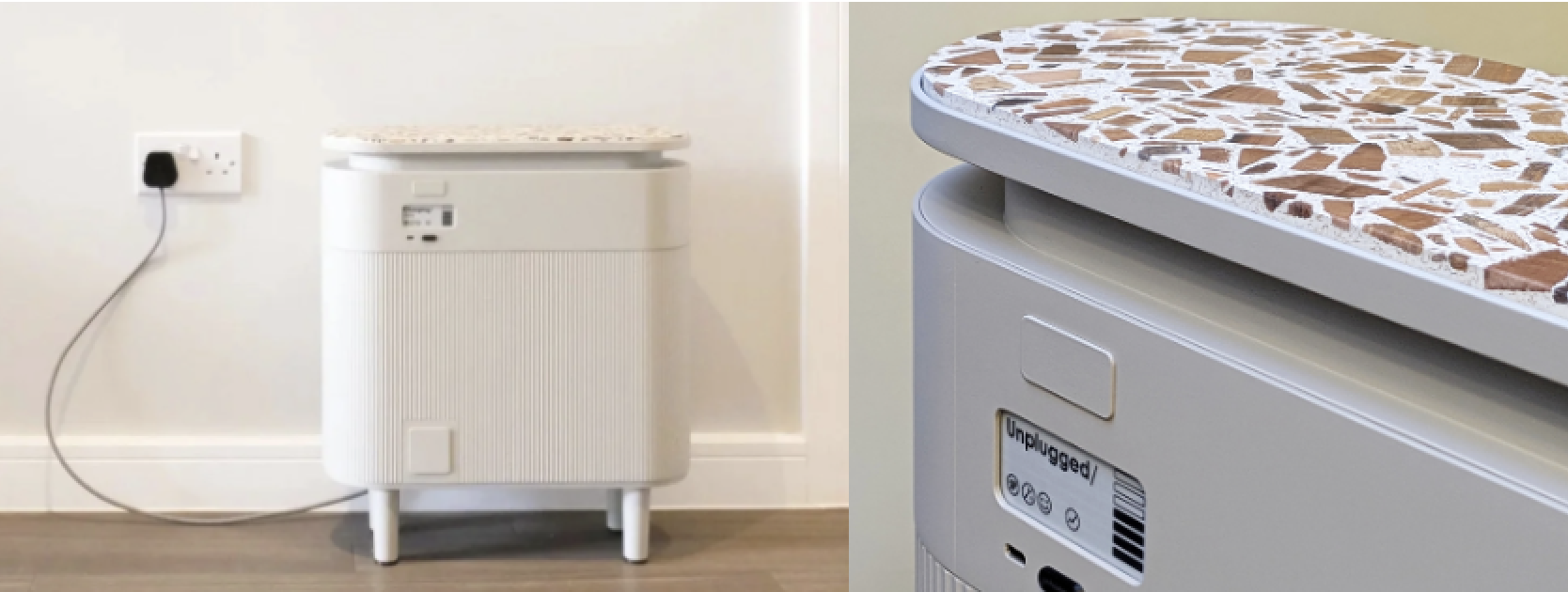
A plug-in battery designed for flats and renters by a London-based start-up. It could be some time before the devices are rolled out due to older wiring regulations in homes Image:Windfall Energy
The Windfall Battery is a plug-in battery designed for people in flats and smaller homes. It needs no complicated installation or changes to the home, so it can also be used if you’re renting. And if you move home, you can just unplug it and take it with you.
The compact devices are portable and designed to be plugged into a socket without any household rewiring, although they are not currently permitted to feed energy back into a home under existing regulations.
They work by drawing electricity through the socket – typically during the off-peak period of a time-of-use tariff – and then discharging back through the same socket to offset demand at times when electricity is more expensive, cutting a household’s bills.
They come in a range of sizes and costs, retailing from about £500. According to Regen, a not-for-profit company which promotes clean energy, some units can pay back within two-and-a-half years. They are significantly cheaper than conventional batteries, where the labour costs alone can run to £1,000 or more.
Subsidised plug-in batteries were among a list of proposals worked up earlier this summer during an exercise by DESNZ and the Nesta innovation charity, aimed at accelerating the delivery of the Warm Homes Plan.
The investigation looked at a range of options for swiftly cutting energy bills. A sector source said the process was launched in response to the spike in energy prices caused by the US-Israeli war with Iran, and a desire within the Government to “piggyback on the massive increase in demand there’s been for things like solar panels and batteries”.
A Government source confirmed DESNZ had drawn up the proposal, saying that plug-in batteries were “attractive” because “they’re so easy to deploy”.
It is not clear yet which families would be eligible for the devices, though there has previously been an expectation under the Warm Homes Plan that grants would be offered to households with a total income of around £35,000 or less.
Households in England with an income of less than £36,000, living in eligible postcodes, or receiving means-tested benefits are already eligible for home upgrades to help cut energy bills, such as heat pumps and solar panels. There are, typically, further conditions for eligibility such as owning your home, renting from a private landlord or having a specific energy rating.

Miatta Fahnbulleh
A decision about whether to press ahead will now have to be taken by the new Energy Secretary, Miatta Fahnbulleh.
However, the initiative appears to be aligned with the Prime Minister’s cost of living focus, which has already seen the Government announce the removal of VAT on household electricity bills.
However, as with plug-in solar panels (previously reported on these pages). plug-in batteries are not currently permitted in Great Britain because existing wiring regulations were not designed for appliances to discharge power back into household circuits.
Government sources confirmed that as with plug-in solar, DESNZ would have to conduct a safety study and then update the regulations, meaning that it will be some time before the devices could be rolled out.
The Government’s immediate focus is approving plug-in solar, expected to happen by the autumn.
A DESNZ spokesperson said: “We’ve cut VAT on electricity to give families breathing space, and we are rolling out plug-in solar, which will be quickest to reach the market – helping to bring bills down for good.”

Windfall Energy’s co-founders, Ashley Grealish (left) and Rob Hallifax Image:Windfall Energy
The battery’s manufacturers, start up Windfall Energy was founded in 2025 with the aim of bringing cheaper, cleaner energy to everyone - not just people living in big houses who could afford it.