

SSEN Transmission has signed the Shetland Development Charter and says future investment will support housing, jobs and local businesses. The document, which was launched earlier this year, sets out the key expectations from investors when it comes to doing any work in Shetland.

Its main aims are to ensure Shetland’s move to renewable energy is fair for everyone, that the community is heard and local needs considered, and for projects to deliver a legacy for Shetland residents and local industry.
The Shetland Development Charter, led by EmPowering Shetland, sets out key expectations from investors undertaking developments in Shetland.
Its main aims are to ensure:
· Shetland’s move to renewable energy is fair for everyone
· The local community is heard and local needs are considered
· There is joined-up thinking when it comes to developments, to avoid duplication of infrastructure and protect our environment
· Projects deliver clean, secure, and affordable energy
· Projects deliver a legacy for Shetland residents and industries
The charter does not replace existing planning and consenting processes. It covers nine priority areas.
1. A Just Transition
2. Ownership
3. Environmental Protection
4. Our Economy
5. A Fair Share for Shetland
6. Community Benefit
7. Local Supply Chain Integration and Community Wealth Building
8. Housing
9. Fiscal and Regulatory Changes
It also includes commitments from Shetland as a community to ensure Shetland benefits proportionally from hosting developments.
SSEN Transmission said it would make several commitments to the future of the isles by signing the charter, covering a number of key areas.
It will work with Shetland Islands Council to “pursue opportunities to create a lasting housing legacy”, it said, building on a current feasibility study exploring how project-related accommodation and infrastructure could support the delivery of permanent housing.
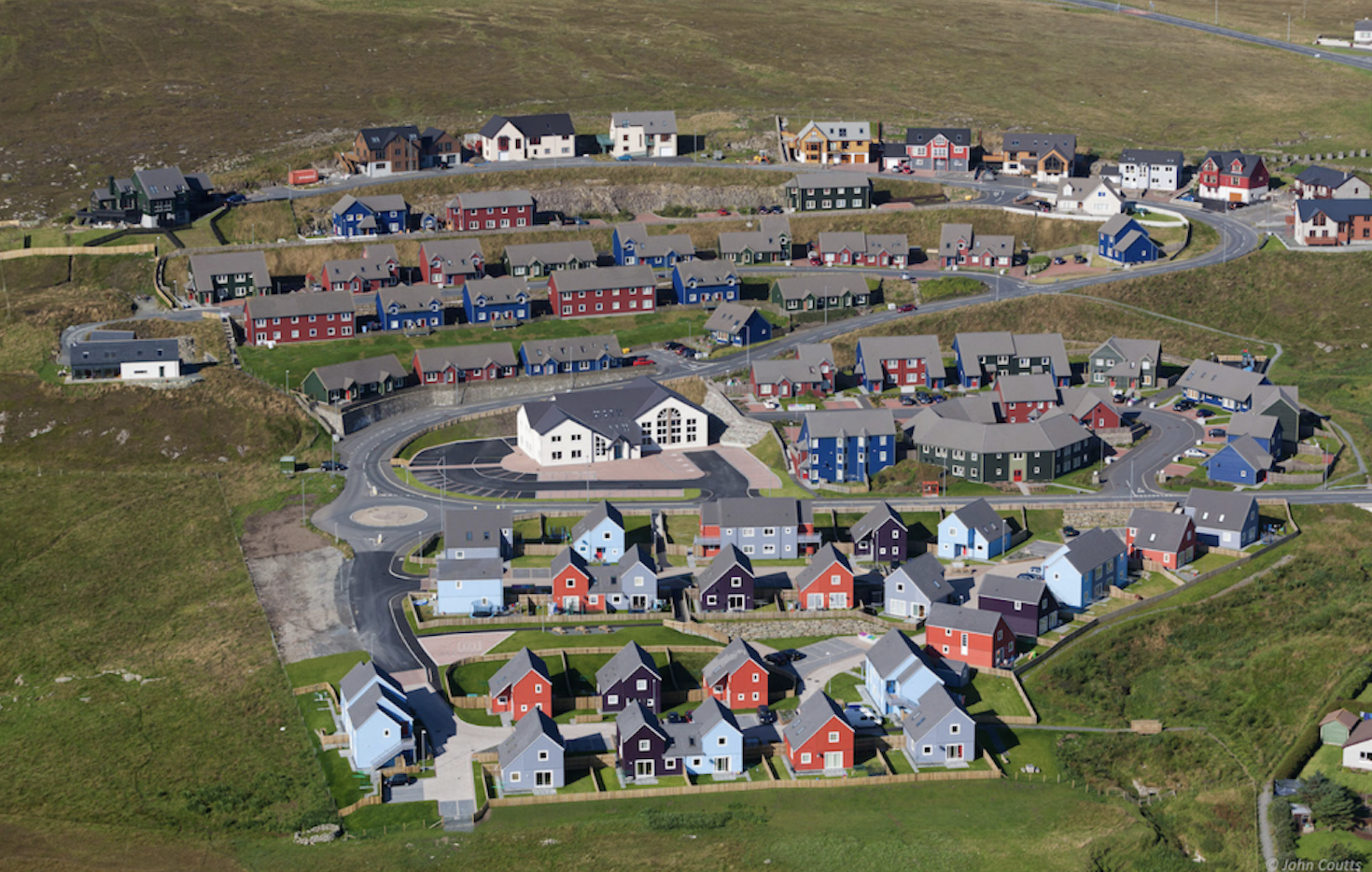
The affordable housing development at Quoys, Lerwick. Image: Hjaltland Housing Association
Future Housing is a joint initiative between Shetland Islands Council and Hjaltland Housing Association which aims to address the future housing provision challenges for Shetland to 2034.
This initiative aims to both enhance and develop the existing housing stock and deliver as many new houses as possible over the next 10 years.
Together, the Council and Hjaltland plan to spend nearly £200m on a programme of new build, refurbishment/maintenance and repair along with advancing home energy efficiency projects - providing a high volume of constuction related work over an extended duration.
This initiative provides a great opportunity for businesses operating in the construction industry looking to expand, scale up or firmly establish their presence. Both the Council and Hjaltland are keen to encourage businesses operating in the sector to actively participate and connect opportunities offered by Future Housing.
SSEN Transmission is overseeing a number of proposed energy development projects in Shetland, including new substations and a second subsea HVDC cable to the Scottish mainland.
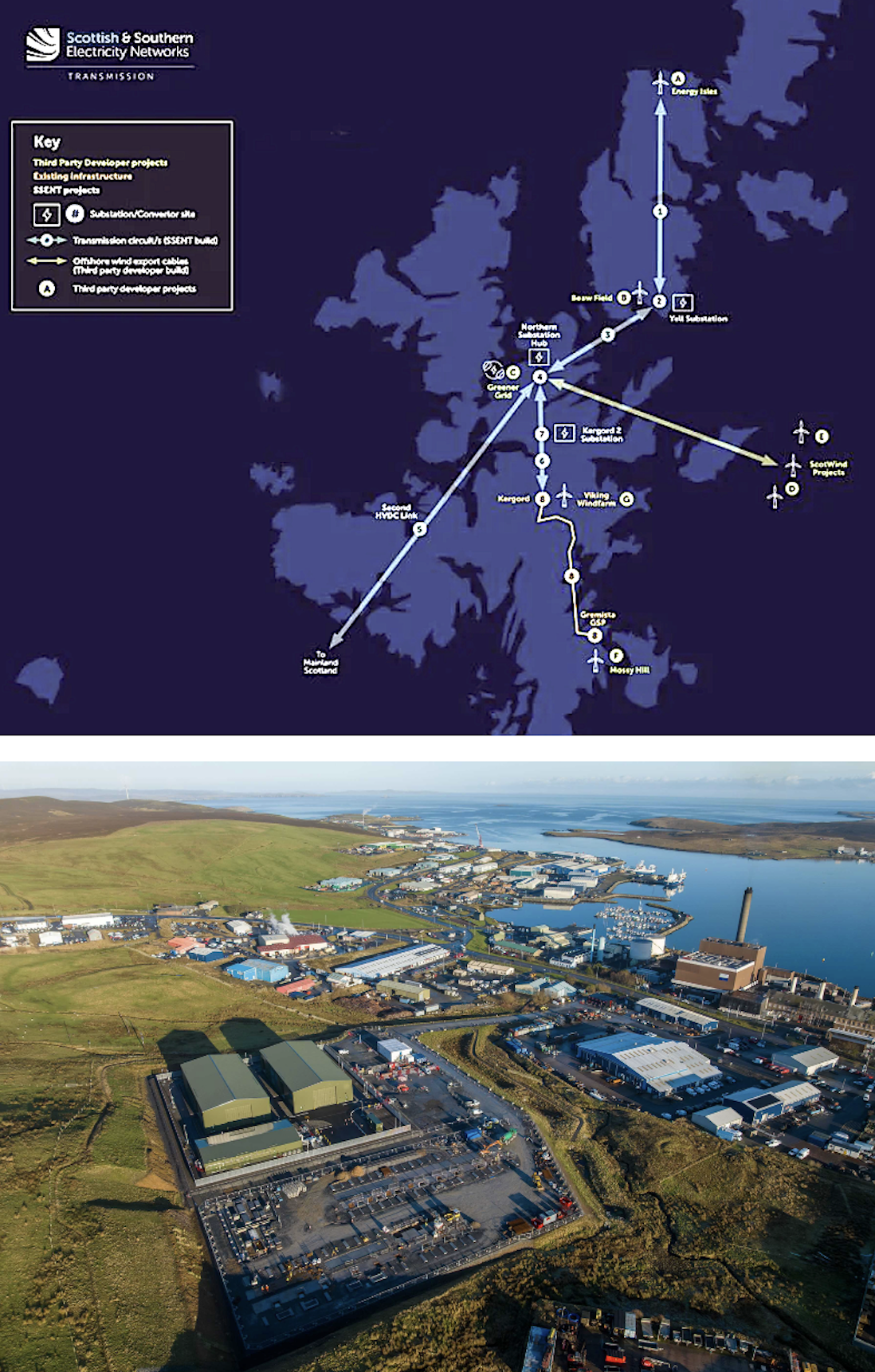
SSEN Transmission’s strategic investments in Shetland and the completed Gremista section of the Kergord-Gremista link. Images: SSEN
Shetland Islands Council Council leader Emma Macdonald said legacy housing could “make a real difference to Shetland residents when homes are in such high demand”.
“We’re working hard with SSEN Transmission to see how we can deliver these homes for the future,” she added.

Shetland Islands Council leader Emma Macdonald, SSEN Transmission’s Sandy Mactaggart and EmPowering Shetland chair Katrina Wiseman. Photo: SIC
SSEN Transmission also said it would work directly with local communities to shape an anticipated £8.9 million of community benefit funding for Shetland and the energy company said it would look to maximise opportunities for Shetland businesses.
This would include working with the local supply chain to increase procurement, job and apprenticeship opportunities and retain as much as possible of the economic value generated by its proposed projects in Shetland.
SSEN Transmission said it would also look to deliver STEM sessions in local schools as part of every new project and would provide 1,000 hours of volunteering to support community projects in Shetland.
SSEN Transmission becomes the second company to sign the charter, behind Shetland Aerogenerators in September.
The company’s offshore delivery director Sandy Mactaggart said:
“We’ve already seen the significant benefits that investment in transmission infrastructure can bring to Shetland, through the delivery of the first High Voltage Direct Current (HVDC) link connecting the islands to the GB electricity transmission system, and the jobs, business opportunities and wider economic benefits it has supported.
“Our proposed future investment builds on that strong foundation. By delivering the critical infrastructure Shetland needs for the future, we can enable further renewable energy development, strengthen energy security for the decades ahead with a second connection to the UK grid and create further opportunities for local businesses and communities.
“Signing the Shetland Development Charter reinforces our commitment to working with our partners and communities to ensure Shetland continues to share in the benefits of that investment.”
EmPowering Shetland chair Katrina Wiseman said SSEN Transmission “has a major role in energy transition in Shetland”.
“The charter is about securing the long-term prosperity of our communities and ensuring Shetland’s energy transition is fair for everyone,” she said.
“By signing the charter investors commit to a charter delivery plan, showing how the principles of the charter will be upheld.
“We look forward to working with SSEN Transmission as a signatory.”